Sunday, 11 October 2026
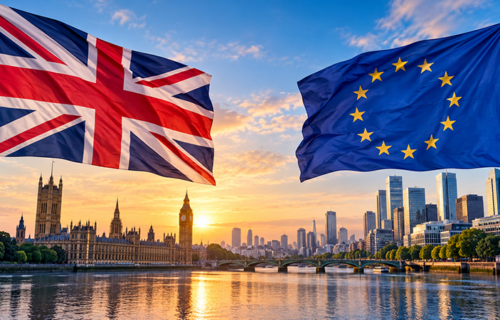
The United Kingdom’s future relationship with the European Union has returned to economic and political discussions following new research suggesting that Britain could potentially regain membership within a shorter period than traditionally required. The renewed debate comes amid growing interest in strengthening commercial relations with European markets and reassessing the economic consequences of Brexit. The campaign organisation Best for Britain argues that the country’s previous participation in European institutions could make a future return less complicated than the process faced by first-time applicants.
According to the organisation’s research, Britain’s familiarity with European legislation, established regulatory structures and longstanding commercial relationships could reduce the administrative work involved in restoring membership. The study suggests that the entire process might be completed within one parliamentary term if political conditions were favourable, drawing comparisons with Finland, which applied in March 1992 and joined in January 1995. However, the proposed timetable represents the campaign group’s assessment rather than an agreed European procedure, and neither the British government nor EU institutions have formally approved an accelerated accession process.
The discussion has attracted further attention as Prime Minister Andy Burnham considers options for developing Britain’s economic relationship with Europe. Possible approaches include improving existing trade arrangements, establishing closer connections with European markets or eventually pursuing full membership. Any application would require negotiations covering regulatory obligations, financial contributions and participation in European institutions. Every existing EU member state would need to approve Britain’s return, regardless of how quickly technical preparations could be completed.
Several questions would need to be resolved concerning Britain’s previous membership arrangements. The country formerly benefited from special provisions covering the euro, border controls and EU budget contributions, none of which would automatically be restored. New members are generally expected to adopt the European currency once the necessary conditions are satisfied, although implementation does not have to occur immediately. Britain’s longstanding travel arrangements with Ireland could also become part of negotiations, but any exemptions from standard membership obligations would require agreement with European governments.
Public opinion has become an important part of the debate. A YouGov survey conducted in late September 2026 found that 59% of respondents in Great Britain supported returning to the EU, compared with 32% opposed, while 73% favoured closer cooperation without necessarily restoring membership. Further polling in early October indicated that 52% would vote to rejoin in a hypothetical referendum, against 27% who would remain outside. The findings suggest that support for improved economic relations extends beyond those advocating full membership, although the conditions attached to any future agreement could influence public attitudes.
For businesses operating between Britain and continental Europe, the direction of these discussions could have significant implications. Since Brexit, differences in regulatory requirements, customs procedures and employment rules have introduced additional complexity into certain commercial activities. Greater economic cooperation could reduce some of these obstacles, potentially influencing manufacturing investment, supply-chain organisation and international expansion. Companies with operations across several European countries would be particularly interested in whether future agreements improve market access and reduce administrative costs.
The commercial property sector could also experience indirect effects as businesses reconsider their operational requirements. Companies assessing office locations, industrial facilities and logistics networks frequently consider regulatory stability, access to customers and workforce availability. A more integrated economic relationship could influence these decisions, particularly for international businesses managing operations across Britain and the EU. Institutional investors may also reassess cross-border opportunities, although property valuations and investment activity would continue to depend on financing conditions, economic growth and individual market fundamentals.
Central and Eastern European economies have particular reasons to monitor developments. Poland, Czechia, Slovakia, Romania and Hungary maintain established commercial connections with Britain through manufacturing, transport, professional services and international investment. Changes to trading arrangements could influence businesses operating across these markets, potentially affecting demand for logistics facilities, production space and commercial offices. However, the scale of any impact would depend on the specific agreements reached and the broader economic environment.
Despite renewed interest in Britain’s European future, a return to the EU remains a possibility rather than an established government policy. The campaign organisation’s proposed timetable does not remove the legal and political requirements of accession, including unanimous approval from existing member states and agreement on membership conditions. The British government’s next steps and the response from European institutions will determine whether discussions lead towards improved trade cooperation, deeper economic integration or a future application for membership, with potential long-term consequences for European businesses and investment markets.