Wednesday, 30 September 2026
Dekpol Budownictwo is increasing its exposure to public-sector construction, with new contracts spanning cultural buildings, education, recreation, social infrastructure and security facilities. The company says agreements secured during the past two years have taken the combined value of this part of its portfolio above PLN 1 billion, marking a significant diversification beyond its established commercial and industrial construction activities.
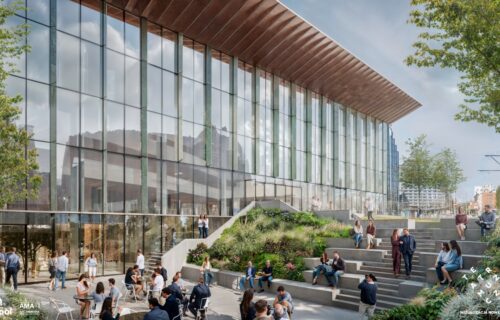
One of the largest projects is the new Musical Theatre in Poznań, where Dekpol is responsible for design and construction. The basic contract is worth approximately PLN 375 million gross, while additional options could lift the total to around PLN 491 million. The planned building will cover almost 28,000 sqm and include a main auditorium for close to 1,200 spectators, a smaller 300-seat venue, recording facilities, restaurant space and supporting areas. Completion is scheduled for the fourth quarter of 2028.
Dekpol has also been appointed to construct the new Lubomirski Princes Museum in central Wrocław for the Ossolineum National Institute. The contract exceeds PLN 140 million and covers a building of almost 10,000 sqm containing exhibition areas, conservation and research facilities, educational space, reading rooms and specialist storage for a collection numbering more than 300,000 objects.
Security infrastructure represents another growing area. In May, Dekpol signed a PLN 153.9 million gross contract for a new municipal police headquarters in Katowice. The development will include an administrative building of almost 11,000 sqm together with supporting facilities and external infrastructure. The contractual implementation period extends to May 2031.
Poznań is also providing another substantial public contract through the redevelopment of the city’s Palm House. Dekpol signed the agreement in August for approximately PLN 196.6 million gross. The scheme covers reconstruction and expansion of the existing complex together with supporting infrastructure, with the main works scheduled for completion during the first quarter of 2030.
The contractor’s public portfolio extends into sports and community infrastructure. Projects currently being delivered include a sports and recreation complex at Kruszyn near Włocławek, incorporating swimming facilities and outdoor sports infrastructure, and the multifunctional Świdnik Arena in Lubelskie. Dekpol is also constructing a primary school and sports hall at Biedrusko in the Suchy Las municipality and a new social-policy centre in Poznań.
The range of projects reflects a broader strategy of reducing dependence on individual construction segments. Dekpol argues that demand across different parts of the building market moves through separate cycles, making a wider mix of industrial, logistics, residential and public contracts important for maintaining activity when investment slows in particular sectors. Its first-half 2026 report shows the public portfolio alongside major private-sector projects including logistics and manufacturing developments, with the average value of signed contracts under execution approaching PLN 90 million at the end of June.
Outside Poland, the company is involved in one of the most technically demanding projects in its portfolio: construction of the new main building at Poland’s Henryk Arctowski Antarctic Station on King George Island. Dekpol leads the construction consortium with Andrewex Construction and reported in June that the main structural enclosure had been completed despite the project’s severe weather and logistical constraints.
Dekpol’s expansion into more specialised public buildings also increases the importance of its engineering and technical resources. The wider group operates production facilities, including precast operations, while Dekpol Budownictwo maintains its own construction equipment fleet. Such internal capacity can be particularly relevant for projects involving complex specifications, constrained urban sites or unusually demanding construction environments.
The growing public-sector order book therefore represents more than an increase in contract volume. Cultural venues, police facilities, schools and specialist public buildings require different technical capabilities from conventional warehouse and industrial construction. By building a track record across these areas, Dekpol is broadening both its revenue base and the range of projects for which it can compete as Poland continues investing in public and social infrastructure.