Sunday, 4 October 2026
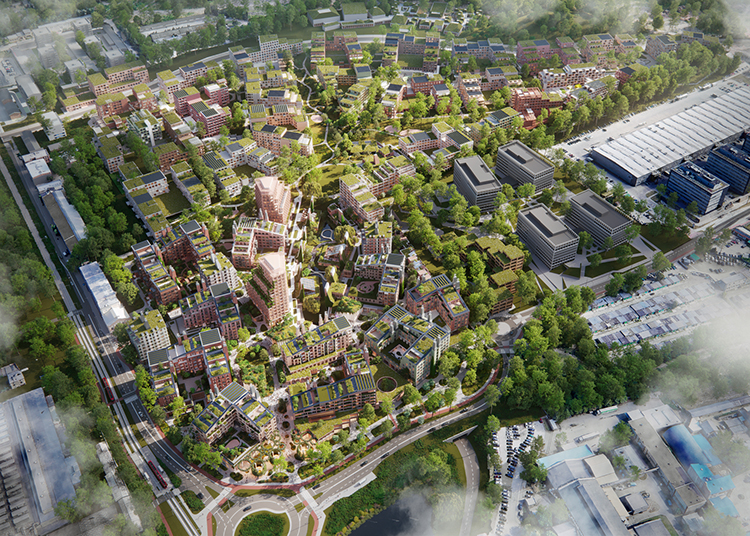
Capital Park Group has completed an extended public consultation for Nowy Wełnowiec, its 30-hectare regeneration project in northern Katowice, and is moving towards contractor selection for the first phase of a development intended to transform former industrial land into a new mixed-use district.
The consultation ran from May 2025 until June 2026 and involved residents, neighbourhood councils, community organisations, urban-planning specialists, students, young people and senior citizens. Capital Park said the findings will now be assessed as detailed planning and implementation of the project progresses.
The process focused heavily on how the development should interact with the existing city rather than operate as a self-contained residential project. Among the strongest themes were publicly accessible green areas, recreational facilities, pedestrian and cycling connections, everyday services and places capable of accommodating community and cultural activities.
Environmental issues also featured prominently. Residents raised questions about biodiversity, water retention, microclimate, traffic and the preparation of the former industrial site for redevelopment.
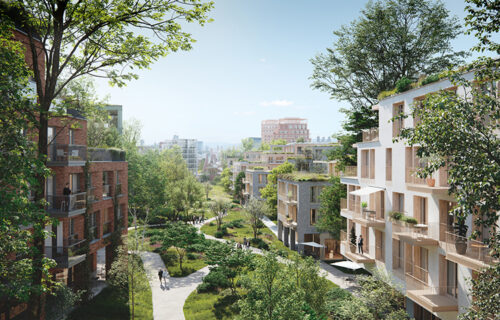
Capital Park plans to dedicate approximately 10 hectares of the 30-hectare property to parks, squares and other green and recreational areas. This will include a four-hectare central park alongside meadows, landscaped areas, woodland elements, ponds and public spaces.
One of the project’s more distinctive planning decisions is the proposed removal of conventional road traffic from ground level. Vehicle movements will instead be accommodated at level -1, allowing the surface to be designed primarily around pedestrians, cyclists, landscaping and public activity.
The approach reflects a broader change in the redevelopment of former industrial areas in Polish cities. Rather than concentrating primarily on building density, large regeneration projects are increasingly expected to demonstrate how they will create public space, manage environmental impacts and connect new development with established neighbourhoods.
Preserving elements of Wełnowiec’s industrial identity is another priority emerging from the consultation. The former Compressor House will be retained and renovated, with participants supporting its potential use for community, cultural and educational activities.
The historic building will already play a role during the first development phase, when it is expected to accommodate offices and a sales centre as well as activities for the local community.
Sylwia Filewicz, Head of Construction & Development at Capital Park Group, said the consultation allowed the developer both to identify local priorities and to address concerns surrounding environmental conditions and preparation of the site. Capital Park intends to continue communicating with residents as development progresses.
The consultation also forms part of the sustainability framework being applied to Nowy Wełnowiec. The development is being prepared according to BREEAM Communities requirements, which assess sustainability at neighbourhood and masterplan level rather than concentrating exclusively on individual buildings.
Nowy Wełnowiec has already received BREEAM Communities Interim certification. According to Capital Park, it was the first mixed-use development of its scale in Poland to complete the scheme’s pre-certification process.
The project is now approaching a more significant transition from planning towards physical development.
Capital Park has divided Nowy Wełnowiec into four principal development areas that will be delivered progressively. The first activity will concentrate on a central seven-hectare section incorporating residential accommodation alongside retail, services, food and beverage, education, leisure facilities and part of the planned central park.
The developer is beginning the selection of a general contractor for this initial stage. Plans call for three residential buildings providing more than 230 apartments together with supporting infrastructure and the refurbishment of the Compressor House.
Capital Park intends to select the contractor by the end of 2026 before proceeding with construction.
The scale of the wider masterplan makes Nowy Wełnowiec significant beyond the delivery of its first residential buildings. The project will ultimately introduce housing, commercial activity, community uses, restaurants and cafés, cultural facilities and recreation onto a 30-hectare site that has remained largely disconnected from the surrounding urban structure.
How that integration is achieved will be important to the project’s long-term success. Large regeneration schemes can substantially increase the supply and value of urban property, but they also generate additional transport requirements and place pressure on surrounding infrastructure and services. The consultation indicates that these issues, particularly traffic and public transport, remain important concerns for the surrounding community.
Capital Park’s decision to move road traffic underground could help create a substantially different public realm from a conventional residential development dominated by streets and surface parking. It also makes the quality of transport connections and the practical operation of the underground road system important elements of the project’s future performance.
The environmental condition of the former industrial land represents another major part of the redevelopment process. Capital Park said environmental studies, site preparation and the treatment of excavated material were discussed during the consultation, with Investeko supporting the project team on environmental and site-preparation matters.
UrbanKGK was responsible for organising the participatory process, while JEMS Architekci developed the urban concept for Nowy Wełnowiec.
The completion of the consultation does not resolve every question surrounding a regeneration project of this scale, but it marks an important step as Nowy Wełnowiec approaches construction. The next test will be how the ambitions developed during the planning process, particularly the extensive greenery, pedestrian environment, preservation of industrial heritage and publicly accessible facilities, translate into the first completed phase.
With contractor procurement beginning and more than 230 apartments planned for the opening stage, Nowy Wełnowiec is moving closer to becoming one of Katowice’s largest attempts to turn obsolete industrial land into a functioning new piece of the city.