Strategic design drives employee well-being at Passerinvest Group’s office spaces

12 November 2024

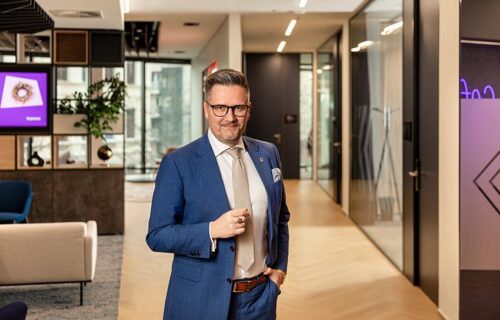
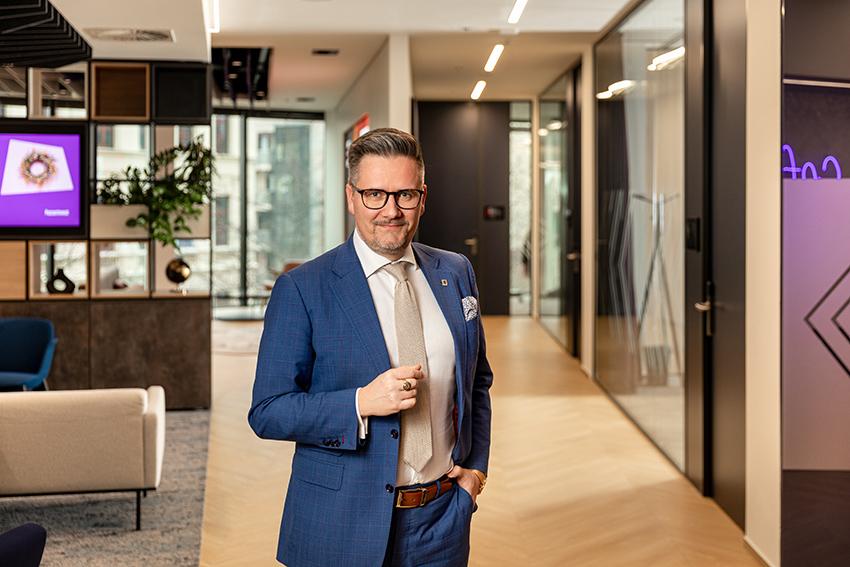
Czech developer Passerinvest Group is redefining the modern office environment by incorporating employee preferences and operational insights into its planning and design. From coffee machine placement to restroom design, Passerinvest considers every detail to create spaces that enhance communication, productivity, and employee satisfaction. Eduard Forejt, Sales Director at Passerinvest, highlights the company’s holistic approach: “When planning spaces, we’re guided by our own operational experience, safety regulations, and, most importantly, the needs of our clients’ personnel. A motivated, satisfied employee is invaluable, so we adapt everything—from interior layouts to materials and colors—to support their well-being.”

Coffee Machines: A Strategic Location

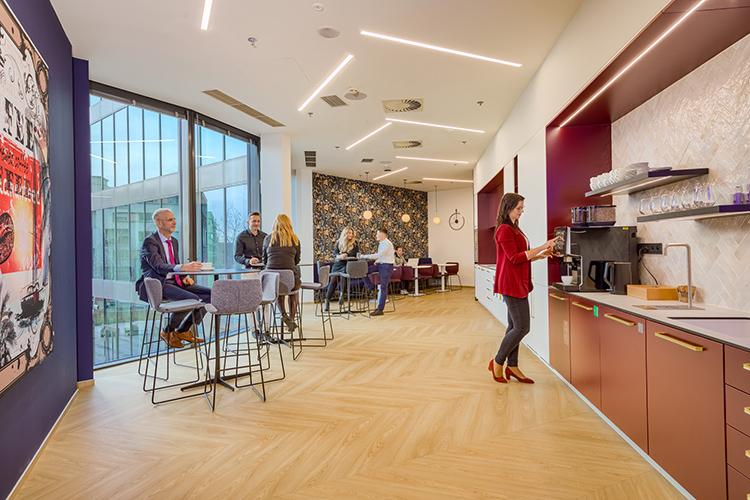
It may seem trivial, but the location of the coffee machine can significantly impact a company’s internal communication flow. Coffee areas become natural hubs where employees exchange information, relax, and consult with one another. If placed too far from the main work areas, it discourages usage, whereas proximity to sensitive areas, such as management offices, can create tension. “Positioning the coffee machine near the director’s office has proven counterproductive in many cases,” Forejt observes. “This depends on company culture, of course, but placement is essential to ensure it fosters natural interactions without causing disruptions.”

Restrooms with a Purpose

Restroom design goes beyond functionality, addressing real workplace needs. In women’s restrooms, large mirrors allow multiple users to apply makeup simultaneously—a frequent request from HR managers. To prevent misplacing jewelry, like wedding rings, sinks and counters are designed in contrasting colors to enhance visibility. Even minor adjustments, like slightly raising the height of toilet seats, can increase efficiency, as a study commissioned by a major corporation found that minor changes can save significant downtime annually. “Such details reflect how even restrooms can impact productivity,” Forejt says.

Thoughtful Open Space Design

While open office spaces encourage communication and collaboration, Passerinvest has developed a balanced “office landscape” model, where team members have designated quiet areas for focused work and private spaces for meetings. “Complete open space feels undignified if employees constantly feel watched or interrupted. We aim to create inviting, structured spaces where people can choose between quiet work and interaction,” Forejt explains.

New Expectations: Beyond the Foosball Table

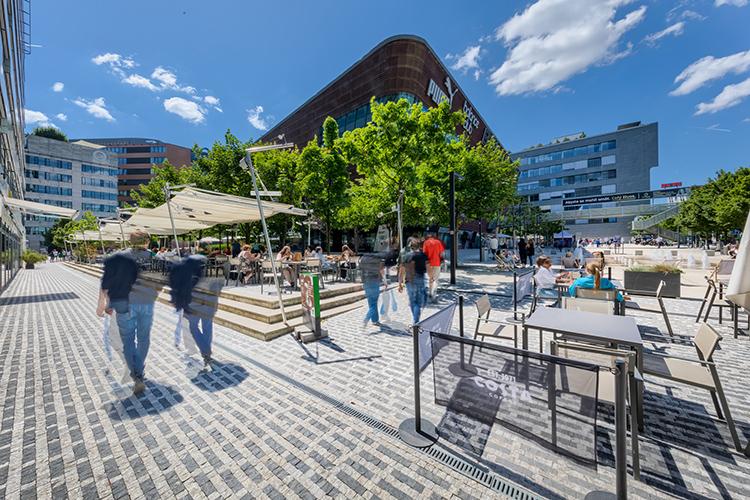
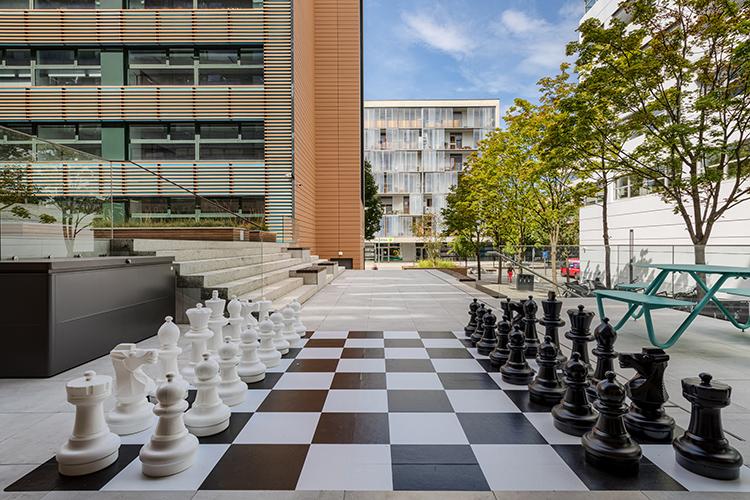
Modern employees need more than a break room or foosball table. Mental well-being requires brief breaks, access to green spaces, and natural light. Today’s workplaces feature quiet zones, rooftop terraces, and walking paths around the building, allowing employees to recharge outdoors. Forejt notes that demand for such features is increasing, with many seeking office spaces near green areas.

Technology and Layout Optimization

Modern technology also supports workplace optimization. For larger corporations, occupancy sensors or wristbands track how employees interact within a space, identifying opportunities for more effective layouts. “Some may see it as ‘big brother,’ but these technologies can reveal why some spaces hinder productivity. Small changes in layout based on real usage patterns can improve satisfaction and comfort,” Forejt says.

Cultural Nuances Shape Office Design

Finally, Forejt points out that office needs vary by nationality. For example, while Czechs prioritize a social lunch hour, the British are accustomed to lighter midday meals and may not value a nearby canteen as highly. The Germans often prefer simple, functional spaces, while Czechs appreciate aesthetic elements like natural materials and indoor plants that enhance the environment.

Passerinvest Group’s people-centric approach demonstrates how thoughtful, adaptable office design can contribute to productivity, morale, and workplace culture across various industries.

Author: Eduard Forejt, Sales Director at Passerinvest
front page info
LATEST NEWS
14 August 2026 Skanska JV secures USD 1.9 billion Los Angeles light rail contract 14 August 2026 Poland’s Job Market Edges Higher as Construction and Logistics Hiring StrengthensPoland’s recruitment market continued to improve in July, although the latest data suggest that the recovery remains gradual rather than signalling a broad acceleration in hiring. The Barometr Ofert Pracy, which tracks changes in the number of employment advertisements published online, increased to 261.5 points in July 2026, compared with 261.1 points in June and 258.5 points a year earlier. The indicator has been rising since April, but the strength of the monthly increases has progressively weakened. The survey is prepared by the Department of Economics and Finance at the University of Information Technology and Management in Rzeszów together with the Bureau for Investments and Economic Cycles (BIEC). It is based on online job advertisements collected each month and adjusted to remove seasonal effects, providing an indication of changes in employers’ demand for new workers. BOP 8.2026.pdf The July results reveal increasingly different conditions between sectors. Recruitment in services is recovering, construction and engineering are showing stronger demand and logistics is improving, while vacancies for physical workers continue to decline. Construction recruitment reaches four-year high One of the clearest improvements is visible in construction. Among occupations requiring scientific or engineering qualifications, vacancies increased across almost every category in July, with IT the exception. Construction recorded a particularly strong result, with the number of advertised positions reaching its highest level in four years. BOP 8.2026.pdf Recruitment of engineers is also recovering. Following several years of declining vacancy numbers, demand has been gradually rebuilding and reached its highest level for two years following the latest increase. BOP 8.2026.pdf For the property and infrastructure sectors, the figures point towards stronger competition for technically qualified employees as construction activity requires additional engineering and specialist capacity. The improvement does not extend equally across the entire labour market. Vacancies for physical occupations declined again during July and have been following a clear downward trajectory since around the middle of 2024. BOP 8.2026.pdf This divergence suggests that employers’ recruitment requirements are becoming increasingly specialised rather than simply expanding across all categories of labour. Logistics hiring continues to recover Logistics is another area showing clearer signs of strengthening demand. The number of logistics vacancies has increased since April and reached its highest level since January 2024 in July. Recruitment in freight forwarding is also following an upward trend. BOP 8.2026.pdf The figures are relevant to Poland’s industrial and logistics property sector because employment demand provides another indication of operating activity among companies occupying warehouses, distribution centres and transport facilities. Services more broadly produced the largest increase in vacancies among the main occupational groups during July. Following more than a year of adjustment, recruitment in this part of the economy has been improving since the beginning of 2026, with July producing the highest number of advertisements since September 2024. BOP 8.2026.pdf Tourism recruitment also strengthened, reaching its highest level in more than 18 months, while education recorded a double-digit monthly percentage increase in vacancies, although demand in the sector remained substantially below the level recorded a year earlier. BOP 8.2026.pdf IT recovery remains fragile Technology presents a more complicated picture. Vacancies for both IT administration and programming declined in July, with the reduction somewhat greater among programmers. Nevertheless, the longer-term direction has improved modestly, with IT vacancies gradually increasing over approximately the past 18 months. BOP 8.2026.pdf The recovery remains far from complete. Demand for IT workers is still significantly below the levels recorded before the economic disruption associated with the pandemic, with the gap particularly pronounced for programmers. BOP 8.2026.pdf Meanwhile, within social-science and legal occupations, recruitment has been broadly stable since October 2025. July brought some improvement for call-centre employees, purchasing departments and lawyers, while vacancies declined for graphic designers, office workers and banking positions. BOP 8.2026.pdf Regional differences remain substantial The recovery is also uneven geographically. After seasonal employment was excluded, online vacancies increased in most Polish regions during July. The strongest monthly increases were recorded in Warmińsko-Mazurskie, Podkarpackie and Śląskie, while the largest decreases occurred in Wielkopolskie, Zachodniopomorskie and Dolnośląskie. BOP 8.2026.pdf At the same time, labour-market conditions are not improving across every measure. The seasonally adjusted registered unemployment rate increased by 0.1 percentage point in June to 6.1%, its highest level since May 2021, according to the report. BOP 8.2026.pdf The combination of slightly higher unemployment and gradually increasing vacancies points towards a labour market undergoing structural adjustment rather than a straightforward hiring boom. The report’s labour-market diagram on page three places July 2026 close to the boundary between improving qualifications and a stronger employment outlook, illustrating the relatively tentative nature of the current recovery. BOP 8.2026.pdf For Poland’s property sector, however, the composition of hiring may be more important than the headline movement in the index. Increasing demand for construction specialists, engineers, logistics workers and freight-forwarding employees coincides with sectors directly connected to development, infrastructure and industrial real estate. The July Barometr therefore points to a labour market moving forward slowly but becoming increasingly differentiated: employers are recruiting again in selected areas, while other occupations continue to face weaker demand. Construction and logistics currently stand out among the areas where that improvement is becoming most visible. 14 August 2026 NBI Analysis: Bucharest Strengthens Its Position in CEE 14 August 2026 How Transit-Oriented Development Has Shaped Japan’s Real Estate Success 14 August 2026 Croatia proposes 50% levy on exceptional 2026 corporate profit margins 14 August 2026 NEPI Rockcastle enters Spain with €252 million acquisition of MegaPark Barakaldo 14 August 2026 GN Group takes more than 30,000 sqm at Panattoni’s Kladno brownfield development