Thursday, 17 September 2026
Europe’s office property market is undergoing a structural shift, as rising vacancy levels, evolving occupier requirements and stricter quality standards challenge traditional workplace concepts. New strategies are increasingly focused on hybrid use, space efficiency and alternative functions, according to insights shared at a press conference organised by RUECKERCONSULT.
Industry representatives from AUKETT + HEESE, CELLS Group, Covivio, FAY Projects and HIH Projektentwicklung highlighted how refurbishment, mixed-use concepts and repurposing are becoming central to maintaining asset value.
A key theme is the economic importance of expanding usable space. Much of Europe’s office stock dates back to before 2000 and is increasingly considered outdated in terms of layout flexibility and building systems. Anna Lena Stoephasius of AUKETT + HEESE noted that comprehensive refurbishments now aim to combine improved space efficiency, user experience and ESG performance.
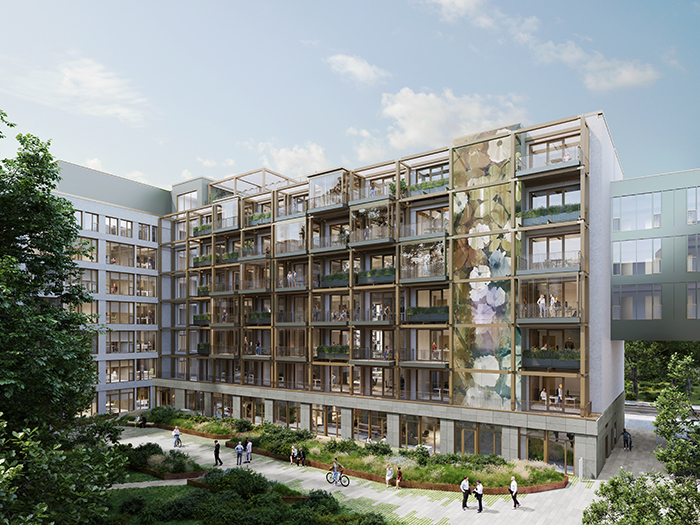
Projects such as Karlsgärten in Berlin demonstrate this approach, where retaining the core structure while adding new floors and usable areas has generated additional lettable space and improved overall viability. According to Sebastian Nau of AUKETT + HEESE, the challenge lies in transforming rigid structures into flexible, sustainable work environments through targeted structural and façade interventions.
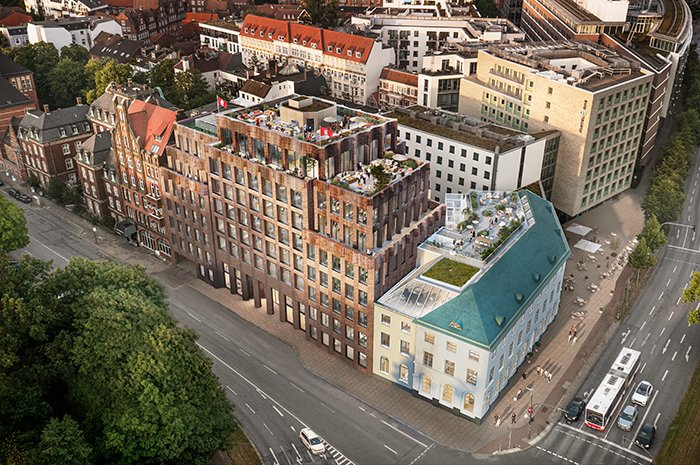
Developers are also focusing on space expansion as a key value driver. At the “Am Holstenwall” project in Hamburg, developed by CELLS, the building’s structure has largely been preserved while adding terraces and communal areas. The refurbishment increased the lettable area by more than 40 percent to 11,700 sq m, with the scheme reaching an 83 percent pre-letting rate ahead of completion in Q2 2026. The project combines office, retail and leisure functions.
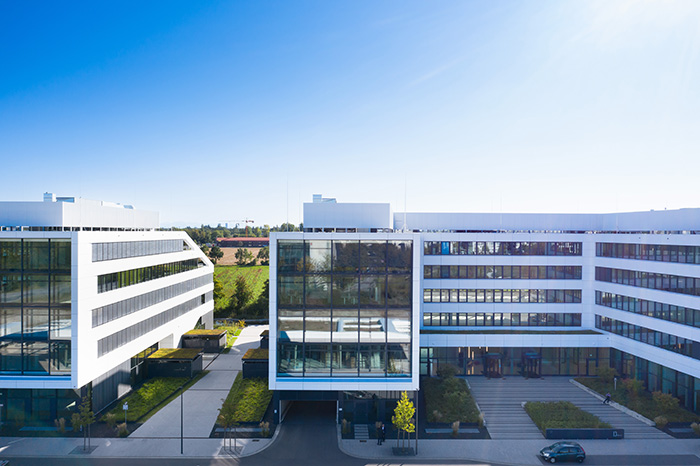
The shift towards mixed-use developments is gaining traction across the sector. Covivio is applying this strategy at its “ICON” project in Düsseldorf, where office space is being complemented by hospitality-style services, catering and shared amenities. Katharina Greis, COO Offices Germany at Covivio, said such concepts are essential to maintaining long-term competitiveness by aligning properties more closely with occupier expectations.
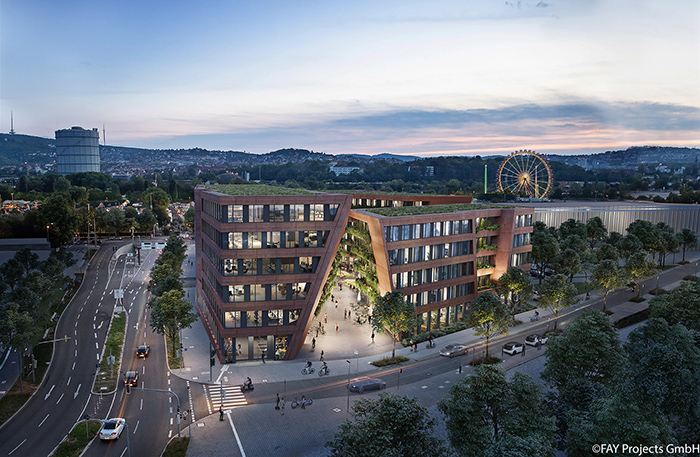
However, not all assets can be repositioned through refurbishment or mixed-use integration alone. In some cases, a fundamental change of use is required. FAY Projects is repositioning its “CANNION” development in Stuttgart, originally planned as a single-use office scheme, into a mixed-use project incorporating a hotel, restaurants, fitness facilities and long-stay accommodation.
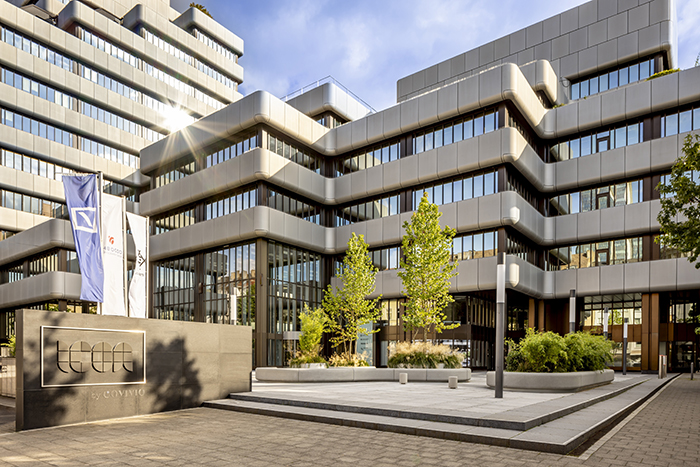
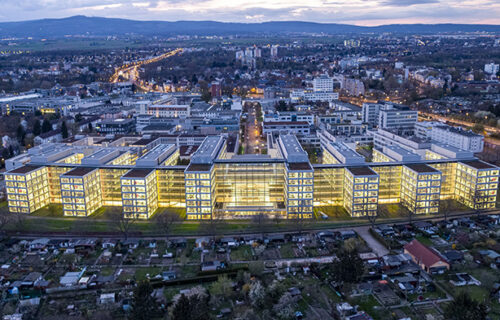
Repurposing is also gaining importance, particularly for structurally vacant or obsolete assets. HIH Projektentwicklung is converting a former office building on the HANOMAG site in Hanover into a school, reflecting growing demand from the education sector. Similarly, CELLS is transforming the former Deutsche Börse headquarters in Frankfurt into a campus accommodating three schools, with completion scheduled for May.
At the same time, restructuring of distressed or stalled developments is becoming more common. HIH Projektentwicklung is overseeing the repositioning of the KORYFEUM scheme near Munich, where original plans for additional office space are being revised in favour of alternative uses, including light industrial.
The overall direction of the market points to a more flexible, asset-specific approach. As traditional office demand patterns continue to shift, landlords and developers are increasingly required to tailor strategies to individual properties, combining refurbishment, functional diversification or full repurposing to ensure long-term viability.