Monday, 21 September 2026
Poland’s office sector is moving into a new stage as the volume of new developments declines and companies reassess how their workplaces function in an era shaped by hybrid working. The combination of reduced construction activity and continued demand for well-located, high-quality offices is gradually shifting market dynamics, particularly in Warsaw.
In recent years the development pipeline across Poland has slowed considerably. Higher construction costs, more expensive financing and cautious investment decisions have resulted in fewer new projects breaking ground. As a result, the amount of office space delivered to the market has fallen to levels not seen for many years.
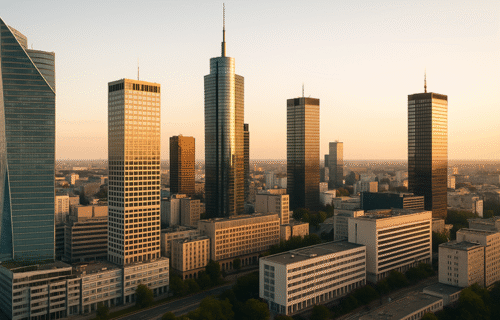
The impact of this slowdown is most visible in Warsaw, the country’s largest office market. Modern buildings in the city centre and key business districts are becoming harder to secure, especially for companies seeking larger areas. Vacancy levels in the most sought-after parts of the capital have tightened significantly, creating a more competitive environment for tenants looking to relocate.
Under these conditions, companies are beginning to plan relocation strategies much earlier than in the past. Businesses searching for new headquarters increasingly start their search several years before the planned move. Early planning allows them to secure space in upcoming projects or negotiate favourable terms in buildings that match their operational requirements.
The situation outside the capital varies from city to city. Regional markets such as Kraków, Wrocław, Katowice and Łódź still have a higher availability of office space overall. However, the range of options narrows when companies require large floor areas or modern buildings that meet the latest technical standards. As a result, many firms opt to renew leases in their current locations rather than relocate.
At the national level, the development pipeline remains limited. Only a relatively small amount of new office space is expected to be completed in the coming years, with projects spread between Warsaw and several major regional cities. This constrained supply is already influencing rental levels, particularly in the most desirable areas of the capital where the newest buildings command the highest rates.
While supply is tightening, demand for office space has remained relatively stable. Warsaw continues to account for a significant share of leasing activity, while regional cities also attract strong interest from companies operating in sectors such as technology, business services and professional consulting.
However, the nature of demand has evolved. Businesses are placing greater emphasis on the overall quality of the workplace environment rather than focusing solely on cost. Factors such as building design, accessibility by public transport and the availability of nearby services have become increasingly important in the decision-making process.
The ongoing shift toward hybrid work has played a central role in this change. In Poland, most companies have adopted work models that combine remote work with several days per week in the office. This arrangement reflects employees’ preference for flexibility while still preserving the benefits of in-person collaboration.
In response, companies are seeking office spaces that support a broader range of activities. Modern workplaces are expected to accommodate collaborative meetings, focused individual work and informal interaction among teams. As a result, flexibility in layout and design has become an important feature of new office developments.
Employee comfort has also emerged as a priority. Access to natural light, good air quality and acoustic comfort are increasingly seen as essential components of a productive working environment. At the same time, proximity to restaurants, services and leisure amenities can significantly influence how attractive a location is to employees who commute to the office several days per week.
For employers, the office continues to serve as more than just a physical workspace. Many organisations see it as a central element in building company culture, supporting teamwork and attracting talent in a competitive labour market. The ability to offer a well-designed and accessible workplace is therefore becoming part of a broader strategy for employee engagement.
Looking ahead, hybrid working arrangements are expected to remain a permanent feature of the Polish labour market. In this environment, the most successful office buildings are likely to be those that combine strong locations with flexible layouts and high-quality working environments.
For tenants, the current market conditions mean that relocation strategies must be carefully planned. With fewer new developments entering the market and competition intensifying for the best locations, companies increasingly need to secure space well in advance and align their office decisions with long-term business plans.
Source: Magdalena Zagrodnik, Partner, Board Member at Walter Herz & CIJ EUROPE Research Team