Sunday, 4 October 2026
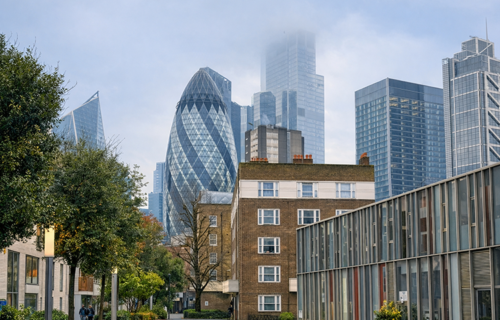
London’s office sector is entering 2026 with a clearer direction than in the immediate post-pandemic years, as both occupiers and investors focus increasingly on building quality rather than sheer floor area. Market research from several international property consultancies indicates that while overall availability remains higher than before 2020, the most modern and energy-efficient buildings are becoming harder to secure, particularly in central districts.
One of the defining features of the market is the gap between older stock and recently completed or refurbished space. Companies are generally leasing fewer square metres than in previous cycles, but they are showing a stronger willingness to pay for buildings that meet environmental standards, offer flexible layouts and provide amenities that support hybrid working patterns. As a result, headline vacancy figures can appear elevated even as competition intensifies for top-tier properties.
On the supply side, development pipelines remain constrained. Rising construction expenses, stricter planning requirements and tighter financing conditions have reduced the number of purely speculative projects. Instead, many landlords are choosing to modernise existing buildings rather than embark on entirely new schemes. This strategy is gradually improving the overall quality of available stock but is not fully offsetting the limited number of large new completions expected over the next two years.
Leasing activity during the previous year showed steady momentum, broadly in line with long-term averages. Professional services firms, financial institutions and technology companies continue to account for a significant share of demand, although requirements are increasingly shaped by workplace strategy rather than headcount growth alone. Shorter lease terms and greater flexibility clauses are more common, reflecting the continued evolution of office use.
Rental performance varies sharply by location and building specification. Premium properties in established central areas are achieving record or near-record price levels, while secondary offices face slower absorption and, in some cases, downward pressure on rents. This divergence is reinforcing the importance of refurbishment and repositioning for landlords seeking to maintain competitiveness.
Investment sentiment toward London offices has improved compared with the more cautious environment seen earlier in the decade. Institutional investors remain selective, favouring assets with strong sustainability credentials, reliable tenant profiles and locations close to major transport links. Although borrowing costs and broader economic uncertainty continue to influence decision-making, survey data from advisory firms suggests that offices are regaining a stable role within diversified commercial property portfolios.
Looking ahead, the central theme for 2026 is not a broad-based expansion but a continued shift toward quality and efficiency. Businesses are reassessing how much space they need, but they are also recognising the office as a strategic tool for collaboration, branding and employee retention. In this context, London’s market is less about volume growth and more about the gradual rebalancing between outdated supply and modern, adaptable workplaces.
Source: CIJ EUROPE Analysis Team