Sunday, 4 October 2026
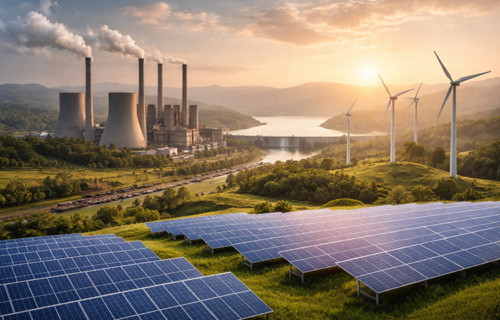
Over the past decade, India has emerged as one of the most consequential players in the global shift toward cleaner energy. Alongside China and the United States, the country has expanded its power generation capacity at an unprecedented pace, driven by sustained economic growth, rapid urbanisation and rising electricity consumption across households and industry. While renewable energy has gained remarkable momentum, coal continues to underpin India’s power system, underscoring the complex balance between environmental goals and development priorities.
Electricity demand in India has followed a long-term upward trend, reflecting structural changes in the economy and wider access to power. Seasonal demand peaks have become increasingly pronounced, placing additional pressure on the grid and reinforcing the need for reliable, dispatchable generation. In response, India has expanded its installed power capacity to more than 500 gigawatts. A major milestone was reached in 2025, when sources other than fossil fuels accounted for more than half of total installed capacity for the first time, achieving this benchmark well ahead of the country’s international climate commitments.
Renewable energy has moved decisively into the mainstream of India’s power strategy. Solar power has seen particularly strong growth, supported by large utility-scale projects as well as expanding rooftop installations. Wind energy has also regained momentum after a period of slower development, contributing to the diversification of the energy mix. Together with hydropower and nuclear generation, these sources have reshaped the structure of India’s electricity sector, even if their contribution to actual power generation still lags behind their share of installed capacity.
Despite this rapid expansion of clean energy, coal remains central to meeting India’s electricity needs. Coal-fired power plants continue to provide the bulk of electricity during periods of high demand, offering a level of reliability and flexibility that variable renewable sources cannot yet consistently match. Domestic coal production has reached record levels, reinforcing energy security while supporting employment across mining regions and related industries. Cost considerations also remain significant, as coal-based power is often cheaper to dispatch than renewable energy combined with large-scale storage solutions.
The persistence of coal in India’s energy mix reflects a series of structural challenges. Renewable generation is inherently dependent on weather conditions, and large-scale energy storage remains expensive and limited in availability. Grid infrastructure and land acquisition constraints can delay project execution, while long development timelines and regulatory complexity discourage private investment in sectors such as wind and nuclear power. In addition, India continues to rely heavily on imported components and materials for clean energy technologies, exposing the sector to global supply chain risks.
To address these constraints, the government has rolled out a range of policy measures aimed at strengthening domestic manufacturing, attracting investment and accelerating technological adoption. Incentives for rooftop solar installations and support for local production of clean energy equipment are designed to reduce import dependence and build industrial capacity. At the same time, new areas such as green hydrogen are being promoted as part of a broader strategy to decarbonise industry, lower fossil fuel imports and create new employment opportunities.
India’s long-term commitment to achieving net-zero emissions by 2070 reflects a pragmatic approach to climate action. Rather than pursuing abrupt shifts, the country has prioritised a gradual transition that aligns environmental objectives with economic growth and social stability. This approach recognises the realities of a rapidly developing economy where access to affordable and reliable energy remains essential.
India’s energy transition is therefore best understood as an evolving process rather than a linear transformation. The country has made substantial progress in expanding clean energy capacity and meeting climate-related milestones ahead of schedule. At the same time, coal continues to play a critical role in supporting growth and ensuring grid stability. This duality defines India’s energy landscape today and offers a realistic perspective for other developing economies navigating the challenge of balancing development with environmental responsibility.
© 2026 cij.world