Friday, 16 October 2026
The National Heritage Institute has moved into its new headquarters at HOP in central Warsaw, taking almost 3,800 sqm and lifting occupancy at the refurbished office property to 98%.
The state cultural institution occupies space across five floors at 132/134 Chmielna Street. The transaction makes it the latest public-sector organisation to establish its headquarters in the building, following the Chief Inspectorate for Environmental Protection.
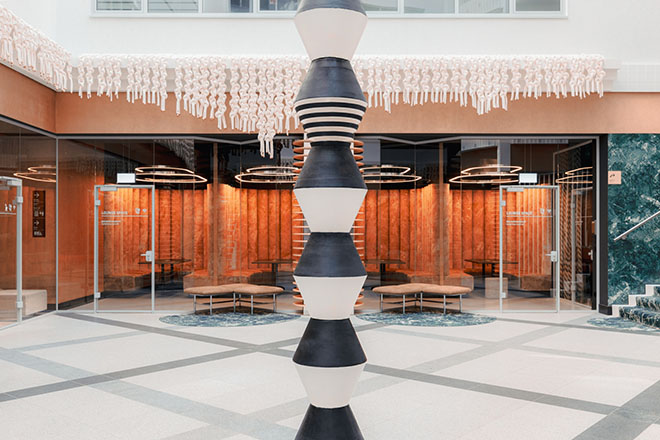
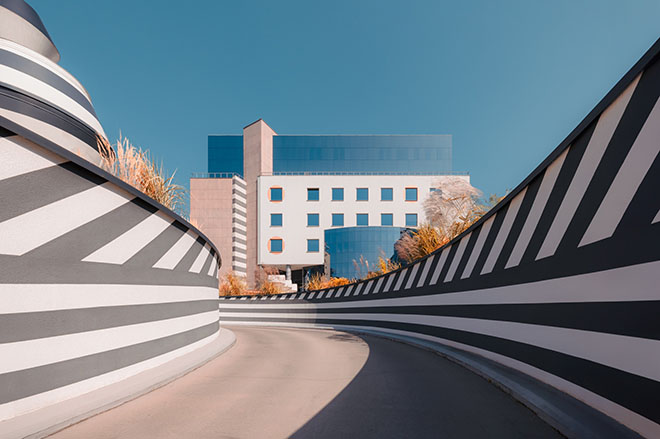
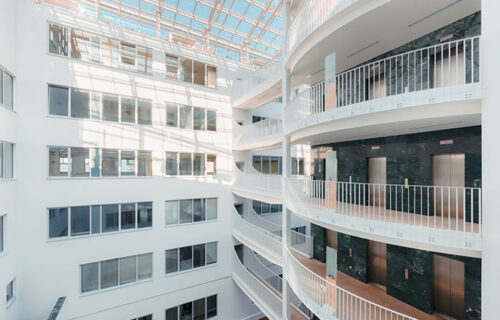
The lease is also significant for HOP’s repositioning as a modern workplace within an existing Warsaw office building. Rather than replacing the original 1990s property, owner Syrena Real Estate has modernised it and introduced new workplace, public and cultural functions.
The National Heritage Institute is responsible for supporting the protection and conservation of Poland’s historic environment, developing standards and increasing public understanding of cultural heritage. Its choice of a refurbished building is particularly notable given the organisation’s own focus on preserving and adapting existing assets.
“The new headquarters provides us with the conditions to further develop the Institute and fulfil its mission. HOP offers a space that meets the needs of our team, whilst its location in the centre of Warsaw makes it easily accessible to both staff and those collaborating with the NID,” said Michał Krasucki, acting director of the National Heritage Institute.
Krasucki also pointed to HOP’s architectural character and the way the existing building has been reinterpreted as factors supporting the choice of location.
Colliers represented the National Heritage Institute during the leasing process, while Reesco is carrying out the fit-out of the new headquarters.
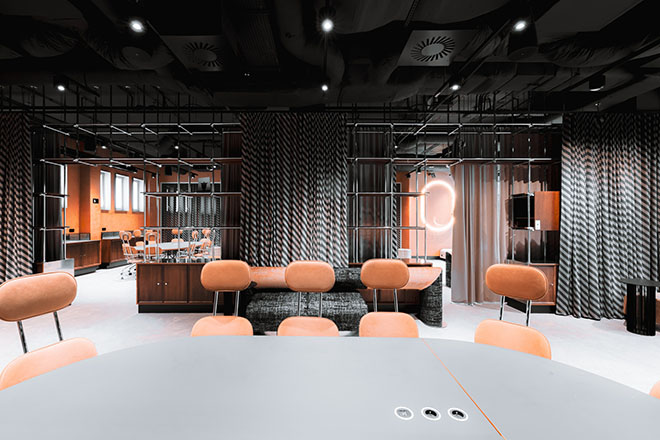
HOP provides more than 14,000 sqm of leasable space across six above-ground floors. Its repositioning has included approximately 1,000 sqm of coworking and conference facilities on the ground floor and the creation of a publicly accessible landscaped square of around 600 sqm in front of the property.
The refurbishment has also introduced cycling facilities and electric vehicle charging infrastructure. Part of the building has been allocated to an artist-in-residence programme, while other areas are used for exhibitions and events connected with architecture, culture and art. Anna Łoskiewicz of Łoskiewicz Studio was responsible for the property’s new architectural concept.
The building has a 94-space underground car park and holds BREEAM In-Use Excellent, WELL Health & Safety and Barrier-Free Facility certifications.
Its tenant base combines public institutions and private companies. Alongside the National Heritage Institute and Chief Inspectorate for Environmental Protection, occupiers include Aplikacje Krytyczne, YOPE, BNP Paribas Bank Polska, ERM Polska, Evergreen and Żabka. Syrena Real Estate also maintains its headquarters in the building.
Reaching 98% occupancy provides an interesting example of the potential for older Warsaw offices to remain competitive following substantial repositioning. Across mature European office markets, ageing buildings increasingly face pressure from occupiers seeking better environmental performance, employee amenities and more efficient space. For owners, this is creating a widening distinction between older properties that receive sufficient investment and those that risk losing relevance.
HOP demonstrates one route available to landlords: retaining and adapting an existing structure while upgrading its functionality and broadening the uses available within and around the building.
The arrival of another state institution adds a further dimension. Public-sector organisations can represent an important source of relatively substantial office requirements, particularly for centrally located properties with strong public transport accessibility. HOP’s ability to attract both institutional and private occupiers suggests that refurbished buildings can compete where location and modernisation compensate for their age.
At almost full occupancy, the property provides evidence that the future of Warsaw’s older office stock does not necessarily depend on demolition and replacement. Well-located buildings capable of being substantially modernised can find renewed demand, potentially extending their economic life while offering an alternative to new development in an increasingly selective office market.