Tuesday, 17 November 2026
Panattoni recorded almost 1.15 million sqm of industrial and warehouse leasing transactions in Poland during the first nine months of 2026, while the amount of unoccupied space in its completed buildings declined during the third quarter. The figures suggest that demand for logistics accommodation remains active, although a significant proportion of transactions involved existing tenants extending their leases rather than taking additional space.
Between July and September, the developer concluded agreements covering 338,199 sqm, including 120,853 sqm of lease renewals. These extensions accounted for approximately 36% of the quarterly total, leaving around 217,300 sqm associated with other leasing transactions. Across the first nine months of the year, Panattoni reported 1,149,676 sqm of transactions, including 295,846 sqm of renewals. Excluding these extensions, leasing activity amounted to approximately 854,000 sqm. The distinction is relevant because renewed agreements maintain occupancy but do not necessarily indicate an increase in the amount of space used by businesses.
Leasing was concentrated in several established industrial regions. Silesia accounted for more than 108,000 sqm during the third quarter, followed by Mazovia with almost 75,000 sqm and Lubuskie with approximately 41,000 sqm. Together, the three regions represented around 66% of the developer’s quarterly transactions. Their prominence reflects the importance of established manufacturing centres, access to major transport corridors and proximity to domestic and international distribution networks, although the figures do not identify the individual factors behind each agreement.
The amount of vacant accommodation in Panattoni’s completed properties decreased from almost 586,000 sqm at the end of June to approximately 452,000 sqm at the end of September. This represented a reduction of more than 134,000 sqm over three months, equivalent to nearly 23% of the previously available space. The proportion of vacant floor area consequently declined from 3.52% to 2.68%, despite continued growth in the company’s completed portfolio.
The reduction was particularly noticeable in southern Poland. In Silesia, vacant accommodation fell from approximately 148,000 sqm to less than 61,000 sqm, while Lower Silesia recorded a decline from more than 122,000 sqm to below 54,000 sqm. These changes indicate that a larger proportion of the developer’s existing buildings was occupied at the end of September. However, the figures describe Panattoni’s own properties and should not be interpreted as vacancy rates for the wider regional warehouse markets.
Marek Dobrzycki, Partner at Panattoni, attributed the reduction in available space to continued tenant activity. He noted that occupancy had improved during the quarter even as the company increased its stock of completed buildings. His assessment suggests that demand has remained sufficient to absorb part of the accommodation available within the portfolio, although the extent of new demand cannot be determined from leasing volumes alone.
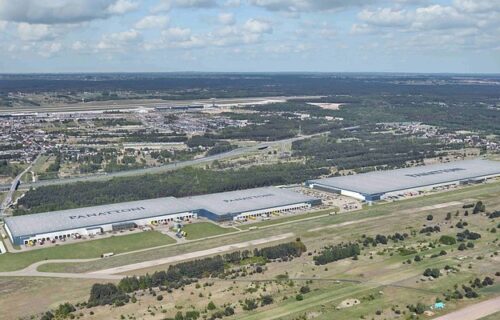
Panattoni’s completed industrial and logistics properties in Poland reached approximately 16.8 million sqm at the end of September, compared with 16.1 million sqm at the beginning of 2026. The company estimates that this represents more than 40% of the country’s industrial and logistics property stock. A further 650,653 sqm was being developed at the end of the third quarter, with the largest concentrations of construction activity in the Łódź and Silesian regions.
The projects under development include a distribution centre for Media Expert in Łódź, facilities at Panattoni Park Bytom and a building for Nagel-Group at Panattoni Park Poznań East III. These investments reflect continuing requirements from retailers, distribution companies and specialist logistics operators. However, the developer has not specified what proportion of its construction pipeline is already committed to tenants, making it difficult to assess how much additional vacant accommodation could enter the market upon completion.
The expansion of industrial property stock is taking place against a changing economic background. Businesses are reviewing supply chains, transport costs and the location of manufacturing and distribution operations. Poland’s position within European road and logistics networks remains relevant to these decisions, particularly for companies serving several markets from a single distribution location. Nevertheless, demand varies between regions and individual facilities, depending on transport access, labour availability, operating costs and the requirements of occupiers.
The continued development of warehouse facilities also raises questions about the balance between construction activity and the amount of space businesses require. A reduction in vacancy within an individual developer’s portfolio is a positive occupancy indicator, but it does not necessarily mean that the wider market is experiencing the same conditions. Differences in building age, location, specifications and lease terms can produce substantial variations in performance between property owners.
The proportion of renewals within Panattoni’s leasing figures is another consideration. During the third quarter, more than one-third of the contracted space involved existing agreements being extended. Such transactions can indicate that occupiers are maintaining their operations at established locations, but they should be distinguished from new lettings when assessing whether companies are expanding their physical requirements.
The company’s results nevertheless indicate that a substantial amount of previously available accommodation was occupied during the quarter, while additional facilities continued to be completed. This combination suggests that leasing activity has supported the expansion of Panattoni’s Polish portfolio without producing a corresponding increase in its reported vacancy rate.
For Poland’s industrial property market, the coming quarters will provide a clearer indication of whether these conditions can be sustained. The amount of new construction reaching completion, the proportion secured by tenants in advance and the performance of individual regional markets will be important in determining whether vacancy continues to decline or begins to rise as further space becomes available.