Saturday, 4 April 2026
The OECD Science, Technology and Innovation (STI) Outlook 2025 warns that governments must fundamentally reform their science and innovation systems to remain effective in a world of accelerating technological change, geopolitical competition, and rising economic insecurity.
The report, Driving Change in a Shifting Landscape, argues that current policy frameworks are struggling to keep pace with rapid advances in artificial intelligence, biotechnology, and quantum computing, as well as new global power dynamics affecting research cooperation and knowledge exchange.
According to the OECD, public R&D funding in the OECD area fell by 1.9% in 2024, exposing the limits of existing approaches. Policymakers are urged to leverage “policy complementarities” by aligning investments in competitiveness, sustainability, and resilience, rather than pursuing fragmented agendas.
“Science and innovation policy is at a turning point,” the Outlook states. “The ability of governments to mobilise science, technology and innovation for transformative change—while navigating geopolitical pressures and technological shifts—will be decisive in shaping the future.”
The 2025 report outlines seven areas for reform. These include strengthening links between science and non-science policy fields, expanding participation in innovation beyond leading firms and regions, and mobilising public funds to attract private finance through blended mechanisms. The OECD also calls for “mission-oriented” approaches to channel innovation toward long-term societal goals such as energy transition and health resilience.
A key theme is the reconfiguration of global scientific cooperation. With mounting geopolitical tensions and strategic competition in emerging technologies, governments are introducing research security measures to protect sensitive data and intellectual property. The OECD cautions, however, that these must be “proportionate, precise, and shaped in partnership with scientists and businesses” to avoid undermining collaboration or research quality.
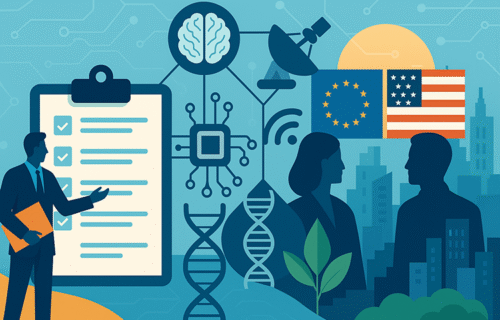
Another focus is technology convergence, particularly the integration of AI with fields such as synthetic biology, neurotechnology, quantum computing, and satellite-based earth observation. The OECD notes that this convergence is generating breakthroughs—from AI-driven protein design to advanced biosensors—but also creating new regulatory and ethical challenges.
The report proposes the creation of “convergence spaces”—institutions and programmes designed to foster interdisciplinary collaboration, ethical governance, and responsible technology deployment.
Governments are also encouraged to adopt ecosystem-based industrial policies that support innovation clusters and enhance strategic intelligence to remain agile amid uncertainty.
The OECD concludes that future prosperity and resilience will depend on how effectively nations align their innovation policies with social priorities, coordinate across sectors, and anticipate risks from disruptive technologies.
“Transformative change will require mobilising science and innovation at an unprecedented scale and speed,” the report notes. “Governments that act decisively now will be better positioned to steer these shifts toward inclusive and sustainable outcomes.”
(Source: OECD Science, Technology and Innovation Outlook 2025, Paris)