Saturday, 4 April 2026
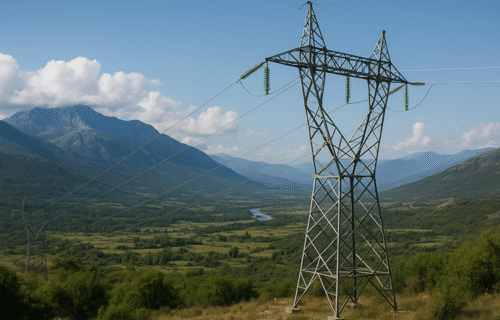
Montenegro’s electricity transmission operator, Crnogorski Elektroprenosni Sistem (CGES), is preparing a significant upgrade to one of the Balkans’ most important power corridors. The project aims to double the capacity of the 220 kV line that connects Bosnia and Herzegovina, Montenegro and Albania — a move expected to strengthen regional energy cooperation and support the growing share of renewable energy in the Western Balkans.
The initiative focuses on modernising the line running from Trebinje through the Perućica hydropower plant and Podgorica to the border with Albania. By replacing aging components with new high-performance conductors, the corridor’s transmission capacity could rise from around 300 MW to as much as 600 MW. This would enable greater cross-border electricity flows and reduce energy losses, improving efficiency across the regional grid.
To support the investment, the European Bank for Reconstruction and Development (EBRD) is considering a sovereign-guaranteed loan of up to €15 million to CGES. The total project cost is estimated at about €17 million. The Bank’s involvement would fill a funding gap in Montenegro’s financial market and provide technical cooperation aimed at improving CGES’s governance and readiness for closer market integration with neighbouring countries.
Beyond expanding capacity, the project is designed to help Montenegro connect more renewable energy sources to its grid — particularly hydropower, wind and solar installations currently in development. The upgrade is also expected to reduce CO₂ emissions through lower transmission losses and more stable operations.
CGES operates Montenegro’s high-voltage network of over 1,500 kilometres of transmission lines and maintains vital connections with neighbouring systems in Serbia, Kosovo, Bosnia and Herzegovina, Albania and Italy. Its undersea cable link to Italy remains one of the country’s key strategic assets, reinforcing Montenegro’s position as a regional energy hub.
The planned improvements to the Bosnia–Montenegro–Albania corridor align with the region’s broader goals of energy market integration and EU alignment. Once complete, the upgraded link will enhance the reliability of Montenegro’s power network and provide a more resilient backbone for renewable generation across the Western Balkans.
Source: Deloitte