Saturday, 4 April 2026
Across real estate, law, advisory and research, women are building senior careers in environments that still demand resilience, clarity and self-belief. What emerges from conversations with female leaders is not a single formula for success, but a set of grounded principles shaped by experience rather than theory. Their stories offer practical inspiration for women navigating leadership paths today.
Confidence is built through competence, not comparison
For Luciana Giurea-Rosca, Head of Residential at AFI Europe Romania, confidence was not innate. “Confidence hasn’t always come naturally to me-it’s something I’ve struggled with my whole life,” she says. What made the difference was being encouraged to contribute without fear of being wrong. “Not knowing everything doesn’t make you inexperienced-it gives you a fresh perspective.”
Her advice to younger women is clear: stop waiting for permission, stop apologising before speaking, and don’t try to imitate anyone else. “You just need to act like yourself-confidently, fully, unapologetically.”
A similar message comes from Clare Sheils, Head of Valuation & Advisory Services Continental Europe at CBRE. She describes confidence as something that followed action, not preparation. “Don’t wait until you feel 100% ready. Start before you’re ready,” she advises.
Preparation matters more than visibility
For Sue Yoakum, Founding Partner at Yoakum Law, whose career spans both architecture and law, leadership credibility comes from deep technical understanding rather than positioning. Having worked for almost a decade as an architect before focusing on law, she explains that construction and engineering “have their own language,” and speaking it allows her to quickly understand clients’ challenges, whether a project is large or small.
That dual expertise has been particularly valuable in male-dominated environments. “I never focused on the reality that often I was the only woman in the room,” Yoakum says. Instead, her priority was preparation. “As a professional, we have to be prepared… it is very beneficial to know the issues and be fully prepared.”
Her approach reframes gender imbalance as a practical challenge rather than an obstacle, placing emphasis on substance, not perception.
Leadership is shaped by listening, tone and restraint
Many of the women interviewed highlight that authority is not about dominance.
Joanna Iwanowska-Nielsen, an accredited executive mentor, describes a turning point in her leadership journey as learning not to rush to answers. Listening first, asking questions and then speaking, she says, is the basis of effective communication.
For Katarína Žoldák Kupcová, Partner and Co-Founder of HERRYS, authenticity and emotional intelligence are central. “The way people feel during and after meeting with you is very important,” she notes, pointing to tone, energy and body language as leadership tools.
Mentorship is not a requirement-but generosity is
Not every leader followed a mentored path. “You might find it hard to believe but I never had a mentor,” Yoakum says. “I made my own way.” When it comes to supporting others, she does not differentiate between women and men, but recognises that some clients need more time and reassurance. “I generously answer their questions until they feel prepared.”
Giurea-Rosca sees mentorship less as guidance and more as space. “It’s creating space to try, to stumble, to ask questions, and to rise again,” she says, emphasising belonging and visibility.
Integration, not balance, sustains leadership over time
The idea of perfect work-life balance is widely rejected.
Yoakum describes her profession as “walking through a minefield on a daily basis,” where vigilance and care are essential to making it to the end of the day. Her advice is simple and unsentimental: love what you do, because “you are going to hate it sometimes.” The mindset she considers essential is openness, communication and care-combined with being yourself.
Others echo this realism. Leadership, they argue, does not require burnout to be valid, but it does require awareness and adaptability.
The wider picture
These personal experiences sit within a broader European context where women remain underrepresented at the highest levels of decision-making. Data discussed in Eurostat’s Women in Research and Innovation podcast shows persistent gaps in senior roles, innovation output and pay, reinforcing why visible, grounded leadership examples continue to matter.
A shared conclusion
Despite different sectors, countries and career paths, the message from these women is consistent: leadership is not about fitting a mould.
Be prepared. Listen carefully. Speak with clarity. Don’t wait for permission. And above all, as Yoakum puts it succinctly: “Be yourself.”
For women looking for inspiration, these voices offer something rare-honest guidance shaped by experience, not abstraction, and proof that leadership can be built without losing authenticity.
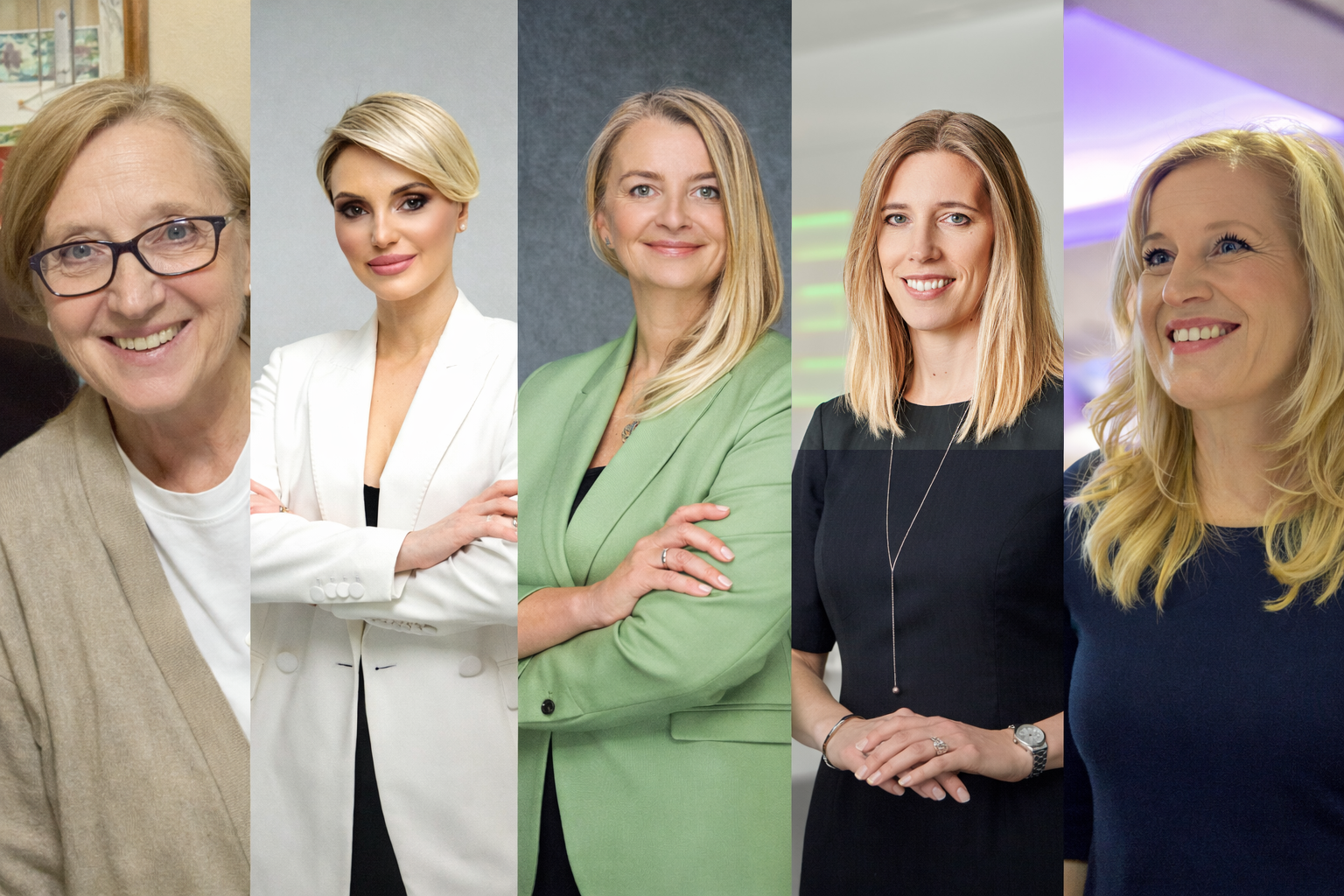
Photo Left to Right: Sue Yoakum, Founding Partner at Yoakum Law, Luciana Giurea-Rosca, Head of Residential at AFI Europe Romania, Joanna Iwanowska-Nielsen, an accredited executive mentor & coach, Clare Sheils, Head of Valuation & Advisory Services Continental Europe at CBRE and Katarína Žoldák Kupcová, Partner and Co-Founder of HERRYS.
© 2026 cij.world