Saturday, 4 April 2026
The office market in the Tri-City area closed 2025 with a total supply exceeding one million square metres of modern workspace. Despite the absence of newly delivered projects during the year, overall leasing activity held steady at just under 114,000 square metres. This balance between demand and limited additions to supply contributed to a gradual decline in the regional vacancy level, which settled below 12 percent by year-end.
Within the metropolitan area, Gdańsk further consolidated its role as the primary business hub. The city now represents roughly three-quarters of the region’s total office resources and accounted for the vast majority of leasing transactions over the past year. The contrast in availability between cities has become increasingly visible: while unoccupied space expanded noticeably in Gdynia, Gdańsk recorded a continued reduction, pushing its vacancy figure into single digits.
Leasing patterns during the year revealed a near-equal division between companies extending existing agreements and those signing fresh contracts. Renewals typically involved larger floorplates, while newcomers more often selected compact office modules. Demand came from a diverse range of industries, with logistics, finance and manufacturing firms among the most active participants in the market.
“We are seeing a clear change in the strategy of tenants, who are focusing on optimisation and quality rather than quantitative expansion. Companies are increasingly choosing smaller but better-designed offices in buildings with high technological standards,” comments Piotr Skuza, Associate Director in the office space department at Savills.
Rental levels for top-quality office space remained broadly unchanged, holding within the mid-teens euro range per square metre per month. Developers, however, have adopted a cautious stance as higher construction costs and shifting occupier preferences influence new investment decisions. The volume of space currently under development is limited and concentrated entirely in Gdańsk, with many future schemes dependent on securing tenants before construction begins.
Looking ahead, large-scale energy and offshore infrastructure projects planned for northern Poland could generate additional demand for modern office environments, particularly those with strong transport connections. With little new supply entering the pipeline, the most attractive and flexible office acknowledging modules in Gdańsk may become increasingly scarce if these sectors expand as anticipated.
Source: Savills
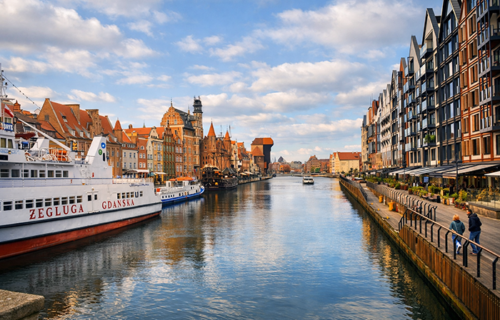
Photo: Gdańsk-© 2026 cij.world