Wednesday, 18 November 2026
British Land reported higher profits and rental income during the six months to 30 September 2026, supported by leasing activity across its London office campuses and retail properties. The UK-listed property company also raised its earnings forecast for the financial year ending March 2027, citing continued occupier demand and limited availability of suitable commercial space in its principal markets.
Underlying profit increased by 7% to £166 million, compared with £155 million in the corresponding period last year. Underlying earnings per share rose by 5% to 16.1 pence, while IFRS profit after tax increased from £218 million to £274 million. The company announced an interim dividend of 12.88 pence per share, representing a 5% annual increase.
One of the principal contributors to performance was rental income. Like-for-like net rental growth reached 12% across the portfolio, with the campus business recording growth of 25%, excluding the Storey flexible workspace operation. Retail and London urban logistics properties recorded growth of 2%.
Leasing activity remained substantial during the reporting period. British Land completed transactions covering 1.4 million sq ft, with agreed rents averaging 7.9% above previous passing rents and 10.4% above estimated rental values. A further 1.1 million sq ft was under offer at rents averaging 11.6% above estimated rental values.
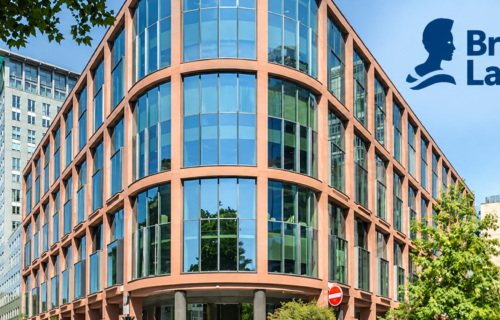
The company’s London campuses accounted for 689,000 sq ft of completed leasing, with rents averaging 14.8% above estimated rental values. Another 396,000 sq ft was under offer at the reporting date, while a further 109,000 sq ft was leased or placed under offer during the following six weeks.
Across retail and London urban logistics, completed leasing amounted to 739,000 sq ft, with rents averaging 7.3% above estimated rental values. An additional 674,000 sq ft was under offer. Retail park leasing transactions were agreed at rents averaging 9.6% above previous passing levels.
Portfolio occupancy stood at 96.4%, excluding developments completed during the previous 12 months. Occupancy reached 95.2% across the campus portfolio and 97.8% across retail and London urban logistics assets.
British Land’s proportionally consolidated property portfolio was valued at approximately £10.47 billion at the end of September, compared with £10.06 billion at the end of March. On a comparable valuation basis, property values increased by 1.5% during the six-month period, with campus assets rising by 1.6% and retail and London urban logistics properties increasing by 1.2%.
Estimated rental values grew by 3% across the portfolio, including 3.9% growth in campuses and 2% in retail and London urban logistics. Retail parks recorded estimated rental value growth of 2.7%. The portfolio’s net equivalent yield increased marginally by three basis points to 6.1%.
The company also reported £765 million of capital activity during the period, including £247 million of property disposals at a net initial yield of 4.7%, broadly consistent with their carrying values. A further £328 million of disposals had been exchanged or were under offer, including agreements reached after the reporting period.
Investment activity included the £30 million acquisition of Telford Bridge Retail Park at a topped-up net initial yield of 8.3%, alongside the completion of the Life Science REIT acquisition in April 2026. British Land is also progressing a committed development pipeline of 1.7 million sq ft, with an emphasis on limiting capital exposure.
The company’s loan-to-value ratio stood at 39.6%, compared with 39.2% at the end of March. Group net debt to EBITDA declined from 7.7 times to 7.0 times. British Land completed £2.9 billion of financing activity and reported £2 billion in available cash and undrawn facilities, with no refinancing requirement until 2030.
Jo McNamara, who recently became Chief Executive, said the financial results reflected higher rental income, investment transactions and expenditure management. She also pointed to occupier demand and constrained supply as factors supporting rental growth in the company’s principal markets.
Following the first-half results, British Land increased its full-year underlying earnings per share guidance to 31.0 pence, equivalent to expected annual growth of 7%. The company maintained its medium-term expectation of annual underlying earnings growth of between 3% and 6%.
The results indicate that rental growth, particularly within London’s office campus market, remains an important contributor to British Land’s earnings. However, the company’s longer-term performance will continue to depend on occupier demand, leasing conditions, financing costs and the execution of its investment and development programme.