Friday, 27 November 2026
Location remains one of the most influential factors in residential property development, but its definition is changing. Proximity to city centres, prestigious neighbourhoods and major roads is increasingly being assessed alongside public transport accessibility, employment opportunities, educational facilities, healthcare, retail services and recreational infrastructure. Developers are also placing greater emphasis on walkability and the integration of everyday services within residential communities.
These considerations are reflected in the twenty nominations for Best Location & Connectivity Residential Project in Development at the CIJ Awards Romania 2026. The category brings together developments across Bucharest, its metropolitan surroundings and Timișoara, representing different approaches to urban integration, suburban living, mixed-use planning and residential accessibility.
Abito Pipera by Pipera Plaza Residential Park benefits from proximity to established commercial and service infrastructure in northern Bucharest. According to the nomination, residents can reach Pipera Plaza, supermarkets, restaurants, cafés and public transport within a five-to-ten-minute walk. Major employment centres, healthcare facilities, kindergartens and recreational destinations are accessible within approximately ten to fifteen minutes by car. The development’s location supports everyday convenience, although access to several important destinations remains dependent on road transport.
AFI Home North – Building B by AFI Romania represents a residential rental development positioned within one of Bucharest’s principal employment districts. Located on Dimitrie Pompeiu Boulevard, the third phase of the build-to-rent project benefits from walking access to Pipera and Aurel Vlaicu metro stations, with tram services approximately three minutes away. Proximity to major corporate headquarters, Promenada Mall, Herăstrău Park and the Floreasca and Dorobanți neighbourhoods supports its appeal to professionals seeking shorter commuting distances. The introduction of coworking facilities in an earlier phase further demonstrates the relationship between residential accommodation and changing working practices.
Amber Forest by Alesonor approaches connectivity through the creation of a self-contained suburban community in Tunari. The 31-hectare development comprises 690 residential units and follows the principles of the 15-minute city, integrating homes with educational, commercial, healthcare, sporting and recreational infrastructure. Amber Forest Agora is planned to provide approximately 7,000 sqm of retail and services, while Verita Amber Campus opened in August 2026. With more than 300 families already living within the development, the project demonstrates how internal pedestrian and cycling networks can reduce the need for certain daily journeys. Further healthcare, sporting and commercial facilities remain under development, with the wider community scheduled to continue expanding through 2028.
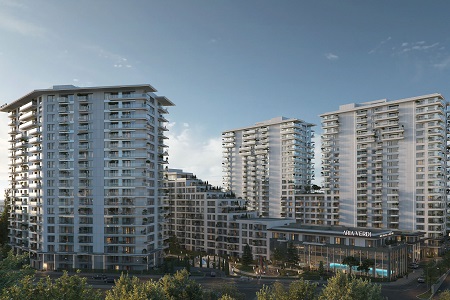
Aria Verdi by Impact Developer & Contractor places particular emphasis on the relationship between residential living, nature and everyday accessibility. Its proximity to three parks provides opportunities for outdoor recreation, while a planned mixed-use component will accommodate retail, professional services and wellness facilities. The development seeks to reduce the distance between residential accommodation and routine activities by introducing additional functions within the neighbourhood. Although the nomination establishes a clear relationship between location and resident wellbeing, it provides limited information on specific public transport connections and commuting distances.
Art Property Mântuleasa by Art Property represents a smaller-scale residential development within one of Bucharest’s historic neighbourhoods. Comprising 52 apartments and two townhouses, the project is scheduled for completion in March 2027. Its central location provides a connection to the established urban fabric and cultural identity of the capital. The development incorporates 67 underground parking spaces, 17 electric vehicle charging stations and more than 1,069 sqm of landscaped areas. Its nomination focuses primarily on architectural integration, heritage and residential quality, although more detailed information concerning public transport and pedestrian accessibility would strengthen its assessment within this category.
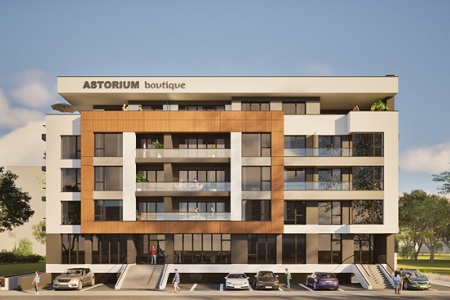
Boutique by Astorium is a low-rise development comprising 41 apartments in Bucharest’s Theodor Pallady district. Its location benefits from proximity to Nicolae Teclu metro station, approximately 900 metres away, alongside healthcare facilities, schools and major retail destinations. Pallady Medical Clinic is located approximately 400 metres from the project, while Regina Maria Medical Campus is around 800 metres away. The development also separates pedestrian and vehicle circulation within its site. Scheduled for completion in November 2027, Boutique by Astorium illustrates how smaller residential projects can benefit from established infrastructure without requiring extensive commercial facilities of their own.
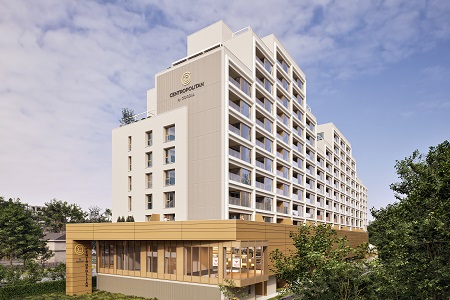
Centropolitan by Cordia Romania adopts the principles of the 10-minute city through its location adjacent to Alba Iulia Square and Bucharest Mall. The development comprises 274 residences alongside integrated retail and community facilities. Its position within an established urban district provides access to commercial destinations, educational institutions, workplaces, entertainment and public transport. Connections to major boulevards further support movement across Bucharest. Rather than depending on the creation of an entirely new neighbourhood, Centropolitan builds upon existing commercial, social and transport infrastructure, demonstrating the advantages of residential development within a mature urban environment.
City of Mara Forum by Alber Holding brings together residential, commercial, hospitality and community functions within a mixed-use development covering approximately 1.5 hectares in Timișoara. Its first phase comprises 203 residential units, 191 underground parking spaces and approximately 4,600 sqm of commercial and service accommodation. The planned retail mix includes healthcare, financial services, supermarkets, restaurants and other everyday facilities. A semi-public pedestrian plaza and the integration of a Hampton by Hilton hotel introduce additional functions to the development. City of Mara Forum demonstrates how mixed-use planning can create connections between residents, businesses and the surrounding urban community.
Cloud9 Evolution Phase II by Alfa Group Real Estate Division is located within northern Bucharest’s Aviației–Pipera business corridor. Its position provides access to major employment centres, Aurel Vlaicu and Pipera metro stations, while Promenada Mall is approximately 15 minutes away on foot. The second phase will comprise 536 apartments within a wider masterplan of 1,148 residential units. Internal pedestrian routes are designed to connect homes with educational facilities, commercial spaces, sporting infrastructure and landscaped areas. Scheduled for completion in the first quarter of 2028, Phase II extends a development strategy that combines metropolitan transport connections with the provision of everyday services within the project.
INFINITY NORD by REDPORT is contributing to the expansion of residential development in the Străulești–Dămăroaia area, adjacent to Petrom City. The project covers more than 4.6 hectares and is expected to deliver approximately 1,200 homes across three phases. Its first phase comprises 213 apartments and approximately 4,652 sqm of commercial and service accommodation. Proximity to major roads, metro infrastructure, schools and green spaces supports its external connectivity, while commercial partnerships involving Auchan and World Class are intended to strengthen local access to retail and wellness facilities. The development reflects the emergence of additional residential and mixed-use destinations beyond northern Bucharest’s established Aviației and Pipera districts.
Lakeside11 by RRG Real Estate Group combines a waterfront location on Lake Străulești with access to Bucharest’s metropolitan transport network. Situated on Șoseaua București-Târgoviște, the project is approximately seven minutes on foot from Străulești metro station and its multimodal transport hub. Supermarkets and shopping facilities are reportedly accessible within five to seven minutes on foot, while road connections provide access to Bucharest’s Ring Road and northern districts. The surrounding area also offers educational and sporting facilities, alongside recreational opportunities in nearby Mogoșoaia. Its location demonstrates how natural surroundings can be combined with established public transport infrastructure.
Nusco City by NUSCO represents a large-scale urban regeneration development within Bucharest’s Aviației business district. Located within walking distance of Aurel Vlaicu and Pipera metro stations and Promenada Mall, the project benefits from proximity to one of the capital’s principal employment centres. The wider masterplan covers approximately 23 hectares and is expected to accommodate more than 4,000 apartments, alongside educational, healthcare, hospitality, office and commercial facilities. According to the developer, nearly 1,000 families already occupy the first phase, while subsequent phases are progressing. The integration of additional services and landscaped areas is intended to establish a more comprehensive urban district rather than a predominantly residential development.
Pajurei 3 Residence Club by InteRo Property Development comprises 160 apartments across two development phases. Its approach concentrates on internal residential convenience through communal facilities, including a swimming pool, fitness centre, outdoor cinema, event spaces, landscaped areas and children’s recreational facilities. These amenities are designed to bring leisure and social activities closer to residents’ homes. The project has also obtained Interim BREEAM Excellent certification. However, the nomination provides relatively little information concerning external transport connections, employment centres or access to surrounding educational and commercial infrastructure, limiting a broader assessment of its urban connectivity.
Palladyo by Mulberry Invest benefits from direct access to established public transport infrastructure on Theodor Pallady Boulevard in Bucharest. Tram and bus stops are located immediately outside the development, while 1 Decembrie 1918 metro station is approximately seven minutes away on foot. The project comprises 130 apartments and two commercial units, with nearby schools, shops, Titan Sports Complex and Teilor Park supporting everyday accessibility. Palladyo represents a residential development whose connectivity is based primarily on existing transport and neighbourhood infrastructure rather than extensive internal amenities or future municipal investment.
PALTIM by SPEEDWELL combines central urban accessibility with the regeneration of a former industrial site along the Bega River in Timișoara. The development comprises 344 apartments and more than 2,500 sqm of planned retail and service accommodation. Its location provides access to the city centre, employment districts, educational institutions and established public transport connections. The surrounding riverfront also supports walking, cycling and outdoor recreation. Planned healthcare, fitness, hospitality and professional services will further strengthen the project’s internal accessibility. PALTIM demonstrates how brownfield regeneration can introduce new residential functions into an established urban environment while benefiting from existing city infrastructure.
PRIMA Solis by Prima Development is positioned on Șoseaua Pantelimon in eastern Bucharest, providing access to established transport, educational, healthcare and commercial infrastructure. According to the nomination, bus services are accessible within approximately three minutes and tram services within seven minutes. The development also benefits from proximity to Fundeni Lake and IOR Park. Approximately 1,600 apartments are planned across seven development phases, complemented by around 2,500 sqm of retail accommodation and 100 electric vehicle charging stations. With the first phase scheduled for completion in summer 2027, PRIMA Solis combines existing neighbourhood infrastructure with the planned creation of a substantial residential community.
QUEENS District by SPEEDWELL is located on Pipera Road within Bucharest’s established Aviației business district, within walking distance of Aurel Vlaicu metro station and close to the Barbu Văcărescu–Floreasca commercial corridor. The €113 million mixed-use development combines 237 apartments, approximately 22,500 sqm of Class A office accommodation and 2,500 sqm of retail and services. Its pedestrian-oriented masterplan and underground parking arrangements are intended to support movement between the project’s different functions. The development benefits from existing employment and transport infrastructure while introducing additional residential and commercial activity into an established business district.
Sema Home by Sema Real Estate forms part of the regeneration of the former Semănătoarea industrial platform in central-western Bucharest. The first residential phase represents an investment of approximately €55 million and comprises 301 apartments within the wider 41-hectare Sema Parc masterplan. Immediate proximity to Petrache Poenaru metro station, alongside bus and tram connections, provides access to the capital’s transport network. The surrounding district accommodates major universities, corporate headquarters, healthcare facilities, supermarkets and recreational destinations. Its position along the Dâmbovița River also provides access to nearby green and cultural spaces. Sema Home illustrates how residential development can benefit from the infrastructure of an already functioning mixed-use district.
SkyLight Residence by InteRo Property Development represents one of the largest mixed-use developments nominated in this year’s category. Located in Bucharest’s Obor district, the project is planned to accommodate more than 2,200 apartments, 115,000 sqm of office accommodation and 8,540 sqm of commercial space. Its position adjacent to Veranda Mall and opposite Piața Obor provides access to established retail infrastructure, while tram services are located less than 100 metres away and Obor metro station approximately 800 metres away. Planned educational, recreational and working facilities support the development’s 15-minute city concept. Its scale also raises important considerations concerning future traffic generation, pedestrian accessibility and the integration of new infrastructure into the surrounding neighbourhood.
THE IVY by SPEEDWELL combines proximity to Băneasa Forest with access to northern Bucharest’s commercial, educational and employment destinations. Located on Jandarmeriei Street, the development comprises more than 800 apartments across ten buildings, with landscaped communal areas and planned facilities including a kindergarten, fitness centre, restaurant and swimming pool. Existing road infrastructure connects the development to Băneasa Shopping City, international schools, healthcare facilities and business districts. The future Tokyo metro station could provide additional public transport accessibility, although this remains dependent on the delivery of planned transport infrastructure. The project’s existing residential community provides a foundation for the continued development of local services.
U-Home by Forte Partners completes the nominations with a centrally located residential development on Calea Șerban Vodă, between Tineretului Park and Carol Park. Its proximity to Tineretului metro station supports access to the wider city, while integration within the U•Center campus connects residents with an established employment destination. The surrounding mixed-use environment includes office accommodation, restaurants, cafés, everyday services and a 2,600 sqm Auchan supermarket. The nomination also highlights independent acoustic assessments addressing residential comfort within a busy urban location. U-Home demonstrates how residential development can be integrated into an existing commercial and employment environment while maintaining access to public transport and recreational infrastructure.
Taken together, the twenty nominations illustrate several distinct approaches to residential connectivity. Centrally located developments benefit from established urban infrastructure, while projects within major business districts seek to reduce commuting distances by bringing housing closer to employment. Larger suburban communities concentrate on creating their own educational, commercial and recreational facilities, while urban regeneration projects introduce residential functions into previously industrial or predominantly commercial areas.
The increasing adoption of the 10-minute and 15-minute city concepts reflects a shift towards measuring residential accessibility through the time required to reach essential destinations rather than simply geographical distance. However, the effectiveness of these concepts depends on the availability of services, the quality of pedestrian infrastructure and the reliability of public transport.
Metro accessibility is particularly prominent across the Bucharest nominations, demonstrating the importance of rapid public transport in a metropolitan environment where road congestion can affect daily commuting. Developments with existing transport connections have a different level of infrastructure certainty from those relying on future metro extensions or other planned improvements.
Mixed-use development is another defining characteristic of this year’s category. The integration of residential accommodation with offices, retail, education, healthcare and leisure facilities can reduce the need for longer journeys while supporting more active neighbourhoods. Nevertheless, the long-term effectiveness of these developments will depend on the delivery, occupancy and accessibility of their planned commercial and community infrastructure.
For the CIJ Awards Romania 2026 jury, the category presents an opportunity to assess location as more than a geographical or commercial advantage. Relevant considerations include existing public transport, pedestrian and cycling accessibility, proximity to employment and essential services, integration with surrounding neighbourhoods and the credibility of future infrastructure commitments.
Ultimately, the strongest residential locations are those that translate geographical positioning into practical, everyday benefits. As Romania’s urban areas continue to expand, the ability of residential developments to reduce unnecessary travel, improve accessibility and integrate effectively into the surrounding city will become increasingly important to their long-term residential and investment value.
The winner of the Best Location & Connectivity Residential Project in Development category will be announced at the CIJ Awards Romania 2026 Gala on 3 December at the Radisson Blu Hotel in Bucharest.