Wednesday, 28 October 2026
Germany’s economic outlook improved considerably in October 2026, with an indicator compiled by the German Institute for Economic Research (DIW Berlin) rising above its long-term benchmark for the first time since February. The institute’s economic barometer increased from 95.9 points in September to 101.5 points in October, suggesting that economic activity could strengthen during the final quarter of the year following a weak third quarter. The improvement was driven primarily by industrial production and construction activity, although conditions remain difficult for consumers and private investors.
The indicator’s return above 100 points suggests that the economy may be moving towards a period of stronger growth. However, the improvement remains concentrated in a relatively small number of sectors, particularly those benefiting from government expenditure. Private investment has yet to show a comparable recovery, while household spending continues to be affected by inflation and concerns about employment.
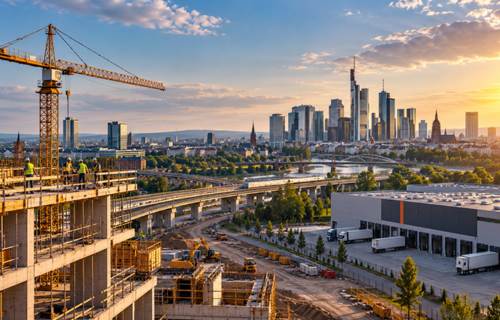
Construction was among the sectors contributing to the improvement in industrial output during August. Activity increased following a weaker period, while orders received by the main construction industry reached a record level, according to the institute. Large infrastructure projects were an important factor behind the increase, indicating that public investment is becoming a more significant source of demand for construction companies.
Manufacturing also showed signs of improvement after a substantial decline in July. Machinery production contributed to the recovery, while industrial order books continued to expand. New orders declined following an unusually large volume of contracts in the previous month, although demand remained broadly stable when major individual orders were excluded. Automotive production weakened again, with the timing of factory holidays identified as one possible contributing factor.
The improvement in industrial activity has implications for Germany’s industrial and logistics property markets, where manufacturing output and business investment influence demand for production facilities, warehouses and distribution accommodation. Nevertheless, stronger industrial production does not automatically translate into additional property requirements. Decisions about expanding facilities or taking new premises will continue to depend on companies’ financial circumstances, operating costs and expectations for future demand.
Energy prices remain a major concern for the economy. According to DIW Berlin, continuing disruption around the Strait of Hormuz has contributed to oil prices remaining above $100 per barrel, while European gas prices have reached their highest level since 2022 ahead of the winter. Higher energy expenditure has also contributed to renewed inflationary pressure, with Germany’s annual inflation rate exceeding 3% in September.
The institute reports that the European Central Bank increased interest rates in September in response to inflation, adding to financing pressures for businesses and property developers. Higher borrowing costs can affect the financial viability of construction projects, particularly where developers depend on external funding. Combined with elevated energy prices, these conditions may limit private sector investment even as publicly financed infrastructure activity increases.
Conditions in consumer-related services remain less favourable. Household confidence has weakened as rising prices reduce purchasing power and employment concerns persist. The number of unemployed people is approaching three million, while total employment has declined again. These developments suggest that businesses dependent on household expenditure may face continued difficulties, potentially affecting demand for retail premises and other consumer-oriented commercial property.
Business services could experience a more favourable environment if the improvement in manufacturing continues. However, the difference between industrial activity and consumer spending illustrates the uneven nature of the current recovery. Government spending on infrastructure and defence is supporting economic output, while private businesses and households remain cautious about committing additional expenditure.
The October indicator suggests that Germany could finish 2026 with stronger economic activity than recorded during the preceding quarter, but the durability of the improvement remains uncertain. For the property and construction sectors, public infrastructure investment is providing additional activity, while high financing costs, energy expenditure and weak private demand continue to influence development decisions. A broader recovery would require stronger investment from businesses and more stable household spending alongside the current increase in government-supported activity.