Wednesday, 28 October 2026
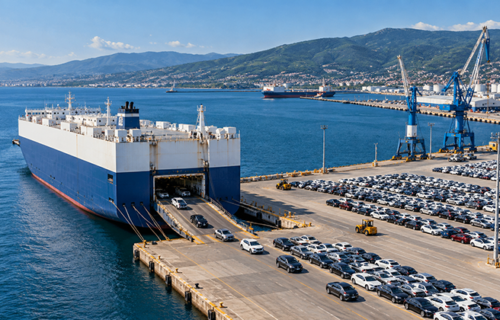
The European Bank for Reconstruction and Development (EBRD) is considering a loan of up to $30 million to support the expansion of Autoport, a vehicle-handling terminal in Türkiye’s Kocaeli province. The proposed financing forms part of an investment programme estimated at $157 million, aimed at increasing the port’s capacity to handle automotive shipments and other cargo. According to the bank’s project disclosure published on 28 October 2026, the financing remains under consideration, with an approval decision scheduled for 2 December 2026.
The terminal is located in Başiskele, on the eastern shore of the Sea of Marmara, within one of Türkiye’s principal manufacturing and logistics regions. Operated by Autoport Liman İşletmeleri A.Ş., a subsidiary of Arkas Holding, the facility handles vehicles transported by sea alongside other commercial shipments. Its position near industrial production centres makes the terminal part of the transport infrastructure supporting automotive manufacturing, imports and exports.
The planned investment would increase the terminal’s ability to accommodate vessels and provide additional space for cargo storage and handling. The works involve improvements to existing port infrastructure rather than the establishment of a separate facility. According to the EBRD, the investment is intended to address increasing demand for vehicle movements and other freight services in the eastern Marmara region, where industrial production and international trade generate substantial transport activity.
The proposed EBRD loan would account for approximately 19% of the estimated project expenditure. The remaining funding is expected to be provided through a combination of company resources and other financing arrangements. The bank’s disclosure also refers to the involvement of international financial institutions in reviewing environmental and social aspects of the development, although the final financing commitments and contractual terms have not been confirmed.
The project is relevant to Türkiye’s automotive industry, which depends on access to maritime transport for the movement of completed vehicles and imported components. Additional port capacity could improve the handling of vehicle shipments and provide greater flexibility for manufacturers, shipping companies and logistics operators. However, the EBRD has not disclosed the precise increase in annual vehicle throughput or the additional storage capacity expected from the development.
The expansion may also have implications for industrial property and logistics operations in Kocaeli and the surrounding Marmara region. Vehicle distribution requires storage areas, transport connections and supporting facilities, while other cargo movements generate demand for freight handling and warehousing services. Improvements to port infrastructure can influence how these activities are organised, although the project documentation does not provide estimates of additional industrial floor space or new property investment resulting from the expansion.
Environmental considerations form part of the financing assessment because the proposed works involve construction within a marine environment. The EBRD has identified potential effects associated with dredging, piling, underwater noise and construction-related traffic. The Sea of Marmara’s protected environmental status requires particular attention to marine conditions, including measures intended to limit disturbance to wildlife during construction.
The bank has classified the project as Environmental Category B, indicating that the identified risks are expected to be addressed through specific management and monitoring measures. Environmental and social assessments have included site inspections involving representatives of international financial institutions. The classification does not remove the need for regulatory compliance or ongoing supervision of construction activities, particularly where works could affect water quality and marine habitats.
The EBRD has not yet published a confirmed construction completion date, the final dimensions of the expanded facilities or the anticipated increase in cargo volumes. These details will be important in assessing the project’s operational impact and its potential contribution to regional logistics capacity. The immediate next stage is the bank’s financing decision, scheduled for December 2026, after which the final investment structure and implementation timetable may become clearer.