Friday, 23 October 2026
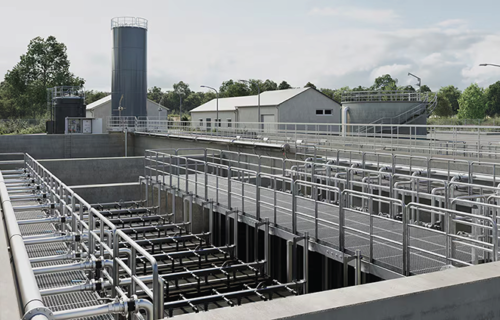
The Czech Republic faces substantial investment in sewage treatment facilities and urban drainage networks as new European Union requirements introduce stricter controls on wastewater pollution. Preliminary estimates attributed to the Czech Ministry of Agriculture suggest that implementing the revised legislation could require capital expenditure of between CZK 115.8 billion and CZK 176.1 billion over the coming decades. The changes will affect municipal water utilities, infrastructure operators and local authorities, while also increasing attention on how rainfall is managed in developed areas.
The revised Urban Wastewater Treatment Directive, which entered into force in January 2025, extends existing European requirements to additional settlements and introduces further obligations concerning pollution monitoring and treatment. Member states must incorporate the legislation into their national legal systems by 31 July 2027. Subsequent deadlines extend over several years, allowing authorities and operators to plan improvements according to the size of individual wastewater systems and the environmental conditions in which they operate.
One of the principal changes concerns the treatment of wastewater in smaller urban areas. By 2035, additional collection and treatment requirements will apply to settlements meeting the relevant population-equivalent thresholds. Larger urban areas will also need to prepare plans addressing pollution associated with rainfall entering drainage networks. The directive establishes a 2033 deadline for such plans in urban areas with at least 100,000 population equivalents, while certain smaller areas identified as presenting environmental risks will face later requirements. Other provisions, including advanced treatment intended to remove selected pollutants, will be introduced progressively through to 2045.
The financial consequences could be considerable for the Czech water sector. The preliminary investment range of CZK 115.8 billion to CZK 176.1 billion has been reported in connection with a draft government assessment, alongside estimated additional operating costs of CZK 5 billion to CZK 6.5 billion. These figures should be regarded as provisional until confirmed against the final government documentation. They do not represent an approved investment programme or establish how costs will be divided between public authorities, water companies, customers and other funding sources.
The management of rainfall is another issue facing Czech municipalities. At a meeting in Prague on 22 October, representatives of the water industry association SOVAK ČR and equipment manufacturer Wilo discussed the amount of rainwater that passes through urban areas without being collected for later use. SOVAK ČR estimates that more than 90% of rainfall is not subsequently utilised, although the organisation has not provided sufficient methodological information to establish how this proportion was calculated. Water that is not collected for reuse is not necessarily lost from the wider water system, as it may enter rivers, infiltrate the ground or return to the atmosphere.
Vilém Žák, director of SOVAK ČR, argued that municipalities should give greater consideration to retaining rainfall before periods of water scarcity occur. “We usually start talking intensely about water shortages when drought arrives,” he said. The association believes that changes to drainage infrastructure and greater use of collected rainfall could help reduce demand for treated drinking water. However, the economic and environmental benefits of individual projects will depend on local conditions, construction costs and the amount of water that can realistically be stored and used.
Urban drainage systems face particular difficulties where large areas are covered by roads, buildings and other surfaces that prevent water from entering the ground. Heavy rainfall can place considerable pressure on sewer networks, especially where surface runoff and domestic wastewater are carried through shared infrastructure. Underground storage facilities, planted drainage areas, permeable surfaces and vegetated roofs can reduce the volume or speed of water entering these systems. Rainwater collected in suitable tanks may also be used for irrigation, cleaning and certain building services, provided that appropriate technical and hygiene safeguards are maintained.
For the Czech construction and property sectors, the regulatory changes will influence infrastructure planning over an extended period rather than create an immediate obligation to replace every existing system. Wastewater operators will need to assess treatment capacity, monitoring arrangements and the condition of drainage networks, while municipalities may incorporate additional water management measures into street reconstruction and new development projects. The scale of future expenditure will depend on national implementation decisions, the condition of existing infrastructure and the availability of financing. As these requirements take effect, wastewater treatment and urban drainage are expected to become increasingly important components of public infrastructure investment in the Czech Republic.