Friday, 9 October 2026
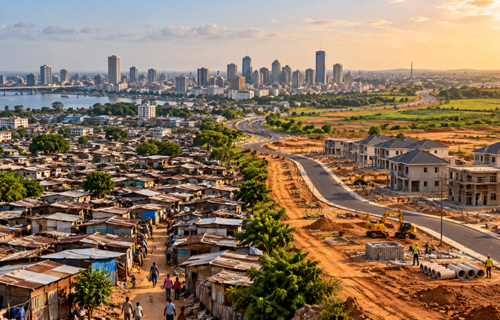
Africa’s housing shortage is usually expressed as a construction challenge, but an increasing body of evidence suggests that the problem begins much earlier in the development process. The continent does not suffer from a lack of physical land. The greater constraint in many rapidly expanding cities is finding land that has clear ownership, infrastructure, transport connections and a price that still allows homes to be delivered affordably.
The scale of the challenge continues to increase. UN-Habitat estimates that Africa already has a housing deficit exceeding 51 million homes and has warned that the gap could expand sharply by the end of the decade if current development patterns continue. Rapid urbanisation is adding to demand, but simply increasing construction volumes will not resolve the shortage if the underlying supply of development-ready land remains constrained.
Land prices are part of the equation, particularly in major cities such as Lagos, Nairobi and Johannesburg. Affordable projects are frequently pushed towards cheaper peripheral locations because central and well-connected sites cannot support the prices required for lower-income housing. Yet moving further from established urban areas introduces another set of costs. Roads, electricity, water, drainage and sanitation may have to be provided before substantial residential development can take place.
This creates a development paradox. Land on the urban fringe may appear inexpensive, but the final housing can still be costly if developers must finance infrastructure that would normally be provided by municipalities or utilities. In Nigeria, developers operating around Lagos and Abuja have highlighted how expenditure on roads, electricity and water can substantially change the economics of projects on supposedly cheap land. Similar pressures have been identified in Kenya, where insufficient infrastructure can undermine the viability of affordable housing schemes.
Land ownership can be an equally serious obstacle. The interaction between customary rights, government allocation and formal property registration remains complicated in parts of the continent. Côte d’Ivoire provides a striking example. At Songon-Kassemblé outside Abidjan, a major social and affordable housing programme encountered disputes involving customary landowners and compensation. Projects were delayed, developers faced additional costs and delivery fell well behind the original ambitions of the programme.
Burkina Faso demonstrates how governments are attempting to address similar problems. In 2026, authorities took steps to formalise land ownership covering more than 900 hectares at Bassinko in Ouagadougou. Resolving title and registration issues can appear administrative compared with constructing thousands of homes, but without legal certainty developers, lenders and households can struggle to invest confidently in property.
Windhoek presents another version of the same challenge. Research published in 2026 links Namibia’s housing affordability pressures with the way urban land is supplied, historical spatial patterns and fragmented governance. Formal housing remains inaccessible to large parts of the population, contributing to continued expansion of informal settlements. The problem is therefore not simply construction costs but how land enters the formal development market and at what price.
Location also changes the meaning of affordability. A less expensive home far from employment, schools and services may reduce the purchase price while increasing transport costs and travel time for the household. This makes infrastructure and public transport part of the housing affordability calculation. Expanding cities without connecting new residential districts to economic centres can effectively transfer costs from property prices to household mobility.
Climate pressures and population displacement add another layer. Somalia had around 3.3 million internally displaced people by mid-2026, while drought and conflict continued to force households to move during the year. Cities receiving displaced populations must deal simultaneously with housing demand, uncertain land tenure and inadequate basic infrastructure. Urban programmes in Baidoa and Kismayo increasingly recognise that permanent housing cannot be delivered independently of secure land rights, roads and essential services.
For real estate investors and developers, these constraints help explain why enormous housing demand does not automatically produce an equally large investable market. Projects require land that can be legally acquired, financed and developed, as well as infrastructure capable of supporting the completed neighbourhood. If those conditions are absent, the cost and risk eventually appear elsewhere in the development equation.
Solving Africa’s housing shortage will therefore require more than cheaper construction techniques or additional development finance. Cities will need to expand the supply of serviced land, improve registration and planning systems, coordinate infrastructure investment and connect new residential districts with employment and transport networks. Public land, infrastructure partnerships and better integration between housing and urban planning could consequently prove as important as the homes themselves.
Africa may have a shortage of more than 51 million homes, but the development bottleneck often starts before construction begins. Increasing the supply of legally secure, infrastructure-ready and well-connected land could ultimately determine whether the continent’s enormous housing requirement becomes a viable development opportunity or continues to feed the expansion of informal settlements.
Source: © CIJ.World Africa Research & Analysis Team