Saturday, 19 September 2026
Mumbai recorded one of its strongest February performances in over a decade, with residential demand continuing to underpin activity in India’s largest real estate market.
According to data published by Knight Frank India, the city registered just over 13,000 property transactions in February 2026, marking the highest February total in more than ten years. The surge in activity translated into stamp duty collections exceeding ₹1,100 crore, reflecting continued strength in buyer sentiment despite elevated property values.
Residential units continued to dominate transaction volumes, accounting for roughly 80 percent of total registrations. The data also indicates an ongoing shift towards higher-value housing, with an increasing share of transactions recorded in the mid- to premium segments. Homes priced above ₹5 crore saw a modest increase in share, while the ₹1–5 crore bracket continued to form the core of the market.
Demand Patterns and Location Shifts
Activity remained concentrated in suburban markets, particularly in the western corridor, which continues to benefit from infrastructure upgrades and improved connectivity. Industry data suggests that the western suburbs accounted for more than half of total registrations, while central locations saw a relative decline in share.
This trend reflects a broader structural shift in Mumbai’s residential market, where affordability constraints in core areas are pushing demand towards peripheral and suburban locations.
Infrastructure as a Key Catalyst
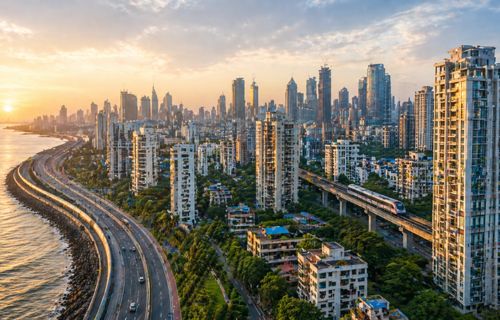
Ongoing infrastructure development remains a central driver of market activity. Projects such as the Mumbai Coastal Road, the Atal Setu and the continued expansion of the metro network are improving connectivity across the metropolitan region.
These upgrades are supporting residential absorption in previously underpenetrated micro-markets, particularly in areas linked to Navi Mumbai and extended suburban corridors. Improved accessibility is also contributing to gradual value appreciation, although the extent varies significantly by location and project quality.
Macroeconomic and Financing Context
India’s broader economic environment has remained supportive of housing demand, with steady employment in sectors such as financial services, technology and media underpinning end-user demand. Mortgage availability has remained relatively stable, although interest rates are still above the lows seen during the pandemic period.
While earlier estimates of GDP growth above 8 percent reflect strong momentum, current projections from institutions such as the World Bank and the International Monetary Fund suggest a more moderate but still robust growth trajectory in the range of 6–7 percent for the near term.
Affordability and Structural Constraints
Despite strong transaction volumes, affordability remains a key constraint. Mumbai continues to rank among the least affordable housing markets globally, with a high price-to-income ratio. Elevated land costs, combined with limited land availability, continue to put upward pressure on pricing.
Rental yields remain relatively low, typically in the range of 2–3 percent, limiting the attractiveness of residential assets for yield-driven investors. As a result, the market remains largely end-user driven.
Development and Regulatory Challenges
The supply side continues to face structural challenges. Redevelopment activity, particularly in older parts of the city, remains complex due to fragmented ownership structures and regulatory requirements. In addition, rising construction costs and periodic liquidity constraints among developers are impacting project timelines.
While recent momentum reflects underlying demand strength, the sustainability of growth will depend on a combination of continued infrastructure delivery, regulatory efficiency and improved affordability.
Source: CIJ.World India Research & Analysis Team