Sunday, 18 October 2026
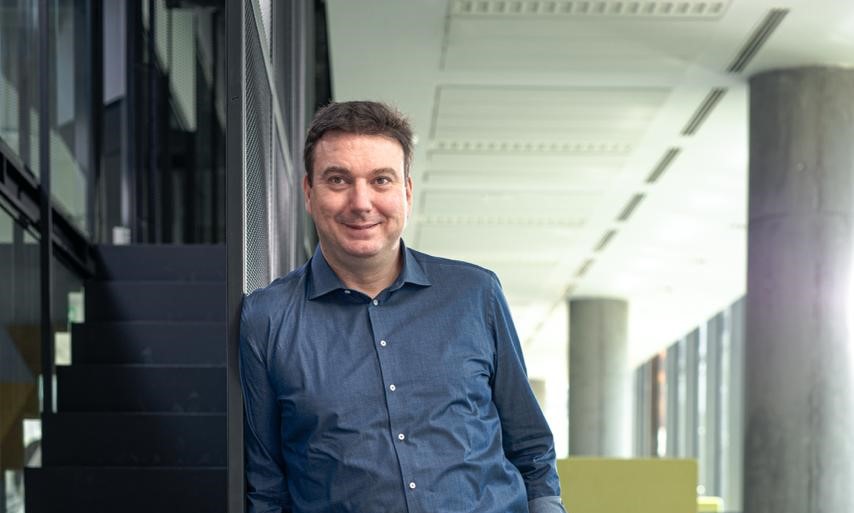
As developers across Central and Eastern Europe explore new living and hospitality formats, the idea of “hybrid hospitality” is gaining traction. Tudor Popp, Managing Partner at BEYOND-SPACE, has been closely analysing this shift and recently shared deeper reflections in his article When Everything Became Hospitality. In this interview, he discusses the operational realities, investment questions and organisational changes that will determine whether the model succeeds in the region.
CIJ EUROPE: From concept to execution, what are the biggest operational risks developers underestimate when trying to implement a hybrid hospitality model in Central and Eastern Europe?
Tudor Popp: The biggest risk is the one nobody puts in a business plan: the assumption that a building with interesting functions will spontaneously become a community. It will not. I have seen many beautifully designed mixed-use projects that look great on the website and feel completely lifeless when you walk in. People show up, do what they came to do, and leave. Nothing connects. Nothing stays.
What creates community is not only architecture. It is people whose job is to build it every day, without a clear metric for success and without an obvious place in the traditional developer org chart. In CEE, developers are very good at construction but still uncomfortable with the idea that the most important hire in a new building may be a community manager whose impact cannot be easily measured on a spreadsheet.
The second underestimated risk is technical and regulatory complexity. When you try to design a building for multiple simultaneous functions that were never originally meant to coexist, the gap between concept and code compliance becomes very real. A hotel room, a student unit and a coworking floor have fundamentally different requirements for plumbing, fire safety, access control, ventilation and operational flows. Across much of CEE, the regulatory framework was built for single-use assets, so hybrid projects inevitably require deeper, earlier conversations with planning and permitting authorities.
CIJ EUROPE: How should investors realistically underwrite hybrid hospitality assets when traditional valuation benchmarks and comparables are still limited?
Tudor Popp: I want to be honest here, I am not a financier. But the truthful answer is that nobody has a fully established framework yet. Many of the confident models you see today are essentially old valuation tools applied to a new type of asset.
From an operational perspective, the core question is actually quite simple: does this building become more valuable over time because the community inside it grows, or does it age like a conventional asset when the market turns? That is a fundamentally different way of thinking about value. It is closer to investing in a brand than buying a static property.
The pandemic provided a useful real-world stress test. The Social Hub, because it could flex its rooms between students and hotel guests, remained operationally positive through 2020 and 2021 while many traditional hotels struggled. That resilience came directly from having multiple user groups and revenue streams.
At the same time, there is an important warning in the Soho House story. The brand built a genuinely strong community and still lost money for decades before being taken private in early 2025. The lesson is not that the model cannot work financially, it is that growth speed and experience quality are tightly linked, and that connection is very easy to underestimate when the concept is exciting and capital is available.
CIJ EUROPE: In markets like Romania and Slovakia, which component typically anchors the business case first, and why?
Tudor Popp: My instinct today is that student accommodation is the most credible entry point, and the reason is very straightforward demand.
In Bucharest, Cluj-Napoca, Iași, Timișoara, in almost every Romanian university city, there is a visible shortage of quality, purpose-built student housing. Not dormitories and not informal shared flats, but professionally managed living environments with real amenities and social programming. Western Europe has been building this product for years, while in our region the category is still largely undeveloped.
What makes PBSA such a strong anchor is that it creates immediate baseline energy inside the building. Once students live there year-round, the hotel, coworking, food and beverage and events components become more natural and more financially viable. The building is alive before the tourist even arrives.
The hotel component helps smooth seasonality, while coworking, at least for now in our markets, should be viewed less as a primary revenue driver and more as an activation layer that connects the building to the surrounding neighbourhood.
CIJ EUROPE: What organisational changes must developers make internally, and where do most groups currently fall short?
Tudor Popp: The most important, and uncomfortable, shift for traditional property companies is accepting that the key person in the building is not the asset manager or the property manager. It is whoever is responsible for the experience.
That role barely exists in most CEE developer organisations today. And when companies attempt to fill it, they often hire either a hotel operations profile or a marketing coordinator and expect the concept to work. Hybrid hospitality requires something different: someone whose primary job is to make people feel they belong.
Developers also sometimes assume the concept can simply be handed off after delivery. They design the building, appoint an operator and expect the vision to survive intact. But the concept is not embedded in the floor plan. It lives in daily programming decisions, who is welcomed, how spaces are used, how commercial efficiency is balanced against experience quality.
Based on many years observing office fit-outs, I would add that organisations consistently underestimate how long it takes for a place to develop real character. You cannot accelerate it with a launch party. It is slow, continuous work, and the developers who succeed will be the ones patient enough to let the ecosystem mature.
CIJ EUROPE: Looking ahead five to seven years, which current assumptions about hybrid hospitality do you believe the market may be overestimating or getting wrong?
Tudor Popp: The first assumption I would question is automatic transferability. There is a tendency to look at concepts developed in Amsterdam or Barcelona and assume they will scale at the same speed and price point in Bucharest or Bratislava. I am not convinced. The willingness to pay a premium for community varies significantly between markets, and CEE is still earlier in that behavioural cycle.
The second is the belief that good design substitutes for real programming. We are already seeing projects that look hybrid, attractive communal areas, mixed uses, well-designed interiors, but are delivered by organisations without a genuine commitment to experience management. The risk is a wave of buildings that are architecturally interesting but socially empty. Romania’s first coworking wave provided a clear precedent.
The third, and perhaps most important, is the assumption that you can scale quickly without diluting what made the concept special. The Soho House trajectory illustrates the tension clearly. The brand’s value came from selectivity and curation. Rapid expansion put pressure on that culture. The key question for hybrid hospitality is not how large the platform can become, but how well the experience can be preserved as it grows.
CIJ EUROPE: Your recent article frames hybrid hospitality as a structural shift rather than a passing trend. What is the deeper change developers and investors should understand?
Tudor Popp: What we are seeing is not simply another mixed-use cycle. It is a response to a more fundamental behavioural shift. As I wrote in my recent piece, “The way we work, live, travel and socialise has blurred into something for which we do not yet have a clean vocabulary.”
Traditional mixed-use stacked functions side by side. Hybrid hospitality blends them under a single operating philosophy derived from the best hotels, one focused on making people feel welcomed, comfortable and connected.
From an investor perspective, the appeal is structural adaptability. A building designed under hybrid logic is not a bet on one use remaining dominant. It is a bet on the enduring human need for community and experience, needs that are far more resilient across cycles.
Ultimately, the developers and investors who will succeed are the ones who stop thinking of buildings as containers for functions and start treating them as environments for human experience. The distinction may sound philosophical today, but over the next decade it will become very practical and very visible in performance.
© 2026 cij.world