Thursday, 5 March 2026
Housing in Slovakia is entering a new phase in which the discussion extends well beyond sales volumes and construction activity. Environmental performance, demographic shifts and changing lifestyle expectations are increasingly shaping how new homes are designed, delivered and managed.
Across the country, stricter environmental standards and rising energy costs are pushing developers to prioritise efficiency from the earliest design stages. New residential projects are increasingly planned with improved insulation, lower energy consumption and integrated renewable solutions. While older housing stock remains energy-intensive, new developments are expected to meet far higher performance thresholds than in previous decades. For buyers and tenants, lower operating costs are becoming just as important as purchase price.
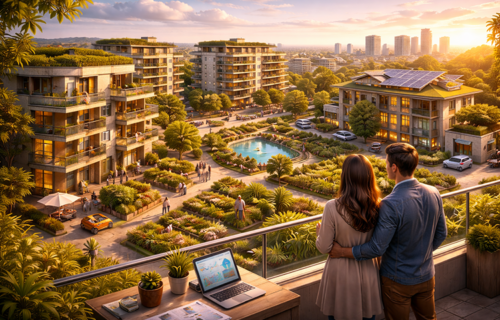
Climate resilience is also gaining attention. Developers are paying closer consideration to overheating risks, water management and the long-term durability of materials. In urban areas, green roofs, shaded courtyards and increased tree coverage are being incorporated to improve comfort during hotter summers. These elements are no longer viewed as optional features but as part of responsible project planning.
Demographic change is another powerful force behind evolving housing demand. Slovakia’s population is ageing, and household structures are shifting. Smaller households, single-person living and delayed family formation are influencing apartment layouts and unit sizes. At the same time, migration patterns – including movement toward larger cities and regional hubs – continue to reshape demand geographically.
In Bratislava and other major cities, urban living remains attractive, particularly for younger professionals. However, suburban and satellite locations are gaining traction as hybrid work arrangements allow greater flexibility. Accessibility to public transport, schools and services plays a growing role in location decisions, often outweighing purely central addresses.
Developers are also responding to a stronger preference for community-oriented environments. Large residential schemes increasingly combine housing with retail units, cafés, childcare facilities and public spaces. The aim is to create neighbourhoods rather than standalone buildings. Access to parks, pedestrian zones and social amenities is becoming part of the value proposition for both buyers and long-term investors.
Technology is playing a growing role in this transformation. Smart systems that monitor energy use, improve building management and enhance security are gradually becoming standard in new projects. Digital platforms are also simplifying leasing, communication between residents and property managers, and maintenance coordination. While adoption varies by segment, the expectation of seamless digital interaction is steadily rising.
Affordability, however, remains a structural challenge. Even as sustainability standards improve and lifestyle expectations evolve, many households face constraints linked to borrowing capacity and income growth. Balancing higher construction standards with accessible pricing will remain a critical issue for policymakers and developers alike.
Looking ahead, Slovakia’s housing market appears set to evolve toward more efficient, adaptable and integrated living environments. Environmental responsibility, demographic realities and technological innovation are reshaping what constitutes a modern home. As these forces converge, the next generation of residential projects will likely be defined not only by location and price, but by how well they respond to broader social and environmental priorities.
Source: CIJ EUROPE Analysis Team