Friday, 3 April 2026
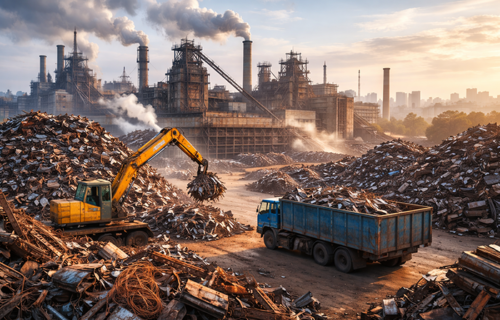
At the start of 2026, companies in Poland’s steel sector are facing renewed uncertainty over the availability of key raw materials. For several years the industry has been under pressure from high energy prices, tighter environmental regulation and competition from producers outside the European Union. In this context, access to metal scrap — an important input for both steel mills and non-ferrous smelters — has become increasingly important for maintaining production levels and controlling costs. Ukraine has traditionally been one of the nearby sources of this material for Polish buyers.
The situation changed at the turn of the year when the Ukrainian government introduced export restrictions covering various categories of metal scrap for 2026. The decision effectively halted regular commercial shipments abroad unless specific exemptions are granted. For Polish manufacturers that had relied on Ukrainian supply, the immediate effect has been reduced availability and upward pressure on prices, alongside the need to identify alternative suppliers in other markets. Facilities that base their production largely on recycled inputs are particularly exposed to such disruptions.
Ukrainian authorities have explained the measure as a way to secure sufficient raw materials for domestic processing industries and to support local employment and tax revenues. Similar export controls on scrap have been used periodically by several countries in recent years, especially during times of economic strain or geopolitical tension. In this case, the timing has drawn attention because the European Union has simultaneously been encouraging shorter and more resilient regional supply chains for strategic materials.
The Polish government has indicated that it intends to address the issue at the European level, arguing that the sudden limitation on exports affects industrial planning and cross-border trade relationships. Officials have also signalled that the matter will be raised in bilateral discussions with Kyiv. From Warsaw’s perspective, the dispute is not only about the steel sector but also about the broader question of how trade preferences and market access should function when one side introduces unilateral restrictions.
Beyond the immediate industrial impact, the episode has added to an ongoing debate about the balance between national economic policy and international trade commitments. Ukraine benefits from preferential trade arrangements and extensive financial and political support from the European Union, yet it also retains the right to regulate the export of certain resources deemed strategically important. Supporters of the restrictions view them as a temporary protective step, while critics see them as a signal of growing economic nationalism.
For now, the practical outcome is a tighter regional scrap market and higher input costs for some European producers. Whether the restrictions will remain in place for the entire year or be adjusted under diplomatic or economic pressure remains uncertain. The development illustrates how decisions taken in one country’s domestic policy sphere can quickly ripple across neighbouring industries and supply networks.
Source: WEI-Warsaw Enterprise Institute