Thursday, 19 March 2026
The market for care facilities in Germany is facing increasing pressure as rising demand driven by demographic change collides with structural limitations affecting operators. Shortages of skilled staff, higher operating costs and regulatory complexity are constraining the sector’s ability to expand, according to participants in a recent webinar hosted by KINGSTONE Real Estate.
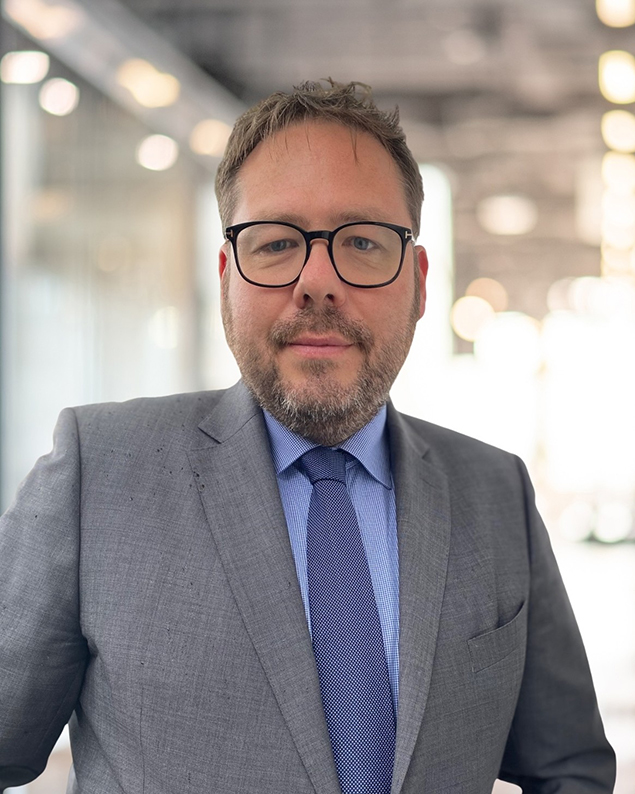
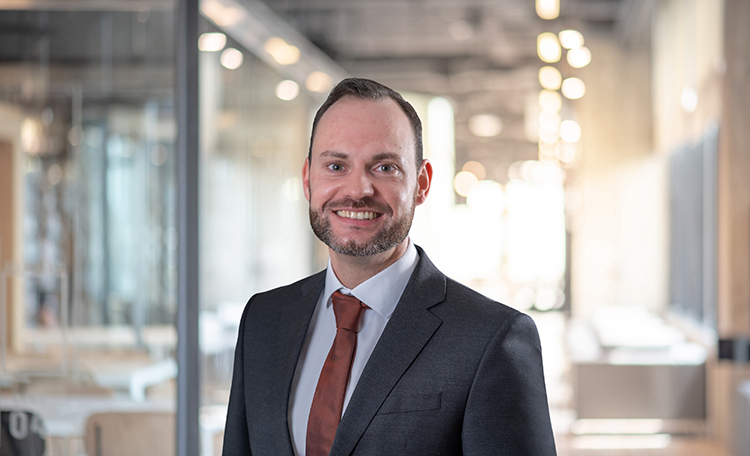
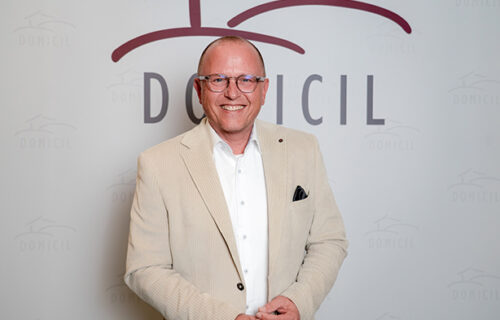
The discussion, titled “Care in transition – operators between growth and reality”, brought together Maximilian Radert, Head of Product Development & Research at KINGSTONE Real Estate, Mathias Staudt, Healthcare Expert at KINGSTONE Real Estate, and Christian Nitsche, Chairman of the Board at DOMICIL Senior Residences.
Germany currently has around 5.7 million people receiving care benefits, most of whom are supported at home or through outpatient services. Only a limited proportion live in inpatient care facilities. Christian Nitsche noted that the current system depends heavily on informal family care. “The system is being supported by the family. The critical question here is what happens when people can no longer be cared for at home. That is when supply will be severely disrupted,” he said.
Maximilian Radert added that demographic change has moved beyond being a social challenge and could develop into a broader structural issue if capacity does not keep pace with demand. He described the situation as potentially becoming a “systemic risk” that requires coordinated attention from policymakers, investors and operators.
While demand remains strong, operators are constrained in expanding services due to limited resources. According to Nitsche, workforce availability represents the main restriction. “The bottleneck exclusively pertains to the shortage of skilled workers,” he said, adding that the problem increasingly affects support functions such as kitchen and cleaning services.
Participants highlighted the need for more flexible regulatory frameworks and reduced administrative requirements to help operators maintain capacity without compromising quality standards.
Investment conditions were identified as another key issue. Rising construction and operating costs, combined with the need to modernise existing stock, are creating financing challenges for new developments. Nitsche pointed to a gap between political expectations and economic realities, arguing that refinancing frameworks need to reflect actual construction and renovation costs.
Mathias Staudt noted that only a small number of German federal states currently link refinancing mechanisms for new care facilities to construction cost indices. “There are only two German states, Baden-Württemberg and NRW, that have adequate regulation around new-builds and at least base their refinancing on the building cost index,” he said. In many regions, ageing building stock makes private operators and institutional investors essential to sustaining and expanding care capacity.
Digitalisation was repeatedly cited as a means of improving efficiency within facilities. Staudt emphasised that digital processes can reduce administrative burdens and allow staff to focus more on care delivery.
Christian Nitsche shared examples from DOMICIL Senior Residences, where electronic documentation, AI-assisted speech recognition and digital service planning tools are already in use. “Our aim is to get employees out of the office and working with our residents,” he said.
The webinar concluded that while demand for care facilities is expected to continue rising, sustainable growth will depend on workforce availability, viable refinancing structures and stable regulatory conditions. Investors may play an important role in expanding capacity, but participants warned that without reforms and a reduction in bureaucracy, supply constraints could intensify.
Summing up the discussion, Radert said: “It is crucial that we view the care sector as indispensable going forward. This is the only way to reconcile supply and demand long term.”