Sunday, 15 February 2026
In this interview, Raluca Munteanu, Business Development Manager at IULIUS, reflects on the group’s 25-year evolution and discusses its approach to urban regeneration, mixed-use development and community-focused projects. She outlines the key milestones that have shaped IULIUS’ portfolio, the company’s long-term vision for Romanian cities, and the major regeneration schemes currently underway in Cluj-Napoca and Constanța.
CIJ EUROPE: Looking back at 25 years of activity, how would you describe the evolution of IULIUS Group’s portfolio and the main milestones?
Raluca Munteanu: The evolution of our portfolio closely reflects the development of the cities where we operate. We began 25 years ago by introducing modern retail to Iași through the first shopping mall outside Bucharest, and gradually shifted towards urban regeneration and mixed-use developments that integrate retail, offices, nature and lifestyle. Today, the IULIUS portfolio includes eight regional projects: the Iulius Mall network in Iași, Cluj-Napoca and Suceava; the mixed-use projects Palas Iași and Iulius Town Timișoara; Palas Campus; and two Family Market convenience retail schemes.
The Iulius Mall network marked our first major milestone, starting in Iași in 2000. These projects went beyond retail, becoming social destinations with a strong focus on community engagement and a constantly updated tenant mix. This experience shaped our long-term approach: developments are sustainable only when they are integrated into everyday urban life.
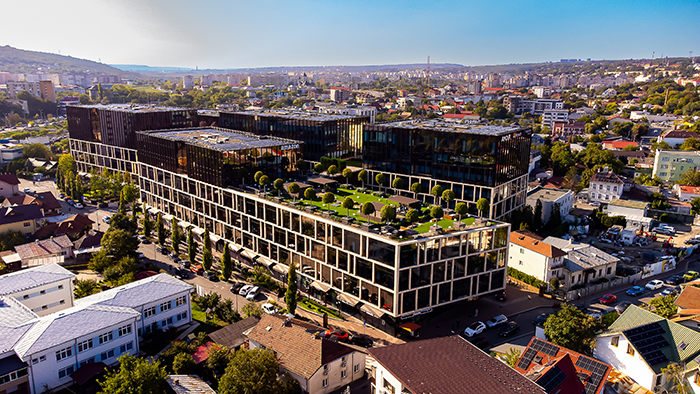
Palas Iași, opened in 2012, represented a turning point as Romania’s first mixed-use urban regeneration project, developed on an underused central site near the Palace of Culture. The model was later replicated in Timișoara through Iulius Town, which transformed a former industrial area into a new business district with offices, retail, green spaces and improved infrastructure. Together with the United Business Center office portfolio, these projects now host 145 corporate tenants and around 40,000 employees.
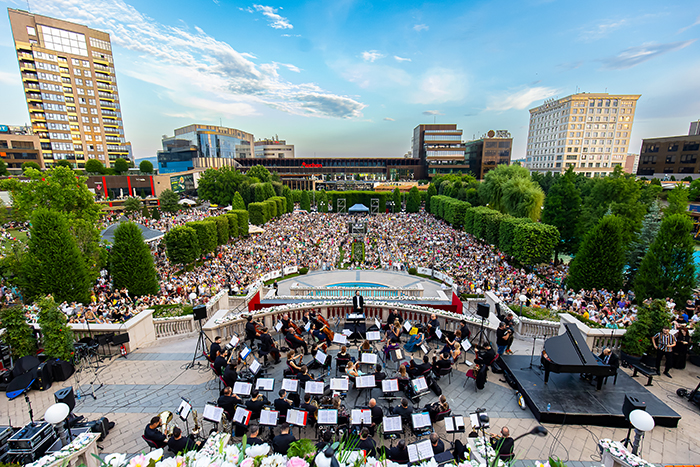
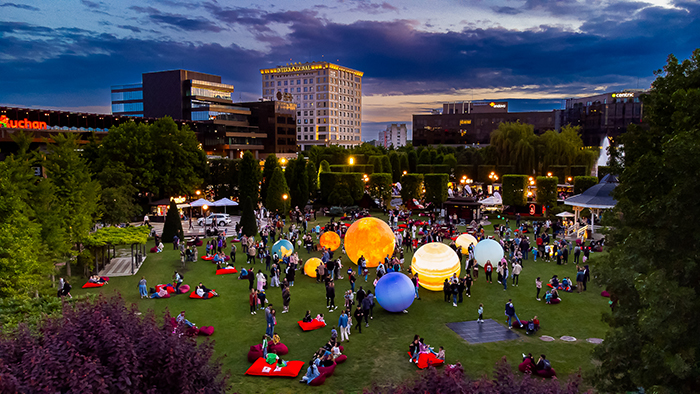
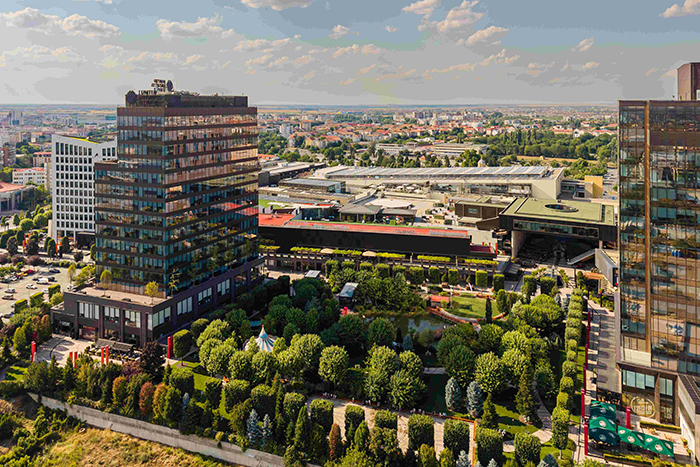
Another defining milestone was the decision to place nature and public space at the core of each development. Over time, we have created more than 18 hectares of urban gardens in Iași, Timișoara and Cluj-Napoca, introducing over 80,000 mature trees and shrubs into dense urban areas.
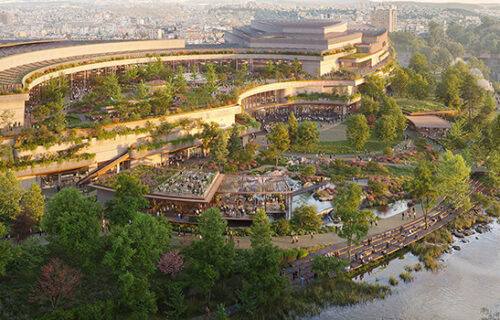
The latest phase includes large-scale regeneration projects in Cluj-Napoca and Constanța. In Cluj, Rivus is planned around a 5+ hectare urban garden connected to the Someș River green corridor. In Constanța, we are redeveloping 38 hectares of the former Oil Terminal platform, beginning with what is currently the largest private bioremediation process in Europe.
CIJ EUROPE: What makes IULIUS developments different on the Romanian real estate market?
Raluca Munteanu: We never start from the building, but from the city. As long-term owners and operators, our focus is on identifying what a place lacks and returning it to the community in an improved form. This is why our projects function as integrated ecosystems, combining offices, retail, services, cultural uses, events and green public spaces.
Community dialogue is another key differentiator. In Cluj, we launched the partedincluj.ro platform and conducted multiple consultation rounds to refine the project concept. In Constanța, the #OrașUnit platform was created to encourage local involvement. Co-creation with residents, authorities, NGOs, universities and local businesses is now standard practice throughout the project lifecycle.
Ultimately, each development aims to restore a meaningful part of the city to its residents.
CIJ EUROPE: What is IULIUS Group’s long-term vision for Romania?
Raluca Munteanu: Our long-term vision is to demonstrate that urban regeneration is the natural way to develop Romanian cities. For more than a decade, our major investments have focused on reactivating centrally located underused or industrial sites to generate economic, social and cultural value.
Urban regeneration, mixed-use development and integrated green spaces are not a niche for us, but our core business model. Starting with Palas Iași and continuing with Iulius Town Timișoara, Palas Campus, RIVUS Cluj and the Constanța regeneration project, we are addressing increasingly complex brownfield sites.
Such projects require balanced integration of uses, mobility and public space, developed in close cooperation with communities and authorities. As long-term investors, we take responsibility not only for our tenants and shareholders, but also for the cities themselves. Our portfolio exceeds €2 billion in value, with more than €190 million invested in green spaces, infrastructure and public facilities, and over 70 million visits registered annually.
CIJ EUROPE: What innovations or new approaches are being implemented in current projects?
Raluca Munteanu: Collaboration, sustainability and innovation define our current developments in Cluj-Napoca and Constanța. Both are complex urban regeneration projects shaped by extensive community dialogue and aligned with high sustainability standards, climate objectives and green financing requirements.
In Cluj-Napoca, the former Carbochim platform is being redeveloped as a mixed-use project centred on nature, culture and family-oriented leisure. A key priority was preserving industrial continuity by relocating and modernising the Carbochim factory, which remains operational. The 14-hectare site will be opened to the public, with a new urban garden connecting to the Someș River. Over 700 mature trees have already been prepared in a dedicated nursery. Developed with UNStudio and following extensive consultation, the €550 million project is close to receiving its building permit and is supported by more than €400 million in green financing.
In Constanța, an €800+ million regeneration project designed by Foster + Partners is underway on a 38-hectare former oil terminal site. A €29 million remediation programme addresses the site’s industrial legacy, alongside preparations for offices, retail, cultural facilities and extensive green spaces. Over 1,100 mature trees are being acclimatised in a nursery, and required archaeological studies are nearing completion. The project is expected to become a new economic driver for the city.
CIJ EUROPE: What is the scale of investments so far and what comes next?
Raluca Munteanu: Over 25 years, IULIUS has invested more than €1.3 billion in Romania, developing eight major projects across four cities. The portfolio includes over 320,000 sqm of retail space and approximately 242,000 sqm of class A offices, hosting around 145 companies and 29,000 employees. Contributions to public budgets exceed €330 million.
Palas Iași and Palas Campus have formed the largest business hub outside Bucharest, while the UBC networks in Timișoara and Cluj-Napoca helped establish new business districts in secondary cities. Urban gardens remain a key social and environmental component, with over €18 million invested and more than 1,000 public events hosted annually.
Looking ahead, we are entering a new investment cycle focused on urban regeneration, with a pipeline exceeding €1.3 billion, mainly in Cluj-Napoca and Constanța. This includes the €550 million RIVUS Cluj project, the €800+ million Constanța redevelopment, the ongoing remodelling of Palas Iași, new Family Market schemes and continuous upgrades across the existing portfolio. Beyond scale and volumes, our priority remains the long-term role these projects play in the life and development of their cities.
As IULIUS enters a new investment cycle, the focus remains on large-scale urban regeneration and long-term involvement in the cities where it operates. With major projects advancing in Cluj-Napoca and Constanța, the group continues to position mixed-use development and integrated public spaces as central elements of Romania’s evolving urban landscape.
© 2025 cij.world