Thursday, 5 March 2026
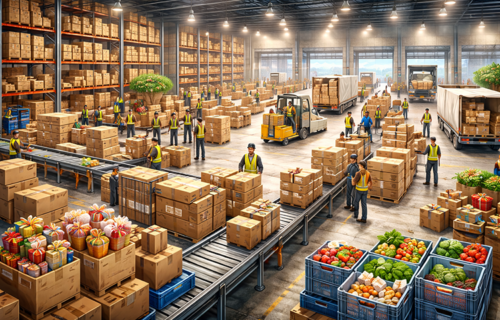
India’s warehousing and logistics sector recorded robust activity in 2025, supported by sustained e-commerce growth, third-party logistics (3PL) expansion and structural supply chain shifts. Industry data from leading real estate consultancies indicate that December continued to represent one of the busiest periods of the year for inventory movement and distribution activity.
According to data published by property advisory firms including Colliers, JLL and Cushman & Wakefield, warehousing demand across India’s top markets remained strong through 2025. Annual leasing volumes ranged between approximately 45–50 million square feet across major cities, reflecting double-digit growth compared with the previous year in several markets.
India’s total Grade A warehousing stock across the top eight cities surpassed 500 million square feet by late 2025, with continued expansion in cities such as Mumbai, Delhi NCR, Bengaluru, Chennai, Hyderabad, Pune, Kolkata and Ahmedabad.
Industry reports also indicate that third-party logistics providers remained among the largest occupiers of warehouse space, accounting for roughly one-quarter to one-third of total leasing in several quarters during 2025.
December traditionally sees elevated logistics activity in India, driven by year-end retail demand, festive consumption, promotional campaigns and seasonal product cycles. E-commerce platforms typically experience a surge in deliveries during the final weeks of the year, contributing to higher warehouse throughput and distribution volumes.
Retailers and consumer brands often increase inventory levels during this period to manage holiday demand, protect service levels and clear quarterly targets. As a result, regional distribution centres and last-mile hubs operate at higher capacity compared with other months.
E-commerce growth continues to influence warehouse location strategy, with increasing emphasis on Tier-2 and Tier-3 cities. Industry observers note that online retailers are expanding deeper into smaller urban markets, prompting demand for strategically positioned fulfilment and sorting centres.
The post-pandemic period has accelerated India’s shift toward faster delivery models, including same-day and next-day fulfilment. Major e-commerce operators have continued investing in logistics infrastructure, including fulfilment centres, delivery stations and automation technology.
Market research reports indicate that capital expenditure by leading e-commerce firms has focused on improving last-mile capabilities and increasing storage capacity ahead of peak seasons.
Demand for temperature-controlled storage has also grown, particularly in pharmaceuticals and food distribution. India’s cold chain market has expanded steadily in recent years, driven by vaccine logistics, biologics distribution and rising demand for frozen and ready-to-eat food products.
Industry estimates place the Indian cold chain market in the multi-billion-dollar range, with pharmaceuticals representing a significant share. However, compliance and standardisation remain ongoing challenges, particularly in maintaining international quality and temperature control benchmarks across operators.
Seasonal consumption patterns in December contribute to higher demand for refrigerated transport and storage, especially for dairy products, frozen foods and perishable goods.
Third-party logistics providers have strengthened their role in managing peak demand periods. In 2025, 3PL operators remained one of the largest occupier categories in the warehousing segment. Industry projections suggest the Indian 3PL market will continue expanding steadily over the remainder of the decade.
Technology adoption has become central to managing year-end spikes. Many logistics firms are investing in predictive analytics, automation, warehouse management systems and AI-driven demand forecasting to optimise inventory planning and reduce congestion during peak periods.
With structural demand drivers such as e-commerce growth, supply chain diversification and urban consumption trends intact, India’s warehousing sector enters 2026 with positive momentum. While December remains a peak inventory month, long-term growth will depend on infrastructure upgrades, cold chain modernisation and continued investment in automation and compliance standards.
Industry analysts note that maintaining capacity discipline and improving operational efficiency will be key as logistics volumes continue to scale across the country.
Source: CIJ.World India Research & Analysis Team