Thursday, 19 March 2026
Global greenhouse gas emissions have climbed to their highest levels on record, underscoring the growing gap between climate goals and real-world progress. Data from international climate agencies show that both atmospheric carbon dioxide concentrations and energy-related CO₂ emissions increased sharply in 2024, continuing a trend of steady growth despite global investment in clean energy.
Average concentrations of carbon dioxide in the atmosphere rose by nearly four parts per million in 2024 — the largest single-year increase since modern measurements began more than six decades ago. Scientists now estimate the global average at over 423 parts per million, a level not seen for millions of years. Methane and nitrous oxide, two other key greenhouse gases, have also reached record highs.
At the same time, global carbon emissions linked to energy use climbed to almost 38 billion tonnes last year, according to leading energy analysts. The rise was driven by continued reliance on coal and gas, particularly in fast-growing economies, as well as higher energy demand following post-pandemic recovery and industrial expansion.
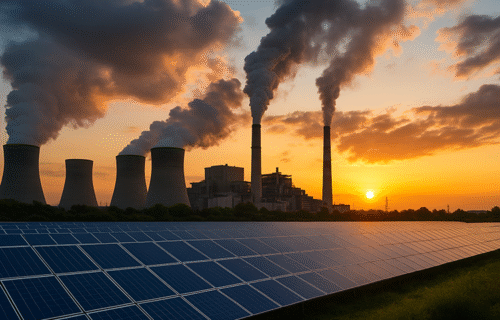
The use of coal — the most carbon-intensive fossil fuel — hit a new record, with growth in Asia offsetting declines elsewhere. Renewables such as wind and solar made substantial gains, but not enough to replace the overall increase in fossil fuel consumption.
While Europe and parts of North America recorded slight declines in emissions thanks to cleaner power generation and improved efficiency, these reductions were outweighed by increases in developing regions. Experts warn that if the current trajectory continues, the remaining global carbon budget compatible with limiting warming to 1.5°C could be exhausted within the next decade.
Scientists also point to signs that the planet’s natural carbon sinks — forests and oceans that absorb roughly half of human emissions — may be weakening due to rising temperatures and deforestation, making the atmosphere more sensitive to future emissions.
The record rise in both atmospheric carbon and global emissions serves as a stark reminder of how difficult it remains to slow climate change. Despite record growth in renewable energy, global emissions continue to rise, highlighting the need for deeper reductions in fossil fuel use and faster progress on climate commitments if the world is to avoid the most severe consequences of global warming.