Wednesday, 4 March 2026
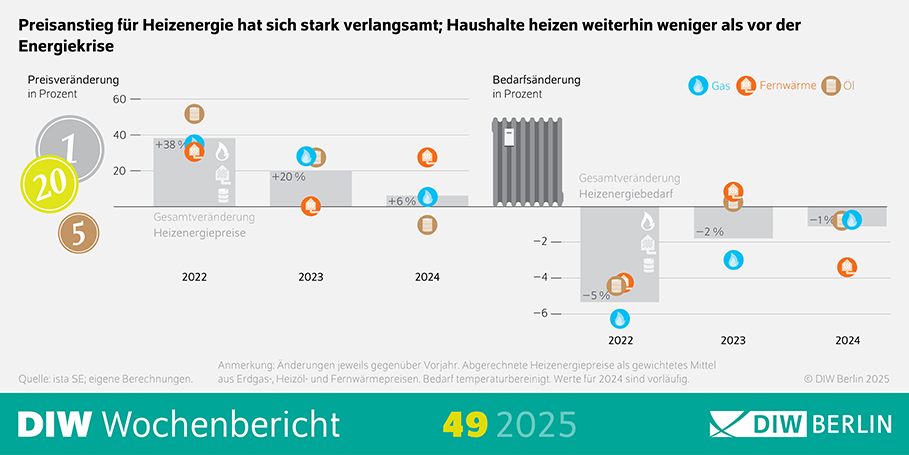
Heating energy demand in German households remained largely unchanged in 2024 compared with the previous year, while overall heating prices rose more slowly. District heating, however, recorded a significantly sharper increase. These findings come from the latest Heat Monitor published by the German Institute for Economic Research (DIW Berlin), based on data from real estate service provider ista SE.
According to the report, temperature-adjusted heating energy consumption remained nearly constant in 2024 and was still around seven percent lower than in 2021, before the energy crisis. Emissions from residential heating also declined slightly. “The DIW Heat Monitor shows that many households are still heating more economically today than before the energy crisis,” said study author Sophie M. Behr from DIW Berlin’s Climate Policy Department.
Heating energy prices increased by an average of around six percent in 2024, compared with a rise of roughly 20 percent the previous year. District heating, however, became considerably more expensive following the expiration of national price caps, with prices rising by 27 percent. “The sharp increase in district heating prices is largely driven by catch-up effects. Prices for heating oil and gas had already risen more sharply in the previous year,” said study author Till Köveker. “Since the beginning of the energy crisis, district heating has nevertheless become less expensive overall than gas or heating oil.” Overall, heating energy prices have risen by 77 percent since 2021, while district heating prices have increased by 67 percent.
The report notes continued regional differences. Temperature-adjusted heating requirements in eastern Germany were nearly 15 percent lower than in western states, reflecting higher renovation rates and greater use of district heating. Households in the eastern states paid about 11 percent more for heating in 2024, compared with a nationwide average cost increase of 3.5 percent.
Behr warned that the uneven price developments could affect public support for the heating transition. “The extremely different price developments in 2024 between district heating and other energy sources could jeopardize the acceptance of the heat transition—unjustifiably, because it does not reflect long-term price developments,” she said. Köveker added that “pricing and price trends for district heating must become more transparent. We also need a reliable regulatory framework so as not to jeopardize investment security for the expansion of district heating and thus for the heat transition.”
Source: DIW Berlin