Thursday, 19 March 2026
A new category of real estate is beginning to take shape across Europe as geopolitical tensions, rising defence spending and industrial transformation drive demand for security-related infrastructure.
According to a recent whitepaper by Periskop Logistics and Biberach University of Applied Sciences, properties linked to defence, security and advanced technologies are evolving into a distinct segment within the logistics and infrastructure market, attracting growing interest from institutional investors.
The report highlights that demand for such assets has increased significantly since 2022, supported by a broader shift in European security policy and efforts to strengthen supply chain resilience. This is leading to the expansion of existing facilities and the reactivation of previously unused industrial sites, particularly in locations connected to manufacturing clusters, transport corridors and military infrastructure.
Unlike traditional commercial real estate sectors, demand for defence-related properties is described as relatively stable and less sensitive to economic cycles. Long-term leases and the presence of government or government-linked tenants contribute to predictable income streams, positioning the segment closer to infrastructure investments in terms of risk profile.
“Defence real estate will develop into an independent, stable asset class,” said Thomas Beyerle, Professor at Biberach University of Applied Sciences. “Driven by rising security expenditures, sovereign tenant credit quality and low economic cyclicality, it offers long-term, predictable cash flows within a highly regulated and specialised market environment.”
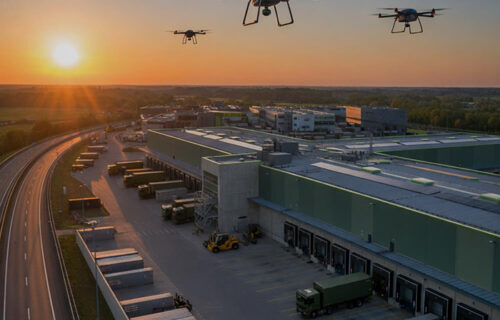
At the same time, the sector is expanding beyond traditional military uses. The whitepaper points to growing demand for facilities supporting cyber security, artificial intelligence, drone technology and advanced communications systems. This reflects a broader transformation in defence infrastructure, where digital capabilities and technological resilience are becoming as important as physical assets.
The investment landscape itself is also evolving. Public-private partnerships, sale-and-leaseback structures and institutional capital are playing an increasingly important role in financing new developments. Governments remain central as anchor tenants and regulatory authorities, but private investors are expected to contribute significantly to the expansion and modernisation of infrastructure.
“Investments in defence real estate combine stability and profitability,” said Kilian Mahler, Managing Partner at Periskop Logistics. “As a sector largely independent of economic cycles, with creditworthy tenants and long-term leases, it provides reliable returns.”
The report also identifies substantial growth potential over the coming years, with demand expected to increase sharply before the end of the decade. This is likely to support new development activity, particularly in energy-efficient and technologically advanced facilities.
However, the sector comes with specific challenges. Projects typically require complex permitting processes, high security standards and strict compliance with environmental, social and governance frameworks. Investors must also navigate regulatory requirements and coordinate closely with public authorities throughout the development process.
A notable shift is also taking place in the interpretation of ESG criteria. The whitepaper argues that security and resilience are increasingly being viewed as foundational elements of sustainability, particularly in the context of protecting infrastructure, economies and democratic systems.
“Security is the foundation of all sustainability,” said Dirk Niebel, highlighting the growing alignment between defence infrastructure and broader ESG considerations.
Overall, the findings point to the emergence of a new real estate segment positioned at the intersection of logistics, infrastructure and technology. As Europe continues to adapt to a changing geopolitical environment, defence-related properties are expected to play an increasingly important role in both economic strategy and institutional investment portfolios.
Photos below: Prof. Dr. Thomas Beyerle, copyright HBC Biberach and Dr. Kilian Makler, copyright Periskop Logistics