Friday, 27 November 2026
Urban regeneration is becoming an increasingly important component of Romania’s residential development market, as developers turn their attention towards former industrial platforms, underutilised urban land and established neighbourhoods requiring renewed investment. Rather than extending cities beyond their existing boundaries, these developments seek to introduce new residential, commercial and community functions into the existing urban fabric.
The fifteen nominations for Best Urban Regeneration Residential Project in Development at the CIJ Awards Romania 2026 reflect different approaches to this transformation across Bucharest, Cluj-Napoca and Timișoara. They range from individual residential developments and heritage conservation projects to large-scale masterplans capable of transforming entire districts.
Beyond the delivery of new housing, the category highlights the importance of architectural integration, environmental performance, infrastructure, economic revitalisation and the creation of communities that contribute to the wider urban environment.
Centropolitan by Cordia Romania represents a €65 million investment in the transformation of an underutilised site adjacent to Alba Iulia Square and Bucharest Mall. Comprising 274 residences alongside retail and community facilities, the development follows the principles of the 10-minute city. Its regeneration strategy builds upon established transport, commercial and social infrastructure, introducing additional residential density into a mature central district. The project demonstrates how redevelopment within existing neighbourhoods can accommodate new housing while strengthening local economic activity and reducing pressure for outward urban expansion.
Citius by Fimaro Development brings a large-scale residential concept to Cluj-Napoca, with approximately 650 apartments planned across three phases. The first phase comprises 172 apartments, 178 underground parking spaces and approximately 2,800 sqm of green areas. Community facilities include playgrounds, walking paths, coworking spaces and retail accommodation. Environmental performance forms an important part of the development, with photovoltaic panels, thermal insulation and construction to nearly zero-energy building (nZEB) standards. Its contribution to urban renewal is primarily centred on residential quality, energy efficiency and community infrastructure.
H EAST RESIDENCE, Phase I by Hagag Development is transforming the former Izolatorul factory site in eastern Bucharest into a residential community incorporating commercial and recreational functions. Located on Electronicii Road, close to Veranda Mall and Obor Market, the wider development will comprise seven buildings with more than 560 apartments. The first phase, scheduled for completion by mid-2027, will deliver 273 apartments, 380 parking spaces and approximately 2,500 sqm of retail accommodation. The redevelopment introduces new economic activity to a former industrial location while benefiting from established neighbourhood infrastructure.
HILS Republica by HILS represents one of the largest industrial land transformations among this year’s nominations. The development is converting the former 18-hectare Faur-Republica industrial platform in eastern Bucharest into a residential district planned to accommodate more than 5,000 homes over a ten-year development period. Its masterplan incorporates more than 55,000 sqm of parks, pedestrian routes and cycling infrastructure, alongside commercial, sporting and wellness facilities. Located approximately 750 metres from Republica metro station, the project combines large-scale brownfield regeneration with the creation of a new urban community based on the seven-minute city concept.
INFINITY NORD by REDPORT, developed in partnership with Dan Șucu, represents the initial stage of a wider transformation of the Străulești–Dămăroaia area in northern Bucharest. The €50 million first phase comprises 213 apartments and approximately 4,652 sqm of commercial, service and food and beverage accommodation. Pre-leasing agreements with Auchan and World Class provide a commercial foundation for the emerging neighbourhood. The architectural concept incorporates pedestrian-oriented spaces and active ground-floor commercial areas, supporting the transition of a former urban platform into a mixed-use destination serving residents and the surrounding district.
Nusco City by NUSCO is a substantial urban regeneration development within Bucharest’s Aviației business district, with an estimated total investment of €1.5 billion. Covering approximately 23 hectares, the masterplan is expected to accommodate more than 4,000 apartments alongside educational, healthcare, hospitality, office and commercial facilities. Nearly 1,000 families already occupy the first phase, while the second phase comprises 840 apartments and the third introduces a further 838 units. A 20,000 sqm urban forest initiative incorporating more than 1,000 trees forms part of the landscaping strategy. The development’s scale illustrates the potential for private investment to reshape an entire urban district.
PALTIM by SPEEDWELL takes a heritage-led approach to the regeneration of a former industrial site along the Bega River in central Timișoara. The development comprises 344 apartments across three residential buildings, complemented by more than 2,500 sqm of retail and service accommodation. A defining feature is the preservation and adaptive reuse of two historic buildings, retaining elements of the site’s architectural identity while introducing contemporary residential functions. With two residential buildings already completed, PALTIM demonstrates how industrial heritage can remain relevant within a renewed urban environment rather than being removed entirely.
PRIMA Solis by Prima Development contributes to the residential renewal of eastern Bucharest through a phased development planned to deliver approximately 1,600 apartments across seven stages. The project incorporates around 2,500 sqm of retail accommodation, 100 electric vehicle charging stations and an extensive landscaping programme designed by Poteca Studio. Its proximity to Fundeni Lake and surrounding parks informs the development’s relationship with the natural environment. Construction to nZEB standards and the integration of smart-home technologies support its environmental objectives. The first phase is scheduled for completion in summer 2027.
QUEENS District by SPEEDWELL represents a €113 million mixed-use investment within Bucharest’s Aviației district. The development combines 237 apartments, approximately 22,500 sqm of Class A office accommodation and 2,500 sqm of retail and services within a masterplan exceeding 45,000 sqm. Underground parking allows landscaped communal spaces and pedestrian circulation to take priority at ground level. The office component has achieved BREEAM Excellent certification at the design stage, while STRABAG’s pre-lease of approximately 4,600 sqm provides an early commercial commitment. The development contributes to the evolution of an established business district into a more multifunctional neighbourhood.
Sema Home by Sema Real Estate introduces residential accommodation into the long-term regeneration of the former Semănătoarea industrial platform on the banks of the Dâmbovița River. The wider Sema Parc masterplan covers approximately 41 hectares, with a long-term development vision exceeding 965,000 sqm of built area. Sema Home’s first phase represents an investment of nearly €55 million and will deliver 301 apartments. The development has obtained BREEAM Excellent certification at the design stage and follows nZEB principles. Its proximity to Petrache Poenaru metro station, universities, workplaces and established services supports the transition of a predominantly commercial district into a neighbourhood active beyond conventional working hours.
SkyLight Residence by InteRo Property Development represents a large-scale mixed-use transformation within Bucharest’s Obor district, acknowledging the area’s industrial association with Aversa Manufacturing. The masterplan encompasses more than 2,200 apartments, 115,000 sqm of office accommodation and 8,540 sqm of commercial space within a total built area exceeding 480,000 sqm. Educational, recreational and community facilities are integrated into the development’s 15-minute city concept. Its proximity to Veranda Mall, Obor Market and existing public transport infrastructure provides a foundation for integration with the surrounding district. The project is designed to meet BREEAM Excellent standards.
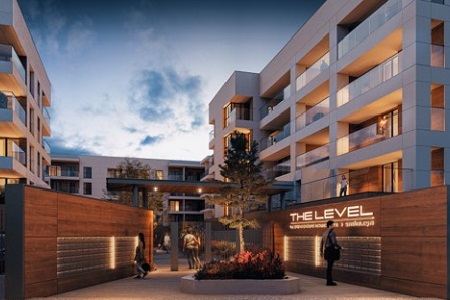
THE LEVEL APARTMENTS, Phase IV by REDPORT represents the final stage of an established residential development in the Străulești–Petrom City area of northern Bucharest. The fourth phase comprises 202 apartments across approximately 18,718 sqm of gross area, with construction scheduled between 2026 and 2028. Landscaped communal areas, residential services and a dedicated garden form part of the development. Unlike projects focused on the transformation of extensive industrial platforms, its regeneration contribution lies in the gradual consolidation of a residential community and the continued modernisation of an emerging urban district.
Titan Premium Apartments by Media City is transforming a former factory site covering 12,300 sqm in Bucharest’s District 3. The development comprises 435 apartments across six interconnected buildings, alongside commercial accommodation and landscaped outdoor spaces. Buildings of varying heights, setbacks and openings have been designed to improve daylight penetration into internal courtyards. Locating most parking underground releases additional ground-level space for landscaping and pedestrian circulation. The architectural approach demonstrates how former industrial land can accommodate increased residential density while addressing the relationship between buildings, open spaces and residential privacy.
U-Home by Forte Partners represents the residential component of U•Center 3, completing the regeneration of the former Adesgo industrial platform in central Bucharest. Located between Tineretului and Carol parks, the development will introduce approximately 200 homes, retail accommodation, publicly accessible pedestrian routes, landscaped gardens and a central green plaza. The project is designed to operate with fully electric infrastructure, meet nZEB standards and pursue BREEAM Excellent certification. Independent acoustic assessments reported in the nomination indicate sound insulation exceeding current regulatory requirements. U-Home adds a residential dimension to an established employment destination, completing its transition into a mixed-use neighbourhood.
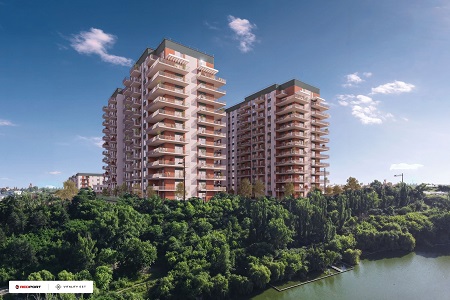
Vitality Est by REDPORT, developed together with Dan Șucu, contributes to the renewal of the Pantelimon district in eastern Bucharest. Covering approximately 27,000 sqm of land, the development will deliver more than 500 apartments across three phases, with 145 apartments included in the first stage. Commercial functions, landscaped spaces and community facilities complement the residential component. Its proximity to Pantelimon Park and Lake, sporting facilities, schools, healthcare services and public transport supports the development’s integration into the wider neighbourhood. The project illustrates how residential investment can contribute to the modernisation of districts historically less represented by integrated contemporary housing developments.
A defining characteristic of this year’s nominations is the transformation of former industrial land. Developments such as HILS Republica, H EAST RESIDENCE, PALTIM, Sema Home, Titan Premium Apartments and U-Home demonstrate how sites that previously served industrial purposes can be reintegrated into the economic and social life of Romania’s cities.
However, urban regeneration is not exclusively associated with former factories. The renewal of underutilised land, the consolidation of emerging residential districts and the introduction of complementary functions into established business locations represent equally relevant approaches to urban development.
Mixed-use planning has become particularly prominent among the nominations. The integration of housing with employment, education, healthcare, retail and recreational facilities reflects a growing recognition that successful neighbourhoods require more than residential accommodation. Developments incorporating these functions have the potential to reduce unnecessary journeys, support local businesses and generate activity throughout the day.
Environmental performance is another common consideration, with several nominated developments adopting nZEB construction standards, BREEAM certification objectives, electric mobility infrastructure and extensive landscaping programmes. The transformation of previously developed land also offers opportunities to accommodate urban growth without placing additional pressure on undeveloped areas.
Heritage preservation introduces a further dimension to the category. Retaining elements of industrial architecture and local identity can provide continuity between a neighbourhood’s past and its future, distinguishing regeneration from conventional redevelopment.
The challenge in evaluating urban regeneration lies in distinguishing the quality of an individual residential development from its broader contribution to the city. Investment value, architectural quality and the number of apartments delivered are important considerations, but they do not independently determine the success of regeneration.
The accessibility of public spaces, integration with surrounding neighbourhoods, environmental improvements, infrastructure capacity and the delivery of promised community facilities are equally significant. Developments that remain accessible and economically relevant beyond their immediate residential boundaries have the potential to generate more enduring urban benefits.
The fifteen nominations at the CIJ Awards Romania 2026 demonstrate the increasing complexity of residential development and the growing responsibility of private developers in shaping Romania’s urban future.
Ultimately, successful urban regeneration should be measured not only by what is constructed, but by how effectively a development transforms its location, reconnects previously underutilised land with the city and creates lasting value for existing and future communities.
The winner of the Best Urban Regeneration Residential Project in Development category will be announced at the CIJ Awards Romania 2026 Gala on 3 December at the Radisson Blu Hotel in Bucharest.