Wednesday, 25 November 2026
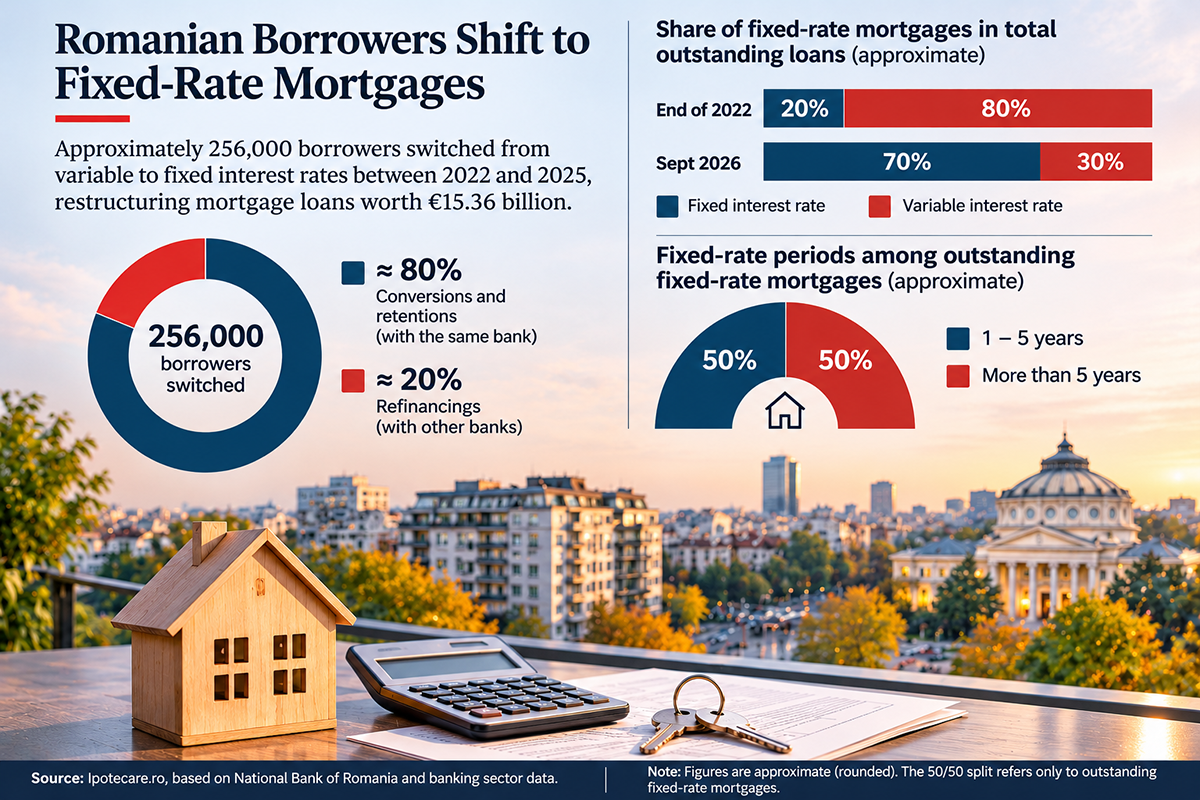
Approximately 256,000 Romanian mortgage borrowers switched from variable to fixed interest rates between 2022 and 2025, restructuring loans worth a combined €15.36 billion, according to an analysis by mortgage broker Ipotecare.ro based on National Bank of Romania statistics and banking sector data. Around 70% of outstanding Romanian mortgages carried fixed interest rates at the end of September 2026, compared with approximately 20% at the end of 2022. The reversal followed a period of rising inflation and borrowing costs that placed considerable financial pressure on households.
According to the analysis, variable mortgage interest rates doubled within nine months during 2022, increasing monthly repayments by approximately 50%. The average debt-to-income ratio rose from 35% at the end of 2021 to 47% in 2023. Nearly 80% of the mortgage conversions and refinancing activity involved borrowers remaining with their existing banks, while just over 20% involved switching to another lender. The transition towards fixed interest rates has reduced borrowers’ immediate exposure to monetary policy changes. However, approximately half of outstanding fixed-rate mortgages have an initial fixed-rate period of between one and five years, with the remainder fixed for more than five years.
This creates a potential refinancing challenge as shorter fixed-rate agreements expire, particularly for households that secured more favourable borrowing conditions in previous years. “Borrowers must constantly keep an eye on macroeconomic conditions and average interest rates,” said Laurentiu Bogdan, Managing Partner at Ipotecare.ro, who anticipates an increase in mortgage rates at the beginning of 2027.
Romania’s outstanding residential mortgage balance reached approximately €23.3 billion at the end of September 2026, representing growth of 5.11% in local currency terms compared with the end of 2025. Variable-rate lending continues to account for approximately 30% of outstanding mortgages, largely comprising loans issued under the Prima Casa government-backed housing programme and foreign-currency mortgages.
For Romania’s residential property market, the transition towards fixed-rate financing provides greater short-term predictability of household expenditure. Nevertheless, future housing affordability and purchasing capacity will remain sensitive to borrowing costs, income growth and the conditions available when existing fixed-rate periods expire.
Source: Ipotecare.ro, based on National Bank of Romania and banking sector data.