Tuesday, 24 November 2026
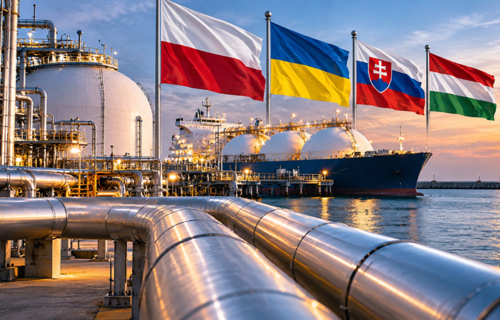
Poland is strengthening its position as a regional energy supplier through new agreements involving Ukraine, Slovakia and Hungary. Polish energy group Orlen has signed a contract with Ukraine’s Naftogaz to supply natural gas sourced from three shipments of US liquefied natural gas (LNG), scheduled to arrive at the Świnoujście terminal during the first quarter of 2027.
The LNG will be converted into natural gas before being transported to Ukraine through cross-border pipelines. The agreement provides Ukraine with an additional supply route amid winter energy demand and continued Russian attacks on the country’s energy infrastructure.
Orlen has also reached agreements with Slovakia’s SPP and Hungary’s MVM ONEnergy to explore potential gas supplies through Polish LNG infrastructure. These discussions follow an earlier contract with Slovak energy company ZSE, which covered approximately 30% of its annual gas requirements and included supplies originating from the United States.
Poland’s expanding energy infrastructure provides opportunities to serve markets beyond its domestic requirements. According to figures reported by Reuters, the country has an annual gas import capacity of approximately 37.3 billion cubic metres, compared with domestic consumption of around 20 billion cubic metres. However, the volume available for neighbouring markets depends on cross-border pipeline capacity, contractual commitments and seasonal demand.
Separately, Orlen and US investment group Carlyle have agreed to explore potential joint investments across the oil, gas and electricity sectors. No specific projects or financial commitments have been announced.
The development of alternative supply routes could reduce Central Europe’s dependence on individual energy suppliers and improve the resilience of regional energy networks. For industrial businesses and other major energy consumers, greater supply diversification could help mitigate the risks associated with disruptions, although it does not necessarily guarantee lower energy prices.
Poland’s emergence as a regional gas distribution centre will depend on competitive delivery costs, demand from neighbouring countries and the capacity of existing infrastructure. Further investment in terminals and cross-border connections will require sufficient commercial demand to support long-term operating costs.
The latest agreements represent a further step towards integrating Central European energy markets, although Poland’s long-term role as a regional supplier will ultimately depend on the commercial viability of these arrangements.
Source: WEI