Monday, 19 October 2026
China’s economy recorded stronger growth during the third quarter of 2026, although the improvement continues to contrast with difficulties affecting the country’s real estate sector. According to figures released by the National Bureau of Statistics on 19 October, gross domestic product increased by 4.5% compared with the same period last year, accelerating from 4.3% in the second quarter. Economic growth reached 4.6% during the first nine months of 2026, placing the country within reach of its official annual target of between 4.5% and 5.0%.
The latest figures illustrate how China’s economy is becoming less dependent on property development and more reliant on manufacturing, technology and international trade. Industrial production increased by 5.5% in September, supported by continued activity across manufacturing industries. Investment in advanced production facilities, automation and technology-related businesses is helping sustain economic output. These developments could create opportunities for industrial property owners, logistics operators and developers serving expanding manufacturing sectors.
Domestic consumption, however, remains relatively subdued. Retail sales increased by just 1.1% in September, suggesting that households remain cautious about spending. Concerns surrounding employment, household finances and residential property values continue to influence consumer confidence. For shopping centres, retail landlords and businesses dependent on discretionary expenditure, the modest improvement indicates that operating conditions may remain challenging despite stronger national economic growth.
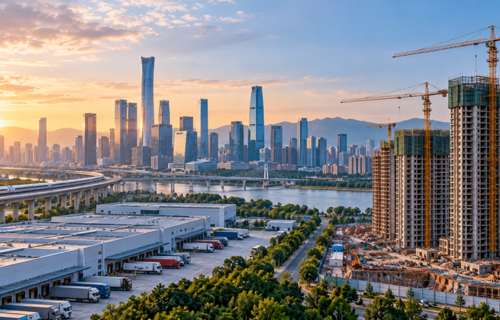
The property sector continues to represent one of China’s most significant economic weaknesses. Real estate development investment declined by 20.6% during the first nine months of 2026, reflecting persistent financial pressure on developers, weak residential demand and the consequences of earlier excessive borrowing. Overall fixed-asset investment also decreased by 7.2% during the same period, indicating continued caution among businesses and investors when committing capital to new projects. The figures demonstrate that stronger economic activity has yet to translate into a meaningful recovery in property development.
China’s prolonged property downturn is also changing the structure of its commercial real estate investment market. Developers seeking to reduce financial obligations and improve liquidity have increasingly considered selling income-producing properties, including office buildings, shopping centres, hotels and logistics facilities. These disposals may create acquisition opportunities for institutional investors and investment funds, although weaker rental demand, financing conditions and uncertainty surrounding asset valuations remain important considerations.
The outlook varies considerably between property sectors and locations. Industrial facilities connected to advanced manufacturing, technology production and international supply chains may benefit from continued economic expansion. In contrast, residential developments in markets with substantial unsold housing inventories face a more difficult recovery. Office and retail properties are also exposed to changes in corporate expansion plans, household consumption and tenant demand, making asset selection increasingly important for investors seeking stable long-term income.
Government efforts to strengthen domestic spending, stabilise residential markets and encourage private investment will remain important during the final months of 2026. However, restoring confidence in property markets may require more than an improvement in national economic indicators. Developers must address existing financial obligations, while potential homebuyers and commercial investors need greater certainty regarding property values, financing availability and future demand. International investors will also be assessing whether China’s changing economic priorities can generate sustainable opportunities across industrial, logistics and other commercial property sectors.
China’s third-quarter performance demonstrates that the economy can continue expanding even as real estate investment contracts sharply. Nevertheless, the difference between industrial growth and property market conditions raises questions about how widely the benefits of economic expansion are being distributed. With China approaching its annual growth objective, attention is increasingly shifting towards whether stronger economic performance can eventually restore confidence in residential and commercial property markets. For developers, property owners and institutional investors, the pace and direction of that recovery will remain central considerations heading into 2027.
Source: CIJ.World Research & Analysis Team