Saturday, 19 September 2026
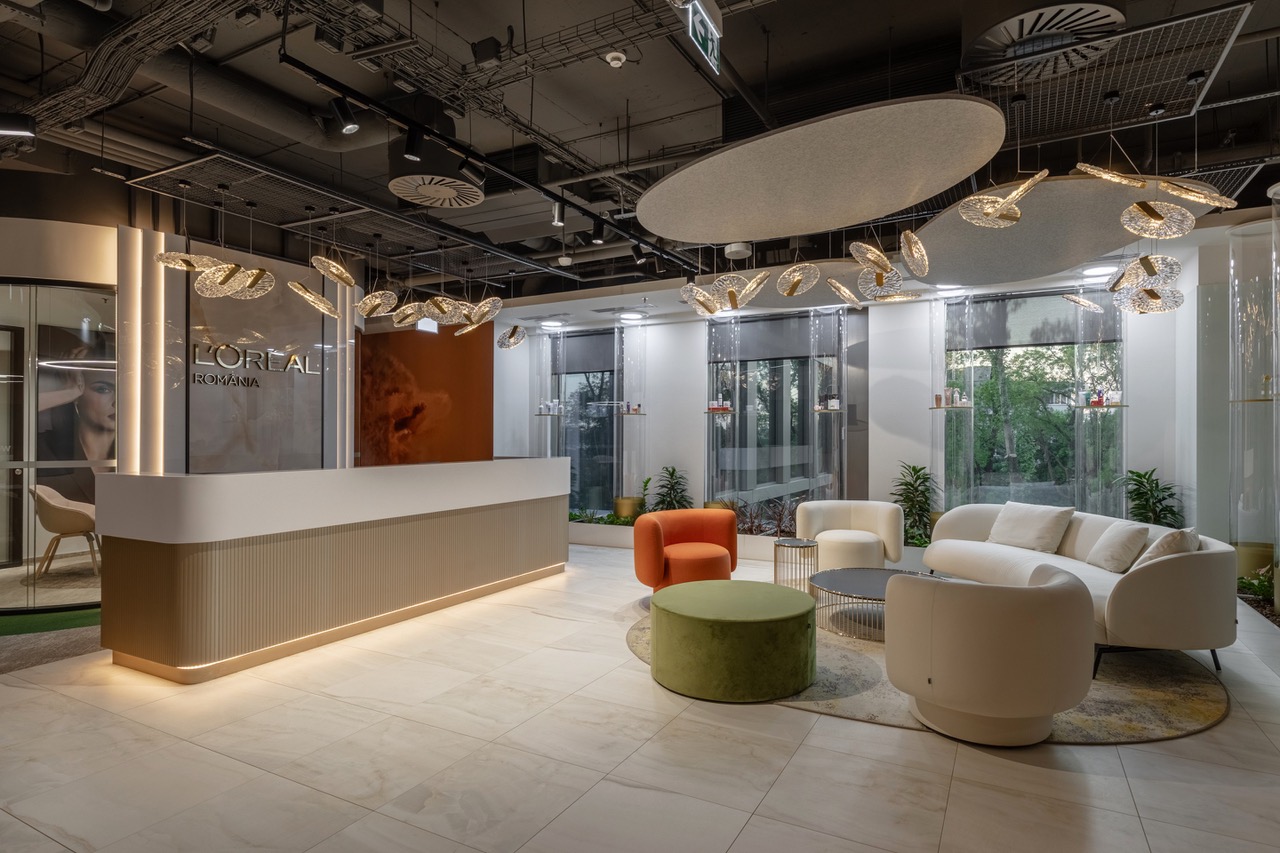
Workspace design is no longer treated as a tenant-led cost, but has become a core element of leasing strategy and asset positioning, with landlords across Romania and Central and Eastern Europe increasingly backing fit-out quality and embedding workplace experience into how office space is marketed and secured, according to a CIJ EUROPE Q&A with Alex Didea, Managing Partner at Workspace Studio.
“What was once a tenant-only matter is now clearly part of the leasing proposition,” Didea explains. “Landlords are competing through fit-out contributions, upgraded amenities, and hospitality-led environments. It is part of their asset strategy.”
This shift has been driven by a combination of structural and cyclical factors. While elements of the trend were visible before 2020, the post-pandemic environment accelerated it significantly. During periods of weaker demand, landlords increased incentives, often preferring to invest directly into workspace improvements rather than offer cash contributions. This has since reset occupier expectations, with companies actively seeking higher levels of landlord support when relocating.
At the same time, a pronounced flight to quality is reshaping the office market. Buildings that fail to meet modern standards in areas such as air quality, mechanical systems and overall workplace experience are increasingly at risk of obsolescence. “It is no longer optional,” Didea notes. “If a building does not provide a high-quality environment, it will struggle to compete. The outcome is simple: refurbish or become obsolete.”
From desks to value creation environments
Beyond landlord strategy, the fundamental purpose of the office itself is evolving. Traditional models centered on individual workstations are giving way to environments designed around collaboration, interaction and team-based productivity.
“The paradigm has changed,” Didea says. “Before, you provided desks for individuals to work. Now, value is created through collaboration. Offices must support teams working together, not just individuals working alone.”
This transformation reflects broader shifts in how work is organised, influenced by hybrid models, digital tools and increasingly artificial intelligence. As a result, workspace design must address not only physical ergonomics, but also cognitive and social dynamics that influence performance.
Rather than over-accommodating employees, Didea frames this as a necessary response to how value is now created. “It is about creating spaces where people want to be. If employees are comfortable, engaged and connected, they create more value.”
Inclusive design is also becoming more relevant, with workplaces expected to accommodate a wide range of employee needs, from different personality types to varying work styles. The challenge, he notes, is to create environments that support both individual focus and collective interaction.
Cost pressures drive smarter allocation, not lower quality
With fit-out costs rising across the region, occupiers face increasing pressure to balance budgets with the need to deliver attractive workplaces. According to Didea, the solution lies not in reducing quality, but in allocating investment more strategically.
“It is not about cheap versus premium. It is about how you distribute the budget to maximise value.”
This approach often involves prioritising high-impact areas such as collaboration zones, social spaces and key employee touchpoints, while limiting expenditure in less critical areas. The strategy varies depending on how each organisation operates, but the principle remains consistent: align investment with where value is actually created.
Data gaps and the move toward behavioural planning
Despite growing access to workplace data, many companies still design offices based on policy rather than actual usage. Didea points to a persistent gap between stated attendance targets and real occupancy levels, suggesting that traditional planning models are increasingly misaligned with reality.
“The question is whether you design based on policy or behaviour. The answer is behaviour.”
However, while data collection has improved, interpretation remains limited. Existing tools provide insights into presence and movement but offer less clarity on why people use space in certain ways or what drives productivity. As a result, flexibility has become a critical component of modern office design.
“The practical solution is to create adaptable environments,” he says. “Spaces must be easy to reconfigure as you learn how people actually work within them.”
This has driven demand for modular and mobile solutions, allowing companies to adjust layouts without major structural changes as their needs evolve.
Mixed-use and proximity reshape office demand
At the urban level, workplace trends are increasingly tied to broader changes in how cities function. Didea points to the growing importance of mixed-use developments, where offices are integrated with residential, retail and leisure components, creating more complete, 24-hour environments.
“If commuting exceeds 30 minutes, people are far less willing to come to the office,” he says. “This is driving demand for developments that bring everything closer together.”
This shift reflects changing expectations around convenience and quality of life. In contrast, traditional single-use business districts, particularly those reliant on long commutes, are facing structural pressure as utilisation declines and surrounding ecosystems weaken.
More broadly, Didea sees this as part of a transition toward a more shared and experience-driven model of living and working. The emphasis is moving away from ownership toward access, visible in the growth of flexible workspaces, rental housing models and amenity-rich developments designed to support interaction and lifestyle.
His more provocative observation that society may be moving toward more centralised or “communitarian” structures should be understood in this context. Rather than a literal political shift, it reflects the increasing role of integrated systems, whether driven by large organisations or technology platforms, in shaping how people live and work.
For real estate, the implications are practical. Assets are no longer evaluated in isolation, but as part of a broader ecosystem that must support proximity, convenience and community. Developments that combine multiple functions and deliver a cohesive user experience are increasingly outperforming single-use formats.
AI to enhance decision-making, but not replace strategy
Looking ahead, artificial intelligence is expected to play a growing role in workplace design, particularly in improving space optimisation, analysing employee behaviour and enhancing cost efficiency. However, Didea emphasises that AI will support, rather than replace, strategic decision-making.
“AI will make workplace planning more evidence-based, but it depends entirely on the quality of data and governance behind it.”
By providing deeper insights into how people interact within offices, AI could help reduce inefficiencies and enable more targeted investment. At the same time, challenges around data quality, interpretation and privacy remain significant.
A widening gap between prime and obsolete assets
The convergence of these trends is reinforcing a growing divide within the office market. High-quality, well-located buildings with strong amenities and adaptable design are increasingly commanding premium rents and attracting demand. Meanwhile, secondary assets risk rapid decline unless significant capital is deployed to upgrade them.
“In today’s market, there is no middle ground,” Didea concludes. “You either invest and stay relevant, or you fall behind.”
As workspace design continues to evolve alongside technology, workforce expectations and urban development patterns, its role within real estate strategy is set to deepen further, positioning it as a key driver of both leasing performance and long-term asset value.
© 2026 cij.world