Sunday, 4 October 2026
Representatives of Slovakia and Germany have reaffirmed the strength of their bilateral relationship, while warning that rising energy costs and broader economic challenges are placing increasing strain on Europe’s industrial base.
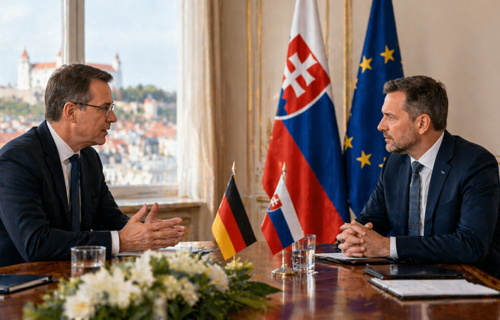
During discussions in Bratislava, Marek Eštok and Gunther Krichbaum highlighted the importance of close cooperation in navigating current pressures affecting the European economy. Both sides emphasised that maintaining competitiveness will require a coordinated response, particularly in sectors heavily exposed to energy costs.
Germany continues to play a central role in Slovakia’s economy, with strong trade links and a significant presence of German companies across the country. This interdependence reinforces the need for aligned policies, especially in areas such as industrial development and investment.
Energy supply remains a key concern. Disruptions linked to infrastructure such as the Druzhba pipeline have underscored the vulnerability of the region to external shocks. Officials stressed that ensuring reliable and affordable energy is essential not only for economic stability but also for sustaining long-term growth.
The talks also covered regional cooperation, with Slovakia preparing to assume leadership of the Visegrád Group. The government signalled its intention to strengthen dialogue within the bloc while continuing engagement with key partners such as Germany on wider European issues.
Geopolitical developments remain an important backdrop to these discussions. The ongoing conflict in Ukraine continues to shape policy priorities, with Slovakia expressing support for the country’s future integration into the European Union, provided necessary conditions are met.
Looking ahead, both countries pointed to the importance of unity within the EU in addressing shared challenges. Future budget discussions will be a critical test, particularly in balancing investment needs with efforts to reduce regional disparities.
The meeting reflects a broader recognition that Europe’s economic outlook will depend on its ability to manage energy risks, protect industrial capacity and maintain coordinated action among member states.