Sunday, 18 October 2026
Samsung is positioning SmartThings Pro as a practical bridge between consumer-level connected ecosystems and the operational requirements of professional building owners.
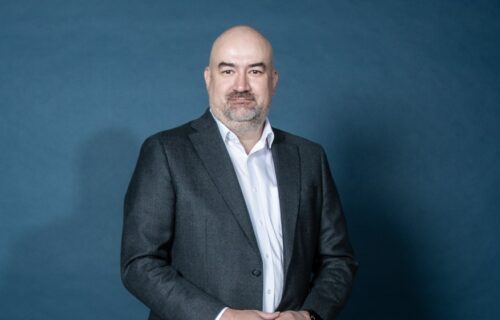
In a conversation with CIJ Europe, Vlad Croitoru, Business Development Manager at Samsung Climate Solutions Romania, described how the company is approaching multi-building monitoring, interoperability across brands and the role of artificial intelligence in improving energy efficiency and comfort standards. He also discussed the strategic importance of training installers and designers, the integration opportunities following Samsung’s acquisition of FläktGroup, and the growing demand for draft-free climate solutions.
Croitoru explained that SmartThings Pro was designed to simplify what has traditionally been a technically complex environment dominated by heavily programmed building management systems.
“SmartThings Pro, it’s a new solution, it’s a new app that Samsung developed,” he said. “When you’re talking about a BMS, you’re talking about a significant amount of programming.” Samsung’s alternative, he noted, is to approach this from the end-user’s interaction with connected devices and extend that logic into professional property management. “We believe that it’s way better to come from the end-user perspective.”
A central component of SmartThings Pro is interoperability. Croitoru emphasized that SmartThings Pro is built around the Matter protocol, allowing devices from different manufacturers to communicate through a common digital language. “We aim to control every device that can be linked to a Wi-Fi, regardless of the brand, as long as it can be linked to a Wi-Fi and if it’s controlled with the Matter protocol,” he said. He described the advantage for portfolio owners managing multiple locations as immediate visibility and remote control from a single interface.
“If you have a chain with 20 stores, now you can see remotely, from your head office, how the smart equipment is running in each location.”
Automation and scheduling form another layer of the solution’s value proposition. Croitoru pointed to everyday inefficiencies such as lighting or air conditioning left running overnight or cooling systems operating while windows are open. “Maybe you have the air conditioning on and it’s left running during the night. It should not be and with SmartThings Pro you can close it,” he said, adding that these functions are not new in concept but are often difficult to configure. “We don’t invent things now. We only make it way easier for the owner to set and to use.”
Artificial intelligence plays a growing role in refining these processes. Croitoru described AI-driven algorithms that learn occupancy patterns and adapt start-up times for heating and cooling systems to reach comfort targets more efficiently. “We are using AI algorithms that growing the buildings’ energy efficiency level, higher and higher,” he said. Unlike fixed schedules, which may waste energy during mild nights or fall short during hotter periods, AI systems can dynamically adjust. “This kind of efficiency can be achieved only with a learning AI.” He stressed that this capability depends heavily on sensor data. “Everything is sensor-based. Everything is sensor-based.”
While technology is advancing rapidly, Croitoru acknowledged that European privacy regulations limit how deeply behavioral data can be integrated into automation systems. “In Europe it’s a bit tricky because we have the GDPR” he said, noting that the technical potential for more personalized control already exists. “Technology-wise, we are already there. It’s simply a matter of personal choice — how much are we willing to accept?”
Beyond technology, Croitoru highlighted cultural differences in comfort expectations as a key factor influencing energy consumption. He compared heating norms in Germany with those common in Romanian households to illustrate how behavioral patterns can override equipment efficiency. “In Germany, the room temperature during winter is typically 18–19°C. If you go to a Romanian household with a similar climate, they will say that the heating system is not working,” he explained. He added that historical context also shapes present behavior. “I think there is some trauma involved in the former Communist Bloc, because we had very harsh winters without any heating given by the government.”
Even the most efficient systems, he noted, can become inefficient if users consistently select extreme temperature settings. “Everybody is just switching on the air conditioning and putting on 18 degrees. In such cases, even the most efficient equipment becomes inefficient.”
Samsung’s acquisition of FläktGroup represents a significant expansion of Samsung’s indoor climate capabilities. Previously strong in VRF systems and heat pumps, we did not manufacture air handling units or close-control solutions. “FläktGroup is a premium manufacturer of air handling units — something we previously did not have in our portfolio,” he said. “Being in the same group will lead to seamless integration.” He noted that the acquisition also opens new opportunities in data-center and IT-focused projects. “The acquisition also opens access to new segments, particularly data centers and IT-focused projects.”
Training and technical education form another pillar of Samsung’s regional strategy. Croitoru confirmed plans for a dedicated training and experience center in Bucharest aimed at improving standards across design, installation, commissioning and maintenance. “We will cover the design phase, the installation phase, the commissioning phase, the maintenance phase, and of course the service.” He views the initiative as both a market-development effort and a quality assurance mechanism. “It is our responsibility to contribute to raising the level of expertise in the market.”
Replacement projects are also becoming increasingly relevant as older systems reach the end of their economic life. Croitoru noted that equipment installed in the late 2000s is now significantly less efficient than current alternatives. “The efficiency level of the 2008 equipment is significantly different from today’s standards,” he said. “So, if you want to be efficient, upgrading to modern systems becomes essential.”
On the product side, Samsung continues to emphasize comfort-focused technologies such as WindFree™, which successfully eliminates cold drafts while maintaining stable temperatures. “WindFree™, it’s all about comfort. It’s a technology that was invented by Samsung,” Croitoru said, adding that its replication by competitors, reflects market validation. Samsung’s WindFree™ technology provides high-capacity cooling when needed and transitions to a micro-hole airflow pattern during lower load periods, especially at night. “With the micro-holes, users are able to feel the cold air, but without feeling the drafts,” he explained. For markets sensitive to airflow discomfort, he added, the appeal is clear. “For the Romanian market, it’s perfect. We hate the draft; we don’t want to feel any cold drafts.”
While Croitoru declined to reveal specific upcoming product releases, he signaled continued development in digital integration and climate innovation. “We are preparing some nice surprises. Keep an eye on us because you’ll be impressed. There are developments ahead that will further strengthen our position.”
© 2026 cij.world