Monday, 23 March 2026
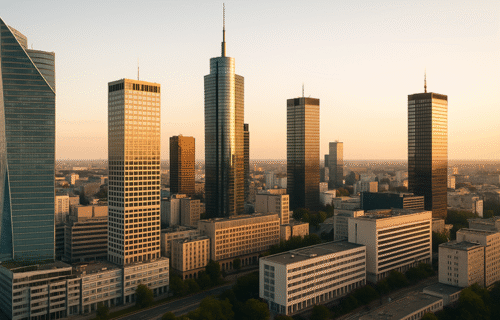
Office leasing activity in Warsaw remained robust throughout 2025, even as the amount of newly completed space fell to one of the lowest levels in recent years. Market analysts say the Polish capital is still experiencing a shortage of modern office availability, particularly in central districts, as development activity slows and older buildings are gradually withdrawn from use.
Total tenant demand during the year reached approximately 790,000 square metres, with the final quarter standing out as the most active period, when signed agreements exceeded 300,000 square metres. The high level of leasing was recorded against a backdrop of constrained supply, with less than 100,000 square metres of new offices delivered during the year and under-construction volumes continuing to decline.
A large share of activity consisted of companies extending or renegotiating their existing agreements, while the remainder came from firms entering new locations or modestly expanding their footprint. Central Warsaw and the Służewiec district accounted for the highest concentration of transactions, although their tenant profiles differed. New occupiers were more visible in the city centre, whereas Służewiec saw a greater share of contract renewals. Among the year’s largest deals were major telecom and pharmaceutical tenants choosing to remain in their current buildings while adjusting lease terms and, in some cases, taking additional space.
Sustained demand has placed upward pressure on headline rents in prime central projects, where monthly rates now reach the upper end of the local market, with premium floors in landmark towers achieving even higher figures. By contrast, business zones outside the core continue to offer more affordable options, drawing interest from cost-conscious occupiers seeking modern facilities with good transport links.
Consultants note that the rising cost of relocation and office fit-outs is encouraging many firms to stay in established premises rather than move, a trend that is also contributing to longer lease commitments. Buildings that combine strong technical standards with efficient operating costs are increasingly favoured as companies become more selective in their space requirements.
On the development side, most new projects completed in 2025 were concentrated in central locations, while construction starts slowed further compared with previous years. At the same time, several outdated office properties were removed from the market or earmarked for conversion, gradually improving the overall quality of available stock. This restructuring has been particularly visible in older office districts, where redevelopment and change-of-use schemes are beginning to reshape the local landscape.
By the end of the year, Warsaw’s modern office inventory exceeded six million square metres. However, the pipeline of future projects shrank noticeably, signalling that new additions are likely to remain limited over the next two years. Analysts expect that the combination of steady tenant demand, cautious development and the ongoing withdrawal of inefficient buildings will continue to tighten availability, especially for large, contiguous spaces in prime areas.
Vacancy levels declined further during the year, with the sharpest reductions recorded in the central business zone, where demand for high-quality space remains strongest. Looking ahead, market observers anticipate that selective rent increases and a growing emphasis on refurbishing or repurposing older properties will shape Warsaw’s office sector as companies balance cost considerations with the need for modern, well-located workplaces.
Source: AXI IMMO