Monday, 23 March 2026
Rio de Janeiro’s office property market in 2025 continued to adjust to slower corporate expansion and changes in workplace strategies that began in previous years. While economic conditions in Brazil showed gradual stabilisation, demand for traditional office space in the city remained uneven, with many companies maintaining hybrid work models and reassessing their long-term space requirements.
Leasing volumes over the course of the year were generally moderate, with most transactions concentrated in higher-quality buildings located in established business districts such as Centro and Barra da Tijuca. Larger occupiers, including public institutions and companies linked to the legal and energy sectors, accounted for a noticeable share of new agreements and renewals. However, the overall pace of new occupier entry into the market was limited compared with earlier growth cycles.
Vacancy levels stayed relatively high across the city, particularly in older buildings that struggle to compete with newer developments offering improved technical standards, energy efficiency and flexible floor layouts. Landlords of prime properties were better positioned to maintain stable rental income, while secondary stock often required incentives or refurbishment to attract tenants. Rental prices showed only minor fluctuations during the year, reflecting a balance between cautious tenant demand and owners’ efforts to retain occupancy.
A visible trend in 2025 was the growing interest in repositioning underused office assets. Some property owners began exploring alternative uses for buildings that had experienced prolonged vacancies, including conversions to residential, hospitality or educational functions. This approach reflects a broader reassessment of how centrally located real estate can be adapted to changing urban needs rather than relying solely on traditional office demand.
Investment activity in Rio’s office sector remained selective. Transactions occurred primarily for well-located or modern assets with stable tenant profiles, while investors showed limited appetite for properties requiring significant capital expenditure or facing uncertain leasing prospects. As a result, deal volumes were modest compared with other commercial real estate segments.
Overall, the year was characterised less by expansion and more by consolidation and repositioning. The market continued to function, but with a focus on asset quality, tenant retention and long-term adaptability rather than rapid growth. These dynamics suggest that Rio de Janeiro’s office sector is moving through a period of structural recalibration rather than short-term cyclical change.
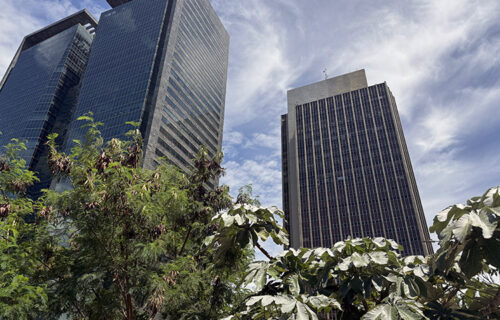
Photo: © 2026 cij.world