Tuesday, 3 March 2026
The long-disused Siemensbahn in Berlin is set to return to operation as part of the i2030 – More Rail for Berlin and Brandenburg programme. The project aims to restore a rail link between Jungfernheide and Gartenfeld, creating a modern connection integrated into the wider S-Bahn network. Deutsche Bahn is delivering the scheme using a rail partnership model, with PORR acting as a contractual partner for one of the main construction packages.
Originally opened in 1929, the Siemensbahn was built to serve Siemensstadt, which was one of Berlin’s largest industrial areas in the early 20th century. Following war damage and the long-term impact of the Berlin Wall, the line ceased operations in 1980 and remained unused for more than four decades.
The renewed route is intended to support current mobility needs in north-west Berlin. Once completed, the line will link the Siemensstadt Square development area directly to the Ringbahn, improving access to Berlin Central Station and Berlin Brandenburg Airport. The overall project covers approximately 4.5 kilometres, running from the Westhafen area via Jungfernheide and Siemensstadt to Gartenfeld.
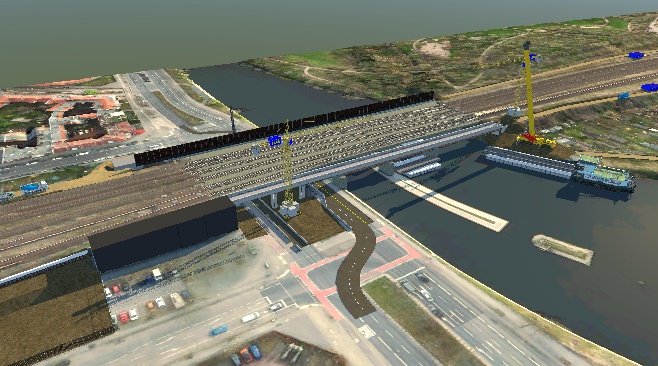
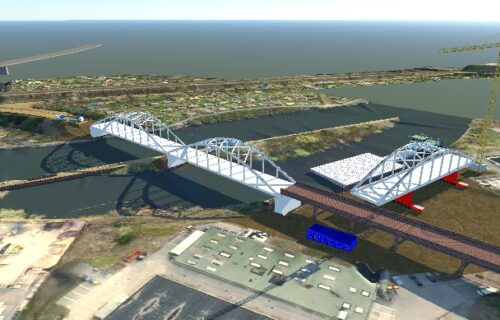
Within the project, a consortium comprising PORR, KEMNA BAU and MCE is responsible for Contract Package 2, known as “KIB Neubau”. This package includes the construction of civil engineering structures such as railway bridges, stations, pedestrian tunnels, noise protection systems and retaining walls. The works extend from the Westhafen section to the Untere Spreebrücken junction with the existing elevated railway, as well as the area around Gartenfeld station. Earthworks, general civil engineering activities and the creation of logistics areas for the wider project are also part of the scope.
The Siemensbahn is being implemented using Deutsche Bahn’s rail partnership model, which brings planning and construction teams together from an early stage. The approach is intended to improve coordination across disciplines and provide greater certainty on quality, schedules and costs during delivery.
Construction is taking place in a dense urban setting, partly alongside active railway infrastructure. This requires detailed logistics planning and the execution of works within limited time windows agreed with Deutsche Bahn. Additional constraints include interventions in listed structures and works in proximity to the River Spree. To address these challenges, a Building Information Modelling (BIM) system was developed during the tender phase to support logistics planning and execution.
The reactivation of the Siemensbahn forms part of broader efforts to expand rail capacity in the Berlin–Brandenburg region, with a focus on improving connectivity and supporting long-term urban development.
Source: PORR Group