Saturday, 28 February 2026
The amendment to the regulation on technical conditions for buildings, due to take effect in September, is expected to affect both construction processes and development costs. Stricter requirements, particularly in energy efficiency and building design, may increase project complexity and costs, which could ultimately be reflected in apartment prices, especially in supply-constrained markets.
At the same time, the new standards aim to improve building quality and long-term operating efficiency. Developers and investors are currently assessing the impact on project feasibility, timelines and pricing, as well as how quickly the market may absorb higher costs.
Joanna Chojecka, Sales and Marketing Director for Warsaw, Wrocław and Łódź at the Robyg Group
The amendment to the Technical Conditions, which is to come into force in September this year, will have a very significant impact on the entire construction process. The scale of the changes introduced by the new regulations is the largest in many years. It covers requirements for energy efficiency and insulation, as well as fire safety, acoustics, accessibility and equipping buildings with environmentally friendly solutions, such as renewable energy installations and charging points. This means that the design and implementation of investments will become more complex, and the technical standard of new buildings will increase significantly.
From the sector’s point of view, these changes are twofold. On the one hand, they will significantly improve the quality of future construction, with buildings becoming more energy-efficient, durable, quieter and better adapted to the needs of an ageing population. On the other hand, however, they will lead to a significant increase in project implementation costs. The increase in requirements for materials, installations and construction standards will translate into higher construction costs, which will naturally result in higher flat prices, especially in the new investment segment. Some developers are already signalling that the introduction of new regulations may require a review of schedules and the profitability of some projects.
The most noticeable changes will be those related to mandatory amenities, such as lifts in multi-family buildings, and increased insulation and fire safety standards. These are elements that will not only improve user comfort, but also significantly increase the unit cost per square metre. As a result, the sector may face some segmentation. Higher quality projects will gain a competitive advantage, while economic investments may be more difficult to implement.
Are all the changes necessary and justified? To a large extent, yes. Raising energy, safety and accessibility standards is in line with European trends and climate requirements. However, the pace and scale of the financial burden imposed on the industry in the short term raises doubts. The overly rapid implementation of many costly requirements at once may lead to a reduction in the supply of new flats and an increase in their prices above the natural market level.
In summary, the new Technical Conditions 2026 represent a qualitative step forward for the Polish construction industry, but at the same time pose a challenge for developers and contractors. In the short term, they will increase construction costs and flat prices, but in the long term they may contribute to the creation of a more modern, durable and energy-efficient housing stock in Poland.
Sebastian Bieńkowski, Director of the Investment Department at Nickel Development
The amendment to the Technical Conditions (WT) regulation, which is to come into force in September this year, will have a significant impact on the entire construction process. This is primarily due to the need to adapt national regulations to EU energy efficiency standards, requirements to improve the quality of life and accessibility of buildings, as well as to update fire safety regulations, which are intended to significantly increase the level of safety for users.
Among the changes, I particularly appreciate those concerning the adaptation of garages and basements to serve as temporary shelters for the population. These are solutions that strengthen the protection of residents and give projects additional utility value.
Of course, the new regulations will require modifications, both in current projects and in the selection of materials, but we do not see these measures as burdensome. This is a natural step towards the expected energy transition, supporting sustainable development and higher building efficiency.
However, it should be taken into account that the implementation of the new regulations will translate into higher investment costs and, consequently, higher flat prices. We estimate that this will be an increase of several per cent.
Renata Mc Cabe-Kudla, Country Manager at Grupo Lar Polska
The amendment to the Technical Conditions 2026 introduces significant changes, higher acoustic standards, more stringent energy requirements, additional requirements for playgrounds and stricter fire safety regulations.
These regulations will increase construction costs due to more expensive materials, more complex installations and higher finishing standards, which will translate into higher flat prices. We would like to point out that at the same time they will improve safety and comfort of use. It is worth remembering that the assumptions may still change.
Magdalena Wrona, Head of Design at Archicom
The amendment to the Technical Conditions Regulation, planned for September this year, should not have a significant impact on the implementation of our investments or the increase in flat prices, nor should it significantly change the design model, which is already based on high safety and quality standards. Many of the proposed provisions, such as the restriction on the use of sharp fence ends and some of the functional requirements, are already reflected in Archicom’s design practice.
The changes concerning increased fire resistance requirements for facades and improved acoustic parameters for partitions may have the greatest impact on the sector, as they may affect both technical solutions and implementation costs. At this stage, however, it is difficult to accurately estimate the scale of this impact. We are talking about draft regulations that may still be modified during the legislative process.
Mariusz Gajżewski, Head of Sales, Marketing and Communication, BPI Real Estate Poland
The planned amendment will introduce a number of significant changes, including increased access to daylight in flats, greater distances between buildings and more restrictive energy efficiency requirements. These regulations will undoubtedly improve the quality of new developments and the standard of living of residents, but in practice they may translate into higher construction costs and limited development opportunities for plots of land. As a result, the likely effect will be an increase in flat prices on the primary market.
We do not anticipate any negative impact of these changes on our projects. BPI Real Estate Poland’s projects are planned in a conscious and sustainable manner. We do not assume maximum use of plots in terms of usable floor space, because our priority is the quality of space, the functionality of flat layouts, access to natural light and the comfort of residents. Therefore, in our opinion, the new regulations are primarily beneficial and steer the market towards a long-term improvement in standards.
I believe this is a step in the right direction, although some of the provisions still need to be clarified in relation to market realities so that the impact of the regulations is balanced for both investors and residents.
Andrzej Swoboda, Vice-President of the Management Board, CTE Group
The entry into force of the amendment to the Technical Conditions, planned for September 2026, may be one of the most important moments for the housing market in Poland. From our perspective, these are necessary, albeit demanding, changes that will significantly raise the standard of new construction and, as a result, may also change the cost structure and prices of flats. There is no denying that the new requirements will entail higher construction costs. The industry is already talking about an increase in costs of up to 10-15 per cent, mainly due to more expensive materials (e.g. better insulation, fire-resistant materials), reinforced partitions, more complex technology and more precise installation.
However, it should be noted that not all of the solutions set out in the new regulation will bring proportional benefits. Energy savings may be minimal if the previous standards were already close to optimal. This means that the prices of new flats designed on the basis of the new technical conditions may be higher. In return, however, buyers will enjoy greater comfort and longer durability of residential buildings.
Overall, we consider the new Technical Conditions to be a step in the right direction. Raising standards of quality, safety, acoustics and energy efficiency is a real response to the expectations of today’s buyers. It is also a sign that residential construction in Poland is maturing and moving towards more user-friendly, durable and comfortable buildings.
At the same time, it is important that the new regulations are applied with moderation and common sense, taking into account the real benefits for the user, and not just a formal ‘race’ for parameters. Too rapid and severe tightening of standards may raise property prices beyond the means of many customers, without a proportional improvement in comfort.
Zuzanna Należyta, Commercial Director at Eco Classic
Like any such change, the amendment to the Technical Conditions Regulation will increase construction costs and, as a result, may lead to an increase in flat prices.
Damian Tomasik, President of the Management Board of Alter Investment
The amendment will bring significant changes to the design and preparation of investments. Already at the concept stage, it will be necessary to analyse shading, distance, functionality and space quality in more detail. Some plots may have lower absorptivity, which will affect both developers’ calculations and flat prices. The changes are intended to improve the quality of development, although some of the provisions are too restrictive and may limit supply.
Tomasz Czuchra, Vice-President of the Management Board of Waryński S.A. Holding Group
The amendment to the Technical Conditions, which will come into force in autumn 2026, will significantly affect the construction process, primarily due to the need to adapt documentation, design solutions and technologies to the new requirements. The scope of the regulations will include, among other things, standards for common areas, energy efficiency and functional elements of buildings, which will require advance planning and appropriate design adjustments.
At the same time, it should be remembered that any increase in standards means higher construction costs, which will ultimately translate into higher flat prices. In many areas, changes are necessary and justified, especially where they improve the usability or energy efficiency of buildings. However, the scale of the regulations must be implemented with caution so as not to lead to a reduction in supply or an excessive burden on buyers.
From the industry’s point of view, the new guidelines are an impetus for modernisation, but they require advance planning and design adjustments, which increases the time needed to prepare investments. Developers will therefore have to factor these costs and risks into their schedules and calculations, which means that flat prices are likely to rise gradually as the regulations come into force.
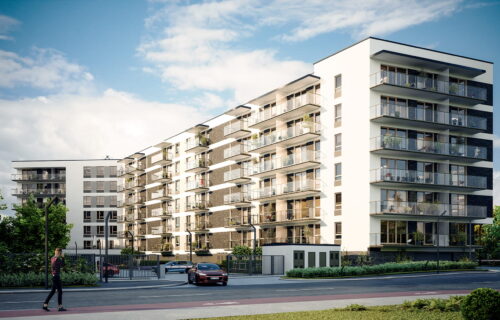
Photo: Rytm Mokotowa – Robyg
Source: dompress.pl