Wednesday, 25 February 2026
Poland has begun the formal process to withdraw from the Ottawa Convention, the 1997 international treaty prohibiting the use, production, stockpiling and transfer of anti-personnel mines, citing a deteriorating regional security environment.
The Polish government submitted legislation in 2025 to initiate the withdrawal, which requires parliamentary approval and a formal notification period under the treaty framework. Under the convention’s rules, a withdrawal takes effect six months after the deposit of the official notice to the United Nations. As of early 2026, Poland is in the process of completing these steps rather than having already fully exited the treaty.
Government officials have linked the move to the security implications of Russia’s war in Ukraine and the fact that Russia is not a party to the Ottawa Convention. Prime Minister Donald Tusk has indicated that Poland must reassess certain defence constraints in light of the changing threat environment on NATO’s eastern flank.
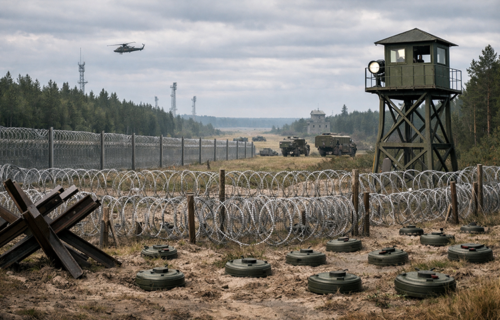
The potential withdrawal is also connected to Poland’s broader “Shield East” (Tarcza Wschód) programme, which focuses on strengthening defensive infrastructure along the country’s eastern borders with Belarus and Russia’s Kaliningrad region. The initiative includes physical barriers, surveillance systems and military fortifications.
Polish authorities argue that anti-personnel mines could serve a defensive role within a wider territorial defence system. However, critics — including humanitarian organisations and arms-control advocates — warn that the use of such weapons carries long-term civilian risks and undermines international humanitarian norms established by the treaty.
If the withdrawal process is completed, Poland would regain the legal ability under international law to produce and stockpile anti-personnel mines. Any actual deployment would remain a separate political and military decision.
The development reflects a broader debate in several frontline NATO states about balancing arms-control commitments with evolving security concerns following Russia’s full-scale invasion of Ukraine.
Source: WEI