Tuesday, 3 March 2026
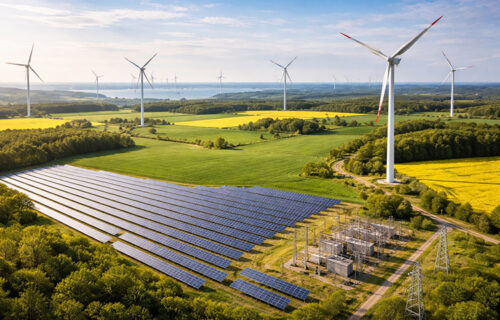
Poland has adopted new legislation designed to create a more predictable and transparent framework for renewable-energy investment, bringing national policy closer into line with the EU’s climate and energy objectives. Approved in November 2025, the law introduces an obligation to map the country’s renewable-energy potential and to designate areas for accelerated renewable-energy development, addressing structural challenges that have long slowed project implementation.
The reforms are intended to reduce administrative complexity, improve transparency in spatial planning and strengthen regulatory certainty. By doing so, they aim to enhance Poland’s appeal to renewable-energy investors at a time when competition for capital across Europe is intensifying.
The legislation reflects the requirements of the EU’s RED III Directive, which obliges member states to identify areas needed to meet their national contributions to EU renewable-energy targets. Under RED III, countries must prepare digital maps covering onshore and offshore areas that show renewable-energy potential while taking into account existing and planned infrastructure such as transmission networks and energy-storage facilities. The directive also introduces the concept of Areas for Accelerated Renewable Energy Development, where projects may proceed under simplified procedures and reduced environmental requirements, provided there are no significant transboundary impacts.
Central to the new Polish framework is the introduction of renewable-energy potential maps as digital tools identifying locations with the highest suitability for different technologies, including onshore and offshore wind, photovoltaics, geothermal energy, hydropower and biogas. The maps, prepared under the responsibility of the minister overseeing climate policy, combine data on resource availability, projected energy demand, existing and planned technical infrastructure and environmental constraints such as protected areas and wildlife migration routes. They will be updated periodically as part of revisions to the integrated National Energy and Climate Plan, allowing them to serve as a strategic reference for both investors and public authorities.
Areas for accelerated renewable-energy development will be designated on the basis of these maps at the regional, or voivodeship, level through resolutions adopted by regional assemblies. Separate plans will be prepared for each type of renewable installation, with priority given to degraded or post-industrial land, artificial water reservoirs and areas linked to technical or transport infrastructure. Environmentally sensitive zones identified through nature-sensitivity mapping will be excluded. Each plan will undergo a strategic environmental assessment and be preceded by public consultations and coordination with relevant authorities, seeking to balance faster investment with environmental protection and public interest.
Within designated accelerated areas, renewable-energy projects will benefit from simplified administrative procedures. In most cases, environmental decisions or full environmental impact assessments will not be required, and fast-track processes will apply to the issuance of building permits.
The law also introduces the option to designate accelerated areas through Integrated Investment Plans initiated at the request of investors. These plans function as a special form of local zoning instrument, enabling faster and more flexible adaptation of planning documents to the needs of specific renewable-energy projects. Used together with renewable-energy potential maps and accelerated development areas, they are intended to improve land-use efficiency while mitigating environmental and social risks and increasing predictability in the investment process.
If implemented effectively, the new framework could significantly improve investment conditions in one of the EU’s largest energy markets and support Poland’s gradual transition toward a more diversified, low-carbon energy mix. By combining digital mapping of renewable potential with accelerated development zones and streamlined permitting, the reform has the potential to shorten project timelines while strengthening energy security and compliance with EU climate commitments. Its success, however, will depend on transparent execution and effective coordination between central government, regional authorities and the private sector.
Source: CMS