Tuesday, 3 March 2026
EPP, the country’s largest manager of shopping centres, has sharply reduced the emissions produced by its real-estate portfolio, bringing the company close to the climate goals it pledged to meet by 2030. Recent sustainability disclosures indicate that emissions from its own operations have fallen by almost half since 2019, while emissions linked to parts of its supply chain have dropped by roughly one-third. These reductions align with the company’s near-term targets validated by an international climate-science body last year.
Company representatives say the progress reflects several years of upgrades across the portfolio. These include improvements to building systems, replacing older lighting with more efficient alternatives, and widening the use of electricity backed by renewable-energy certificates. Office properties already run entirely on electricity matched with green-energy guarantees, and the company aims to steadily expand this approach in its retail assets.
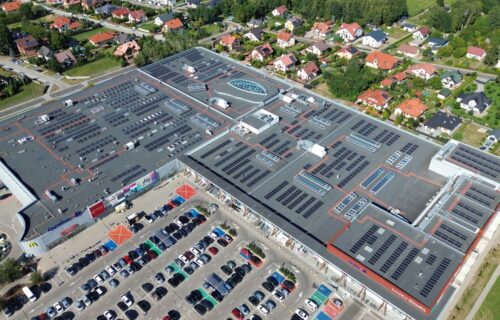
Energy-saving projects have also been carried out at the property level. One example is the shopping centre in Poznań, where a broad renovation programme resulted in lower energy use in shared spaces and moved the building into a higher efficiency category. The firm is also developing rooftop solar installations, with plans to add more than a dozen systems over the next two financial years. Several centres have already been equipped with new panels, which will help reduce dependence on the grid.
Alongside these measures, EPP is introducing digital tools designed to improve how waste is monitored and sorted across tenant units. The system captures data in real time and is being phased in across the assets under management.
The company continues to seek external verification of its buildings based on environmental performance. All of its office properties hold high ratings under international assessment schemes, and its shopping centres meet or exceed mid-level certification standards. The firm is also expanding the number of lease agreements that include sustainability clauses. Nearly half of its contracts now contain provisions aimed at reducing the environmental footprint of day-to-day operations.
EPP has also increased its focus on community engagement. Over the past year, its centres hosted hundreds of initiatives aimed at local groups, with employees contributing thousands of volunteer hours. These activities ranged from portfolio-wide campaigns to locally driven projects supported through small grants.
Although the company has already come close to achieving its 2030 climate targets, it maintains that further work lies ahead. Its long-term ambition is to balance all emissions across its portfolio by mid-century, a goal that will require continued investment and collaboration with tenants, contractors and suppliers.