Tuesday, 3 March 2026
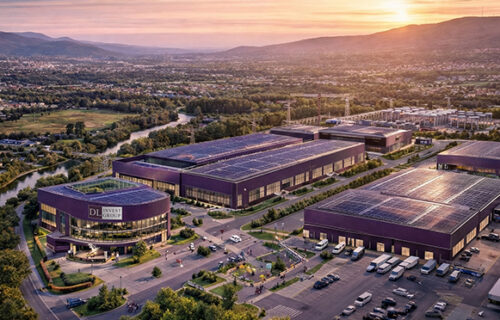
DL Invest Group and Boosteroid have formed a joint venture to develop a large AI-focused data centre in Bielsko-Biała. The planned facility will begin with 82 MW of IT capacity, with further expansion phases expected to take total capacity beyond 200 MW and potentially up to 1 GW, subject to electricity availability and grid development.
The project reflects growing demand for infrastructure capable of supporting artificial intelligence, high-performance computing and cloud-based services. Industrial and logistics assets with access to significant power supply are increasingly being considered for conversion into digital infrastructure.
DL Invest Group manages a real estate portfolio valued at more than €1.2 billion, with occupancy levels of approximately 97 percent across more than 400 tenants. The company operates an integrated business model covering development, construction, asset management and property management, and retains assets for the long term. This structure enables it to adapt industrial properties for alternative uses, including data centre development.
Boosteroid operates 29 GPU-based data centres and provides infrastructure for AI and high-performance computing workloads. The Bielsko-Biała facility is being designed to accommodate high-density IT operations and to meet the technical requirements of large-scale cloud providers. The project is being developed in cooperation with hyperscale clients and is intended to support private AI cloud deployments for enterprise users.
The first phase will deliver 82 MW of IT load. A second phase is expected to increase capacity beyond 200 MW, alongside potential expansion into other markets. A third phase could scale the Polish site to 1 GW or more, depending on power supply conditions and transmission infrastructure.
The development is positioned as a step towards strengthening Poland’s domestic digital infrastructure capacity. Locating large-scale data processing facilities within the country allows companies operating in regulated sectors to store and process data locally, which may support compliance with national and European regulatory requirements.
The facility will also be available to businesses seeking dedicated AI infrastructure. Companies in sectors such as finance, manufacturing and healthcare will be able to deploy and train AI models using their own data within a controlled environment.
Access to sufficient and competitively priced electricity remains a key factor for the project’s long-term viability. The scale of further expansion will depend on the development of stable energy sources and grid capacity capable of supporting high-load digital infrastructure.
The Bielsko-Biała investment marks a shift in the use of industrial real estate towards digital infrastructure and reflects broader changes in the European data centre market.