Tuesday, 10 March 2026
Over the past twenty years, Romania’s construction and real estate sectors have experienced rapid expansion, periods of economic uncertainty and significant technological change. During this time, Vitalis Consulting has grown from a small consultancy focused on office fit-outs into a project and cost management firm involved in a wide range of developments across the country. Since its establishment in 2006, the company has worked with more than 400 clients and contributed to projects totaling more than 5.5 million square metres.
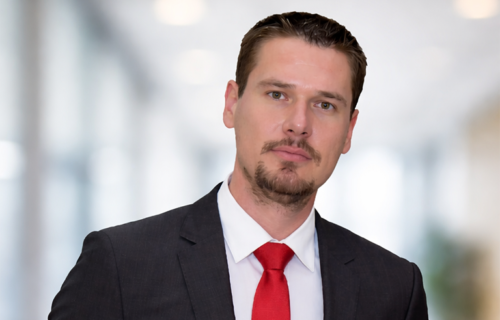
In an interview with CIJ EUROPE, Florin Popa, Managing Partner and Owner of Vitalis Consulting, reflects on the company’s development, the challenges faced during major economic disruptions and how the firm is adapting to new technologies, sustainability requirements and evolving investor expectations.
When Vitalis Consulting was founded in 2006, Romania’s office market was expanding rapidly as international companies entered the country and required support in preparing their workplaces. Popa recalls that the company initially focused on project management for office fit-outs, helping tenants transform leased spaces into functional offices that met their operational needs. The company’s services at that time concentrated on managing construction works and controlling project costs.
Shortly after launching the business, the team decided to broaden its activities beyond interior projects. Instead of focusing only on tenant fit-outs, the company began managing projects from the earliest stages of development, including greenfield construction. This decision shaped the future direction of the company and allowed it to expand into a wider range of sectors.
However, the company’s early growth was soon tested by the global financial crisis in 2008. Popa describes the period as a turning point for both the business and the wider industry. After two years of strong activity, the sudden slowdown in development forced companies across the construction sector to rethink their strategies. Vitalis Consulting adapted by diversifying its services and seeking projects that continued despite the economic downturn. According to Popa, the ability to adjust during difficult market conditions helped the company stabilise and move forward in the years that followed.
A second major disruption occurred during the COVID-19 pandemic, when many industries paused their activities. Construction projects were also affected, although not all developments stopped completely. Popa explains that the company’s focus during that period was to ensure that projects could continue safely and that teams could maintain their work on site despite the restrictions and uncertainty affecting the global economy.
In recent years, another important transformation has taken place in the form of digitalisation. According to Popa, digital tools have significantly changed how projects are managed, supervised and documented. Technologies such as Building Information Modelling (BIM) allow project teams to visualise buildings in three dimensions and identify potential technical conflicts before construction begins. Vitalis Consulting has also developed internal digital systems that store information about construction costs and quantities, allowing employees to access data more efficiently and compare scenarios when planning projects. These tools help project managers identify possible design issues and support more accurate decision-making throughout the development process.
While technology has improved efficiency, Popa believes that the most important factor behind the company’s long-term growth has been its approach to client relationships. Vitalis Consulting’s guiding principle is the concept of building trust with clients throughout the entire project lifecycle. For Popa, trust is not simply about delivering a completed building but about creating confidence and transparency at every stage of the development process. Over time, this approach has helped establish long-term partnerships with many clients, a significant proportion of whom return to the company with new projects.
These relationships have also supported the company’s expansion beyond Bucharest. As clients developed projects in other Romanian cities, Vitalis Consulting followed them into regional markets such as Cluj-Napoca, Timișoara and other urban centres. Popa says this continuity often creates a sense of collaboration between the consultancy and its clients, who already understand how the company operates and can quickly move forward with new projects.
Over the years, the company has expanded its services to cover the full lifecycle of a development. In addition to project and cost management during construction, Vitalis Consulting now provides advisory services before construction begins. These services include technical due diligence for land acquisitions and property purchases, where consultants evaluate site conditions, infrastructure limitations and regulatory constraints before development starts. During construction, the company continues to manage budgets, oversee site progress and coordinate health and safety measures. Its involvement often continues until the building is handed over and operational teams take control of the property.
The types of projects the company works on have also evolved. While office developments were once dominant in Romania’s real estate market, Popa notes that a growing share of projects today are income-generating facilities such as hotels, manufacturing plants and hospitals. Industrial and manufacturing developments are becoming increasingly prominent, including projects for pharmaceutical production, drone manufacturing and specialised industrial facilities.
Another emerging area is renewable energy. Vitalis Consulting is currently involved in several photovoltaic park developments, representing approximately 120 megawatts of installed capacity under construction or development. These projects typically require lengthy permitting procedures but relatively short construction periods once approvals are secured.
Environmental standards have also become an increasingly important consideration for investors and developers. Certifications such as LEED and BREEAM, which evaluate building performance in areas such as energy efficiency and environmental impact, were once considered optional but are now widely expected in modern real estate developments. Although Vitalis Consulting does not directly provide certification services, it assists clients in planning projects that can meet these requirements by coordinating with specialised consultants and integrating sustainability considerations from the early stages of design.
Despite technological progress and evolving industry practices, some structural challenges remain within the development process. One of the most significant is the time required to obtain building permits. Popa explains that in cities such as Bucharest the permitting process can take longer than developers initially anticipate. Delays of several months can increase project costs and create additional financial pressure. However, he notes that projects which bring benefits to the local community or involve the restoration of historic buildings often receive greater support from authorities.
Reflecting on the company’s history, Popa highlights several projects that hold particular significance. One of the most memorable involved construction and refurbishment works associated with Bran Castle, one of Romania’s most visited historical landmarks. The project included the development of an underground visitor passage and improvements to the site’s visitor infrastructure while preserving the historical character of the building. Working on a project with such cultural importance required careful coordination with heritage authorities and strict attention to preservation requirements.
Another project that remains memorable for the Vitalis team was one of its earliest residential developments shortly after the company’s founding. At the time, the company consisted of only a few employees, all of whom were directly involved on the construction site every day. The project represented the company’s first major step from managing interior works to supervising full-scale construction developments.
Today, Vitalis Consulting employs nearly ninety professionals and operates through several specialised departments covering project management, site supervision and technical consultancy. As the company has grown, internal communication and collaboration have become increasingly important. Teams share information about construction costs, contractor performance and project experiences, allowing employees to support each other and maintain consistent standards across multiple projects.
Looking ahead, Popa believes the next phase of the market will require careful planning and flexibility. Developers are facing increasing pressure to deliver high-quality buildings within strict budgets and tight timelines, while also navigating regulatory changes and market uncertainty. In this environment, Popa sees the consultancy’s role as helping clients manage complexity and make informed decisions throughout the development process.
After two decades of activity, Vitalis Consulting has grown alongside Romania’s construction sector, adapting to economic cycles, technological changes and new market expectations. For Popa, the company’s continued development ultimately reflects a simple principle: maintaining long-term relationships with clients while consistently delivering reliable project management. As Romania’s real estate market continues to evolve, that approach remains central to the company’s strategy for the years ahead.
© 2026 cij.world