Thursday, 8 October 2026
Slovakia is preparing to resume diesel exports after a short-lived restriction introduced in March, but authorities are not stepping away from intervention altogether. Instead, the government is maintaining a framework of domestic controls designed to protect local supply, reflecting a cautious approach as the situation stabilises but remains uncertain.
The earlier restrictions were introduced after disruptions to crude deliveries through the Druzhba pipeline raised concerns over supply security. In response, the administration led by Robert Fico activated emergency measures that allowed it to manage fuel distribution more directly. This included limiting exports and drawing on state reserves to support refining operations.
A key factor in the decision to ease export limits has been the gradual improvement in supply flows. The increased use of the Adria pipeline has provided an alternative route for crude deliveries, reducing pressure on the domestic system. At the same time, the country’s main refinery, Slovnaft, has been able to stabilise production after relying on strategic reserves during the peak of the disruption.
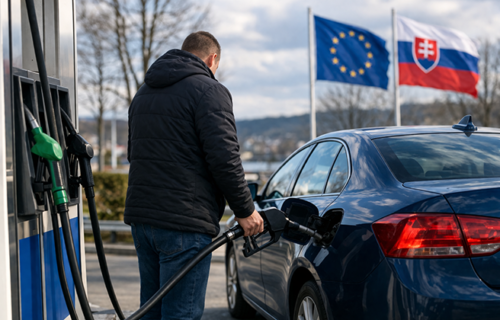
Despite this improvement, the government is not returning to a fully open market environment. Restrictions affecting how fuel is sold domestically remain in place, including limits aimed at preventing excessive demand. Measures targeting cross-border refuelling, which emerged as price differences within the region attracted drivers from neighbouring countries, are also being retained.
These steps have not gone unnoticed at the European level. The European Commission has raised concerns about the compatibility of such policies with internal market rules, particularly where pricing or access differs depending on the origin of consumers. While temporary action can be justified during supply stress, prolonged or selective restrictions risk creating friction within the single market.
The episode highlights the degree to which Central Europe’s fuel systems remain exposed to disruptions beyond their control. Although global oil price movements have played a role in shaping market sentiment, the more immediate pressures have come from logistical constraints and the time it takes for supply chains to adjust. Even when international prices ease, the effect is not felt immediately at the pump due to procurement cycles and processing delays.
Slovakia’s decision to resume exports while keeping domestic safeguards in place reflects an attempt to balance competing priorities. On one side is the need to restore normal trade flows within a tightly connected regional market. On the other is the imperative to ensure that local supply remains sufficient in the face of ongoing uncertainty.
For neighbouring countries, particularly those that rely on Slovak fuel exports, the easing of restrictions will provide some relief. However, the continued presence of domestic controls suggests that the situation remains fragile. The broader lesson is that energy markets in the region are still highly sensitive to external shocks, and that policy responses can shift quickly when supply risks emerge.
In the coming months, the direction of travel will depend on the reliability of alternative supply routes, the stability of global markets and the broader geopolitical backdrop. Until these factors settle, Slovakia and its neighbours are likely to operate in an environment where market openness and state intervention continue to coexist uneasily.