Thursday, 10 September 2026
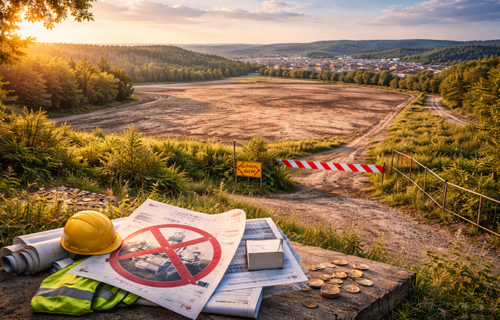
The planned construction of a large-scale battery manufacturing plant in Dolní Lutyně, located in the Karviná region, will not proceed, Czech Prime Minister Andrej Babiš announced on Sunday. The decision follows sustained opposition from local residents, who have expressed concerns over the project’s impact on the community and surrounding environment.
The proposed facility, intended to produce batteries for electric vehicles, was prepared under the previous government led by Petr Fiala. According to Babiš, public resistance at the local level played a decisive role in abandoning the project. He added that the government would now seek alternative investment opportunities for the approximately 278-hectare site, focusing on projects that would gain broader local support.
The announcement came as a surprise to municipal officials. Pavel Buzek, mayor of Dolní Lutyně, said he had not been informed in advance but noted that residents had long opposed large-scale industrial development on the site. He highlighted the proximity of the land to protected natural areas and warned that such a project could divide the municipality geographically and place heavy demands on local infrastructure.
Criticism of the decision came from former Minister of Industry and Trade Lukáš Vlček, who argued that abandoning the gigafactory represents a missed opportunity for the Czech economy. According to him, the project could have strengthened the country’s automotive sector, generated significant public revenues, and supported economic transformation in a region affected by the gradual decline of coal mining.
Under earlier plans, the state had approved the transfer of land for a business park valued at approximately CZK 200 billion, with expectations of creating up to 7,000 jobs. However, a potential foreign investor postponed its decision last year amid weaker global demand for electric vehicles and battery technologies.
Local civic groups have consistently voiced concerns over environmental risks, the loss of agricultural land, and the scale of the proposed development. Representatives of the association Zachovejme Poolší confirmed they had communicated these concerns directly to the prime minister and called for a broader discussion on alternative uses of the site. While the land remains designated as strategically important for state investment, the group maintains that projects of such magnitude are incompatible with the character of the area.
In his statement, Babiš also outlined several broader government initiatives, including plans for closer cooperation with Slovakia on housing and energy projects. He said Czech ministers would report on discussions with their Slovak counterparts in early March, ahead of a joint government meeting expected later in the month.
Separately, the prime minister reiterated his government’s position on foreign policy, stating that the Czech Republic would not deploy troops to Ukraine or fund military supplies. He also referenced recent discussions with U.S. President Donald Trump, emphasizing the role of the United States in any future peace efforts related to the war in Ukraine.
The decision to abandon the gigafactory marks a significant shift in the Czech Republic’s industrial development plans and underscores the growing influence of local and environmental considerations in large-scale investment projects.
Source: CTK