Friday, 11 September 2026
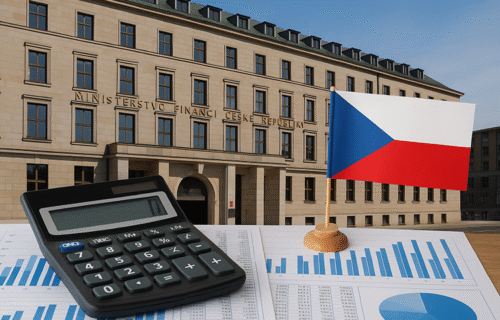
The Czech state budget ended November with a deficit of CZK 232.4 billion, according to new data from the Ministry of Finance. The gap widened by CZK 49.3 billion during the month but remains below last year’s November shortfall of CZK 259.2 billion. Despite the improvement, it is still one of the deepest deficits recorded since the country’s establishment.
By the end of November, state revenues totalled CZK 1.87 trillion, a year-on-year increase of 7.6 percent. Higher tax receipts and stronger collection of compulsory insurance payments were the key drivers of this rise. Expenditures reached CZK 2.102 trillion, up 5.3 percent compared with the same period last year.
Finance Minister Zbyněk Stanjura, who is leaving office following the government’s resignation, said the budget will be handed over to the next administration in a stronger position than the one his cabinet inherited. He pointed to a significantly smaller deficit at this stage of the year compared with 2021.
Analysts, however, cautioned that challenges remain. PwC analyst Dominik Kohut noted that only a small margin separates the current deficit from the full-year target of CZK 241 billion. He stressed that the long-running pattern of large deficits cannot be resolved without substantial structural changes to public finances, warning that technical revisions to economic forecasts are insufficient without deeper reforms.
Corporate income tax collection recorded the strongest growth among major tax categories, rising 14.7 percent year-on-year to CZK 175.8 billion. Revenue from the windfall tax applied to energy, petrochemical companies and major banks amounted to CZK 32.8 billion, higher than at the same point last year. Personal income tax generated CZK 167.6 billion, reflecting wage growth across the economy, which also contributed to a 7.1 percent increase in insurance contributions to CZK 730.8 billion.
Value added tax (VAT) receipts reached CZK 377.4 billion, an 8.4 percent increase attributed in part to stronger household consumption. Excise duties brought in CZK 153.4 billion, up 2.9 percent year-on-year. Higher excise tax rates on alcohol and tobacco supported the rise, while economic activity and transport volumes boosted fuel-related revenues.
Social benefits remained the largest expenditure item, amounting to CZK 845.6 billion by November, including CZK 656 billion for pensions. Debt-servicing costs climbed to CZK 86 billion, an increase of 15.7 percent. Analysts highlighted that the cost of servicing public debt has grown sharply over the past decade; Raiffeisenbank’s Tereza Krček noted that such expenses are now two and a half times higher than in 2010. Kohut added that rising debt costs reduce the government’s capacity to invest.
Capital spending reached CZK 197.1 billion, 20.2 percent higher year-on-year, though representing just over 74 percent of the amount planned for the full year. Transfers to the State Fund for Transport Infrastructure rose markedly to CZK 76.9 billion, an increase of 43.3 percent.
For 2025, the budget framework allows for revenues of CZK 2.086 trillion and expenditures of CZK 2.327 trillion, corresponding to a planned deficit of CZK 241 billion. Last year’s budget finished CZK 271.4 billion in the red, the lowest deficit since the start of the COVID-19 pandemic but still among the largest in modern Czech history.
Source: CTK