Atal launches new residential development in Kraków’s Bronowice district

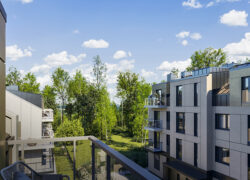
ATAL has added a new project to its Kraków portfolio with the launch of ATAL Bronowice, located on Starego Dębu Street. The development will comprise 188 apartments, with sizes ranging from approximately 40 to 80 sq m and layouts of two to four rooms. Completion is scheduled for the third quarter of 2027.

The project consists of low-rise residential buildings situated in a quiet part of the Bronowice district. According to ATAL, the design aims to integrate with the surrounding green areas and maintain a restrained, residential character.

The development’s layout is intended to accommodate a variety of households, from single occupants to families. Plans include underground garages, above-ground parking spaces, a playground and outdoor recreational areas.

The surrounding neighbourhood offers retail outlets, services, medical facilities and schools. Public transport connections provide access to the city centre, while proximity to the A4 motorway and Kraków Airport may benefit residents who travel frequently.

Recreational areas near the project include walking and cycling paths, and the district features established green spaces.

Apartment prices range from PLN 14,500 to PLN 16,500 per sq m in developer standard. Buyers can opt for turnkey finishing through the ATAL Design programme, which offers four finishing packages: Basic, Optimum, Premium and Invest.

Nepi Rockcastle reports resilient operational performance in Q3 2025

NEPI Rockcastle NV (“NEPI Rockcastle, Europe’s third-largest listed retail real estate company by portfolio value, reported stable operational results across the portfolio, supporting continued growth during the third quarter (Q3) of 2025. For the first nine months (9M) of 2025, net operating income (NOI) increased by 12.3% year-on-year to €461.3 million (9M 2024: €410.6 million). On a like-for-like (LFL) basis, NOI rose by 4.4% year-on-year, supported by indexation, rental uplifts, higher short-term income, and disciplined cost control. Performance also benefited from €9 million in revenue from the renewable energy business (+23% compared to €7.3 million in 9M 2024).

Tenant turnover increased by 3.5% LFL for the period, while footfall declined slightly (-0.6%). Average spend per visitor increased by 9% overall—supported by higher basket sizes at the two large properties acquired in Poland last year—and by 4.6% LFL. The occupancy cost ratio was 12.7% for 9M 2025 (down from 13.1% in the first half (H1) of 2025). The EPRA retail vacancy rate remained low at 1.6% at quarter-end. Collection rates were strong at 99% for the period.

Rüdiger Dany, NEPI Rockcastle’s CEO, said: “The Group’s performance over the first nine months of 2025 underscores the strength of our platform and the quality of our assets across Central and Eastern Europe. We delivered healthy rental growth, maintained very low vacancy, and continued to enhance the customer experience across our properties. The successful €500 million green bond issuance in September, which was heavily oversubscribed, further strengthened the balance sheet and supports our debt maturity strategy. Our late-2024 acquisitions of Magnolia Park and Silesia City Center in Poland have been strong contributors to growth. Our investment in the energy business is already delivering double-digit returns, with significant expansion potential in the coming years.

Looking ahead, our development pipeline, strong retailer demand, and disciplined capital allocation will support continued earnings growth and long-term value creation. We remain confident that the Group will achieve its full-year guidance.”

SOLID FINANCIAL POSITION WITH STRONG LIQUIDITY, 31.4% LTV AND €500 MILLION GREEN BOND EXTENDING MATURITIES

In September 2025, the Group completed a €500 million unsecured eight-year green bond with a 3.875% coupon and an issue price of 99.353%. Demand exceeded €4 billion from more than 200 investors. Net proceeds were used to proactively manage upcoming maturities in October 2026 and July 2027, refinancing €250 million of each tranche. Proceeds were allocated in line with the Group’s Green Finance Framework. The issue attracted broad institutional demand across the UK, France, Benelux and the DACH region.

As at 30 September 2025, the Group held €421 million in cash and €690 million in undrawn committed revolving facilities.

The Group’s loan-to-value ratio (LTV) was 31.4% as of 30 September 2025, remaining below the Company’s 35% strategic threshold (estimated LTV of 33.9% after payment of the H1 2025 distribution).

The investment portfolio was valued at €8.1 billion as at 30 September 2025, in line with June 2025, as properties are independently valued only at half-year and year-end.

EPRA Net Reinstatement Value was €7.74 per share at 30 September 2025, 4.81% higher than €7.38 per share at 31 December 2024.

OPERATING PERFORMANCE

Trading update

LFL tenant sales increased by 3.5% year-on-year in 9M 2025, while footfall decreased by 0.6%. In Q3, tenant sales grew 2.9% year-on-year, while footfall declined by 1.5%, following a strong start to the year that moderated in Q2 and edged lower in Q3. Average basket size increased by 4.6% year-on-year on a LFL basis in 9M 2025, showing resilient spending per visit despite lower footfall.

Relative to inflation, tenant sales growth was broadly in line with the Group-weighted average CPI of approximately 4.3%, while basket growth exceeded CPI. In Romania, the VAT increases introduced in Q3 2025 under new government fiscal measures tempered spending, particularly in discretionary categories.

Category performance varied: Fashion Complements (+10%), Health & Beauty (+9%) and Entertainment (+8%) showed the strongest results. Electronics (-3%) and Sporting Goods (-3%) were affected by tenant-specific factors. Fashion, the largest segment, remained broadly stable (+1% LFL). These results reflect the Group’s continued focus on tenant mix and initiatives aimed at maintaining trade densities and rental sustainability.

Leasing activity

Leasing remained active. Year to date, 1,098 leases covering approximately 243,900 m² were signed (including renewals). Of these, 353 were new leases totalling over 75,000 m², representing roughly 3.25% of the Group’s GLA. International tenants accounted for approximately 65% of GLA for new leases. The blended rent uplift on renewals was around 5.2% above indexation. Demand for retail space remained steady across CEE, with new agreements concentrated in Sport, Fashion and Health & Beauty.

Notable Q3 leases included Primark (Shopping City Sibiu, Romania), Just Gym (Pogoria Shopping Centre, Poland), Sports Direct (Shopping City Târgu Mureș, Romania), Nike (Arena Centar, Croatia), Medicine (Galeria Warmińska, Poland), and BIPA (Mega Mall, Romania).

Recent openings included Half Price (Magnolia Park, Poland), Zara (Arena Centar, Croatia; Arena Mall, Hungary), Rituals (Mammut Shopping Centre, Hungary), Notino (Arena Centar, Croatia), and Adidas (Bonarka City Center, Poland).

DEVELOPMENT UPDATE

Construction and permitting progressed as planned across several major projects.

At the Promenada Bucharest extension, 68.5% of the GLA is signed or agreed; superstructure works are underway, with completion targeted for Q1 2027. At Bonarka City Center in Kraków, works are about 85% complete across nine phases, with completion scheduled for Q1 2027. Refurbishment of Arena Mall Budapest remains on schedule, with completion expected in Q2 2028.

In Poland, the Pogoria Shopping Centre extension is advancing, with 97% of the added GLA pre-let; completion is expected in Q1 2026. In Bulgaria, Promenada Plovdiv has obtained initial permissions and a concept-stage building permit; final permits are expected by Q1 2026, with completion planned for Q3 2027. At Galati Retail Park in Romania, permitting continues, and lease terms have been agreed for 81% of the GLA.

NEPI Rockcastle completed its first greenfield photovoltaic (PV) plant in Chișineu-Criș, Romania (54 MW), now in the testing phase, with commercial operations expected in Q1 2026. Two further Romanian PV projects in Ariceștii Rahtivani (105 MW) are progressing and are expected to begin phased operations in 2026 and 2027. The Group is evaluating potential energy-storage acquisitions to enhance PV returns. The rollout of PV installations across assets outside Romania and Lithuania is also ongoing.

The Group’s development pipeline under construction or permitting totals over €870 million, including retail extensions and green-energy investments, of which €318 million had been spent by the end of Q3 2025.

CASH MANAGEMENT AND DEBT

As of 30 September 2025, the Group had €421 million in cash and €690 million in undrawn committed credit facilities. The gearing ratio was 31.4%, below the strategic threshold of 35% (estimated 33.9% after the H1 2025 distribution).

Covenant headroom remained strong:

  • Solvency Ratio: 0.37 (maximum permitted 0.60)

  • Consolidated Interest Coverage Ratio: 4.9 (minimum required 2.0)

  • Unencumbered assets to unsecured debt: 270% (minimum required 150%)

The average cost of debt for 9M 2025 was 3.1%. The portion of debt exposed to variable rates was 15%, consisting of the IFC loan.

CORPORATE EVENTS

On 6 November 2025, the Board completed its CEO succession process and appointed Marek Noetzel as Chief Executive Officer, effective 1 April 2026. Mr. Noetzel has been COO since 2022, overseeing operations across 60 properties in eight CEE countries. His leadership in leasing, occupancy strategy, asset management and Poland acquisitions were noted as key factors in his appointment.

He will succeed Rüdiger Dany, whose mandate ends on 31 March 2026. The Board acknowledged Mr. Dany’s contributions, including major portfolio acquisitions and strong earnings growth.

OUTLOOK

The Board reaffirms its August 2025 guidance that distributable earnings per share for the full year are expected to be 2.5% to 3% higher than in 2024, maintaining the 90% dividend payout ratio.

This guidance assumes stable trading conditions and does not factor in potential political or macroeconomic shocks. It may be revised if material changes occur. The guidance has not been reviewed by NEPI Rockcastle’s auditors and remains the responsibility of the Board.


Savills IM and Vestas IM secure 46,000 sq m of lease renewals in France and Poland

Savills Investment Management and Vestas Investment Management have agreed two lease extensions totalling 46,000 sq m across logistics assets in France and Poland.

In northern France, VM Building Solutions has renewed its lease for six years at Lambres-lez-Douai Logistics Park. The agreement covers 37,025 sq m in a facility rated BREEAM New Construction ‘Very Good’. The property forms part of the portfolio of the Vestas European Strategic Allocation Logistics Fund I (VESALF I), which is managed by Savills IM.

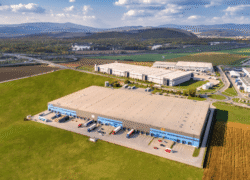
In southern Poland, Omida Solutions has extended its lease for five years at Beskid Park II, where it occupies 8,695 sq m. The park forms part of the VESALF II fund and comprises five buildings with a combined area of around 90,000 sq m, all certified BREEAM ‘Very Good’. Located in Czechowice-Dziedzice in Upper Silesia, the site benefits from access to national road no. 1 and the A4 highway. Omida Solutions, part of the Omida Group, has been a tenant since 2022.

Laurent Vouin, Head of France at Savills IM, said the renewals reflect the continued appeal of the logistics assets and their locations. Isabella Valgimigli, Portfolio Manager at Vestas IM Europe, added that the agreements highlight the importance of both sites within the firms’ broader European logistics strategies.

VESALF I, launched in 2020, is a pan-European logistics fund backed by Korean institutional investors. VESALF II, established in 2022, follows the same investment focus. Savills IM manages portfolios across France, Belgium, Luxembourg and Poland, including significant logistics holdings in both markets.

Grant Thornton extends its lease at Malta Office Park and increases its office space

Grant Thornton, the Polish member firm of the Grant Thornton International network, has renewed its lease at Malta Office Park in Poznań and decided to expand its occupied area. The new agreement, signed for five years, increases the company’s space in the complex to nearly 4,200 sq m.

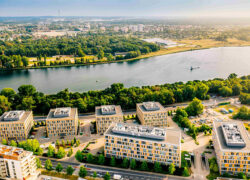
Malta Office Park consists of six office buildings located next to Lake Malta, an area with long-established recreational and sports facilities as well as convenient public transport links. The surroundings include service points, retail outlets and cycling routes that connect the district with other parts of the city.

Grant Thornton, which has operated in Poland since 1993 and employs more than 1,200 people across seven locations, previously occupied close to 3,000 sq m in the complex. The expansion adds over 1,200 sq m and allows for a more flexible layout that can accommodate both individual work and collaborative tasks. Colliers advised the tenant during the renegotiation process.

Agnieszka Gola, Leasing Manager at EPP Polska, notes that the renewal and expansion reflect continued tenant interest in the complex, which the company manages. She adds that ongoing efforts focus on improving the quality of the working environment and adapting the property to current workplace expectations.

Completed in 2011, Malta Office Park has undergone a series of upgrades to align with contemporary environmental and operational standards. The complex holds a BREEAM Outstanding certification and is supplied entirely by renewable energy. It includes waste-sorting facilities and an intelligent system that tracks energy consumption throughout the day. A biodiversity plan has also been prepared for the site.

Tenants have access to various amenities, including cafés, a pharmacy, a medical clinic, a gym and parcel services, as well as outdoor areas between the buildings intended for informal use. The Piwnica Club, an on-site social space, is used for after-hours events.

EPP, which manages the complex, also organises activities for tenants, such as workshops and leisure events. According to Joanna Gieniusz-Langer, Senior Property Manager at EPP, the focus is on creating an environment that supports interaction among users in addition to providing office space.

GEMO completes expansion and modernization works at Westfield Černý Most

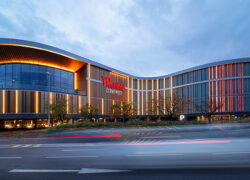
Construction firm GEMO a.s. has finished a major phase of work on the expansion and modernization of the Westfield Černý Most shopping center in Prague. The project, carried out while the center remained open between 2024 and 2025, adds roughly 9,100 m² of new leasable space, 32 new shops and food units, and three newly built cinema auditoriums. GEMO acted as the general contractor for the project, which involved constructing a new extension and linking it to the existing building.

The works included deep foundations for the new sections, reinforcement of parts of the existing structure, complete construction of the new areas, and various modifications to the current building. The contractor also installed new facade and roof cladding and carried out extensive adjustments to technical systems as required during the construction phases.

A notable part of the project was the effort to reuse structural elements and technologies where feasible. Some equipment, such as escalators, was refurbished and incorporated into the updated design, while elements no longer meeting current safety or fire standards—such as sections of the glass façade—were replaced with systems offering higher fire resistance and improved acoustic performance. The resulting façade and technical upgrades aim to improve comfort for users and reduce the building’s energy demand.

According to GEMO project manager Martin Koudelka, keeping the shopping center fully operational during construction required extensive organizational planning. Work was divided into phases, with night shifts and tightly coordinated deliveries used to limit disruption. Temporary fire-safety and smoke-control solutions were implemented as required. New sections were approved and handed over to the investor in stages, resulting in more than 15 separate approval procedures.

The expansion incorporated measures intended to lower material and operational impacts. These included the use of low-carbon concrete with documented environmental product declarations, consistent waste sorting and recycling, and a focus on long-life materials and reduced operating costs. The project has been designed to meet BREEAM New Construction certification at the Excellent level.

The architectural design was prepared by the London studio Benoy. Construction management was handled by RUBY Project Management, design and supervision by Obermeyer Helika a.s., and the investor is Unibail-Rodamco-Westfield through Centrum Černý Most s.r.o.

Buying an Apartment in Austria: Why It’s Not the Same as Owning a Weekend Cottage

Interest among Czech buyers in Alpine property continues to rise, driven by the appeal of reliable winter seasons, well-developed infrastructure and the impression of long-term stability in the market. Despite this growing enthusiasm, specialists warn that Austria regulates residential property in a way that differs substantially from what buyers may be accustomed to in Czechia. Understanding these rules is essential for anyone considering an apartment in the mountains.

Tomáš Chrobák of SUR REAL Investments, a company advising clients on Alpine real estate, explains that one of the defining features of Austrian property is that the permitted use of each unit is set in advance by local authorities. He notes that when a building is approved, the municipality determines whether the units are intended for everyday living, holiday use or structured tourist accommodation. Because of this, he advises buyers to verify the permitted use of a specific apartment before they commit to a purchase.

Although these categories exist across Austria, the level of restriction differs from one region to another. Mountain states such as Tyrol and Salzburg are known for applying some of the strictest limits, especially in popular ski destinations where local authorities wish to prevent communities from turning into “empty” resort villages. In these areas, approvals for privately used holiday apartments are extremely limited. Carinthia takes a different approach, relying more on annual charges and zoning rules than on outright limits, which makes it somewhat easier for owners who want a place for themselves. Other states, including Styria, Upper Austria and Lower Austria, tend to use a mixture of standard planning regulations and local financial measures rather than strict prohibitions. However, even in these regions the final decision always depends on the municipality and should be checked in advance.

A common misunderstanding arises when buyers expect that an apartment in an Austrian resort can be used as freely as a cottage in Czechia. This is rarely the case. Many Alpine apartments are part of managed resort complexes and are intended to operate as short-stay accommodation for visitors. Owners are given a limited number of weeks per year for private visits, and the rest of the time the apartment must be rented out through a contracted operator. These developments often function much like hotels, with identical furnishings included in the purchase price and centralised management that handles guest stays, cleaning and maintenance. Chrobák points out that this model suits buyers who prefer not to manage bookings or upkeep themselves, as the operational responsibilities remain with the resort management.

For those who want more freedom, there are alternatives. One option is to purchase a property classified as a secondary residence. These allow the owner to use the property without imposed limits and to decide independently whether to rent it out. However, this type of home is rare, particularly in the most sought-after Alpine valleys. Another approach is to select a property where owners are free to appoint their own rental manager and negotiate the terms of personal use. This can offer more flexibility, though it still depends entirely on what the local municipality has authorised for the property.

Anyone renting out property in Austria must be prepared for administrative obligations. Owners usually have to register with local tax authorities, and depending on how the rental is structured, they may also need to deal with value-added tax. According to Chrobák, the process is manageable, especially because many Austrian tax advisers work with Czech and Slovak clients and can act on their behalf. He also notes that Austrian institutions often send letters directly to the address of the apartment rather than to the owner’s home country, which is why many investors arrange for a local adviser to handle their official correspondence.

Revenue from tourist rentals typically develops gradually. New resort projects often require two or three years before achieving stable occupancy and repeat guests. René Bertignol, developer and operator of the new Das Förstereck resort near Zell am See and Saalbach, emphasises the importance of patience. He explains that apartments in Austria should be viewed as long-term holdings rather than quick-profit opportunities. While yearly rental income is useful, it is the longer horizon—supported by strong demand in established regions—that tends to determine the overall return.

Some resort operators advertise guaranteed annual rental returns to attract buyers. Chrobák advises treating these offers carefully, noting that fixed returns are often set below what well-located properties could achieve naturally. He argues that unusually high guaranteed percentages should be approached with caution and that investors are generally better served by choosing locations with strong year-round tourism, where income depends on real occupancy rather than promotional guarantees. Long-term value growth, supported by limited supply in Alpine areas, remains an important part of the investment assessment.

Source: Tomáš Chrobák of SUR REAL Investments

Czech real estate investment activity moves toward one of its strongest years

Investment in Czech commercial property has remained strong through the first three quarters of 2025, continuing the pace set earlier in the year. The value of transactions recorded between January and September is estimated at about €2.46 billion. This places the market close to the volumes seen in 2020 and well ahead of the activity logged during the past four years. Analysts note that the unusually active first half of 2025 played the largest role in this outcome, with investment in that period already exceeding the full-year totals achieved since 2020. Although transaction levels in the third quarter were more moderate, they remained significantly higher than those seen during the same period last year.

A broad mix of assets changed hands in recent months. Office buildings and warehouse facilities represented the largest share of deals in the third quarter, supported by several major sales in Prague and regional cities. Among these were two office buildings in the Karlín district of the capital and a logistics complex near České Budějovice, each reaching valuations close to the upper end of this year’s transaction range. Investor interest has remained diversified across the market, covering established office properties, modern logistics parks and regional shopping centres, as well as older industrial sites with redevelopment potential. One such example is a former foundry in Brno, which is set to be incorporated into a growing business park.

Looking at the full nine-month period, industrial and logistics real estate attracted a significant portion of capital, followed by hotels, office buildings and retail assets. The distribution of investment suggests that buyers are seeking both stable income-producing properties and longer-term development opportunities.

Domestic investors have remained the main force behind market activity in 2025. They accounted for the majority of completed transactions, with participation ranging from smaller private investment groups to some of the country’s largest real estate companies. Market observers expect this trend to continue through the final months of the year, particularly as several Czech buyers are engaged in negotiations for high-profile assets now being marketed. At the same time, local capital has been expanding beyond national borders, with Czech funds increasing their presence in neighbouring countries such as Poland and Germany.

The closing months of 2025 are expected to be influenced by several major sales. The most prominent among them is the disposal of the Palladium shopping centre in central Prague, which has received approval from the competition authority and is set to become the largest single-property transaction ever completed in the country. Additional deals nearing completion include the sale of a major hotel in Prague 6 to PPF and several buildings currently being divested by international owners such as CA Immo and Amundi. Developers including Penta have also been active in acquiring new sites for residential development.

Not every transaction currently under negotiation is expected to be finalised by the end of December, yet the volume already achieved this year places 2025 among the strongest in the Czech Republic’s recent history. Whether it surpasses previous record years will depend on the timing of the remaining deals. What is already apparent is that the market has regained a degree of activity not seen for several years, driven largely by domestic investors and supported by a steady supply of properties coming to market. Analysts anticipate that these dynamics will continue to shape the market as it enters 2026.

Sources: Colliers, C&W and Accolade

P3 Logistic Parks expands portfolio in Slovakia with SERT acquisition

P3 Logistic Parks has expanded its Slovak holdings by acquiring nearly 100,000 m² of logistics and industrial space from Stoneweg Europe Stapled Trust (SERT). The purchase includes assets in Nové Mesto nad Váhom, Žilina, and Košice, and further consolidates P3’s position in several established industrial regions.

The acquired portfolio totals 95,535 m² and is located along key transport routes, including the D1 and E571 corridors.

Expansion in Nové Mesto nad Váhom

The largest share of the acquisition is situated in Nové Mesto nad Váhom, where P3 already owns a 26,000 m² logistics park and adjacent land zoned for additional construction. The three newly obtained buildings adjoin P3’s existing site, increasing the park’s total leasable area to more than 100,000 m².

According to P3, demand for industrial space in Nové Mesto remains high due to its motorway access and proximity to the Czech border. The company states that the expanded site offers options for flexible space and potential future development of up to 56,000 m².

Additional assets in Žilina and Košice

The transaction also includes a 5,044 m² warehouse in the Žilina industrial zone associated with KIA Motors, and two buildings totalling 11,759 m² in Košice. These eastern Slovak assets serve manufacturers and distributors operating near the Hungarian, Ukrainian, and Polish borders, and are located close to the Volvo and U.S. Steel sites. P3 already manages properties in both cities.

Stoneweg Europe Stapled Trust said the sale aligns with its strategy for the Slovak market. CBRE advised the seller.

Part of a broader expansion strategy

The acquisition forms part of P3’s ongoing investment programme aimed at increasing its footprint in established and emerging logistics locations. Following its recent purchase of the Logicor portfolio, the company now controls a significant share of Slovakia’s institutional-grade logistics stock. The newly acquired assets are occupied by long-term tenants and are located in well-established industrial zones with direct access to major highways.

Data4 signs long-term renewable power agreement with TotalEnergies for Spanish data centres

Data4 has concluded a 10-year power purchase agreement with TotalEnergies to supply renewable electricity to its data centre campuses in Spain. The contract, effective from January 2026, will provide 610 GWh of wind and solar energy from new facilities totalling 30 MW of capacity.

The agreement supports Data4’s objective of increasing the share of renewable power across all its European operations. TotalEnergies views the partnership as part of its wider strategy to supply low-carbon energy solutions to large industrial clients.

Data4 currently operates in six countries, including Poland, and plans to invest nearly €2 billion in its Spanish campuses by 2030. According to François Sterin, Chief Operating Officer, the contract provides long-term access to carbon-free electricity at stable pricing, an important factor given the rising power demand associated with artificial intelligence and digital infrastructure growth.

TotalEnergies’ Senior Vice President for Flexible Power & Integration, Sophie Chevalier, noted that the company’s Clean Firm Power model combines renewable generation with flexible assets to deliver stable supply profiles aligned with customer requirements.

The agreement builds on TotalEnergies’ existing PPAs with several multinational companies, including STMicroelectronics, Saint-Gobain, Air Liquide, Amazon, LyondellBasell, Merck, Microsoft, Orange and Sasol.

HSF System reports lower carbon footprint and expands sustainability measures

HSF System, part of the PURPOSIA Group, has reported a significant reduction in its carbon footprint and introduced new steps aimed at improving the sustainability of its construction activities. The company continued refining its ESG data collection in 2024, expanded energy-efficiency initiatives, and strengthened its approach to circular construction.

In the Czech Republic, the company recorded a carbon footprint of 164.58 tCO₂ per employee, a 54% reduction compared with 2023. Its Slovak subsidiary, HSF System SK, calculated its carbon footprint for the first time at 177.09 tCO₂ per employee. The analysis was carried out by Green0meter and ČSOB Advisory based on the GHG Protocol. According to ESG manager Petra Cichoňová, clearer legislative frameworks and methodologies for life-cycle assessments would support wider adoption of low-carbon construction practices.

During the year, HSF System installed a photovoltaic system at its Ostrava headquarters and added electric vehicles to its fleet. The company also strengthened cooperation with waste processors and introduced a supplier Code of Ethics as part of efforts to increase transparency within the supply chain. Director Tomáš Kosa noted that the group is voluntarily reporting ESG data and is exploring circular construction principles to limit environmental impact.

Sustainability measures are integrated across the company’s role as a general contractor, including material-efficient design, digital planning to reduce waste, and interest in modular and prefabricated construction methods. HSF System also participates in industry initiatives through the Association of Building Entrepreneurs, where it contributes to ESG methodology development. Cichoňová will serve as an ambassador for the Czech Green Building Council’s #BuildingLife campaign.

The company is involved in several research partnerships, including 3D concrete printing development with VŠB – Technical University of Ostrava and studies on building energy efficiency with the University of Žilina. In 2025, HSF System received Deloitte’s Best Managed Companies award for Czechia and Slovakia.

LATEST NEWS